Transportation Then and Now
Students compare past and present forms of transportation and explain how new designs have changed the ways people travel and move goods.
Illustrations are auto-generated and may be placeholders. They can be refreshed to match the narration.
Notice Transportation Clues
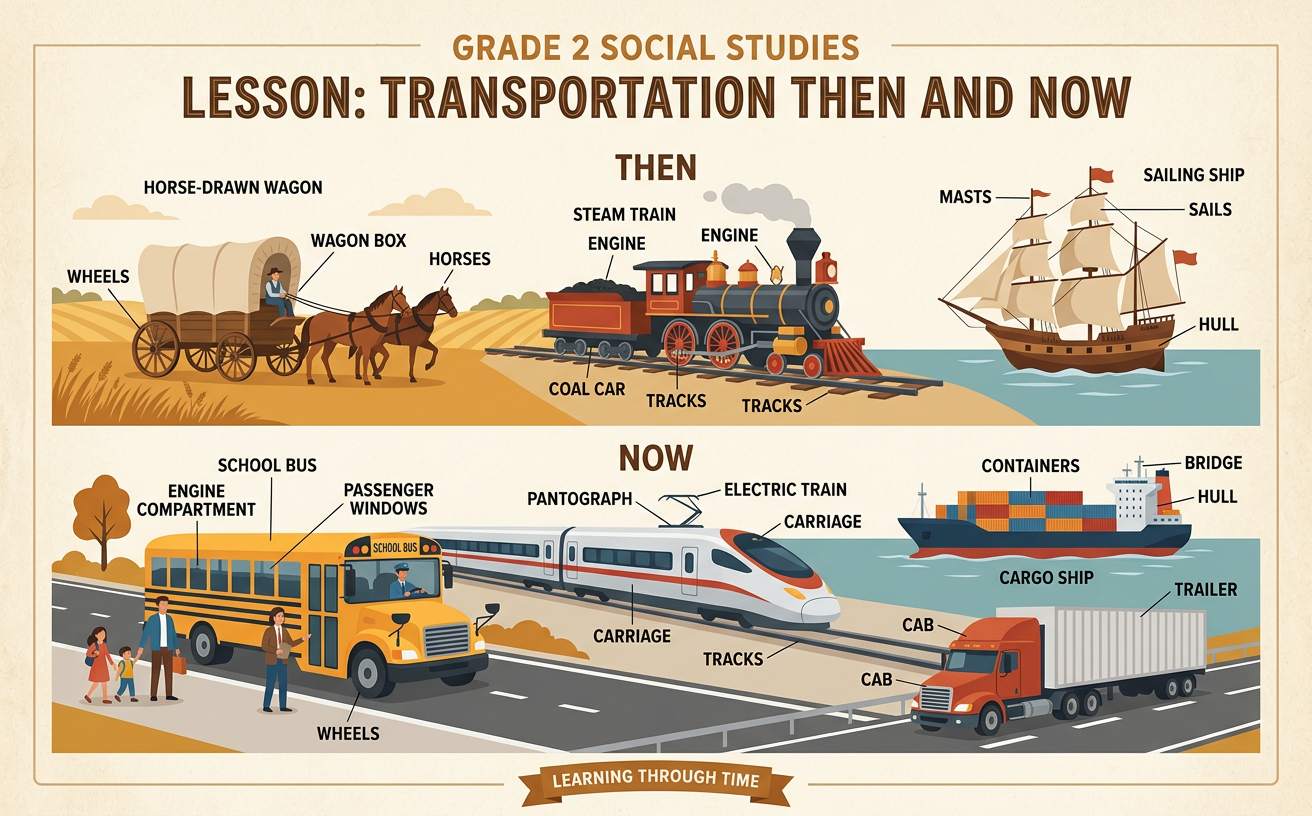
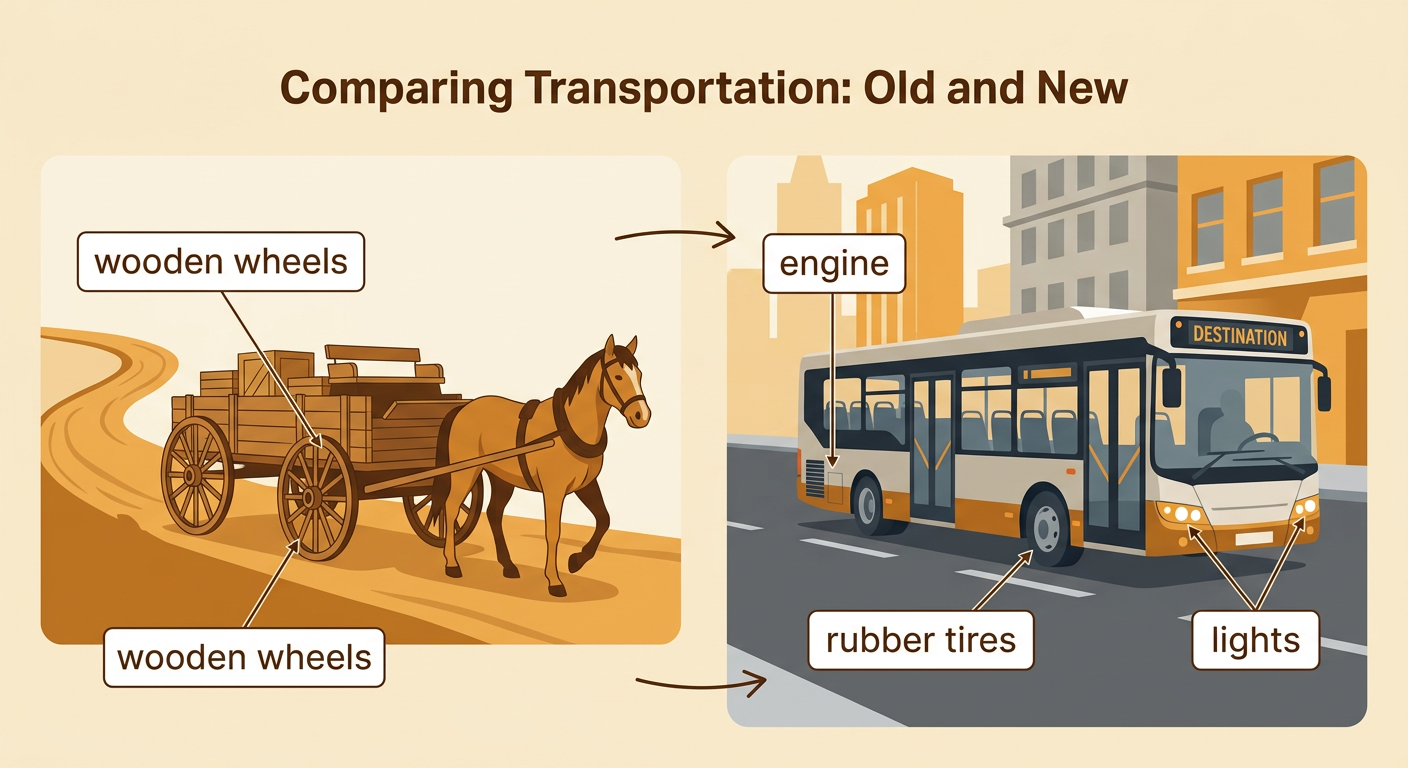
Transportation means the ways people and goods move from place to place. We can study pictures, objects, maps, and written accounts to learn about transportation in different times. Look for clues such as wheels, engines, tracks, sails, roads, and safety equipment. A horse-drawn wagon has wooden wheels, a place for goods, and no motor. A city bus has an engine, rubber tires, electric lights, and many seats. These details help us decide which vehicle is older and which is used today. Ask questions as you observe: What makes it move? Where can it travel? What can it carry? Comparing clues from two sources helps us build a more complete picture of transportation then and now.
Travel in the Past
Long ago, most people traveled more slowly than people often travel today. Many walked or rode horses. Horse-drawn wagons and stagecoaches carried people, food, tools, and mail over land. Sailboats used wind to cross water. In the 1800s, steam-powered trains began moving large numbers of passengers and heavy goods along railroad tracks. The trip still depended on the route, weather, and available transportation. For example, a farmer might load apples into a wagon and travel to a nearby town. The horse needed food, water, and rest, so the journey could take many hours. These forms of transportation were useful, but long trips could be tiring, uncomfortable, or difficult in bad weather.

Transportation Today
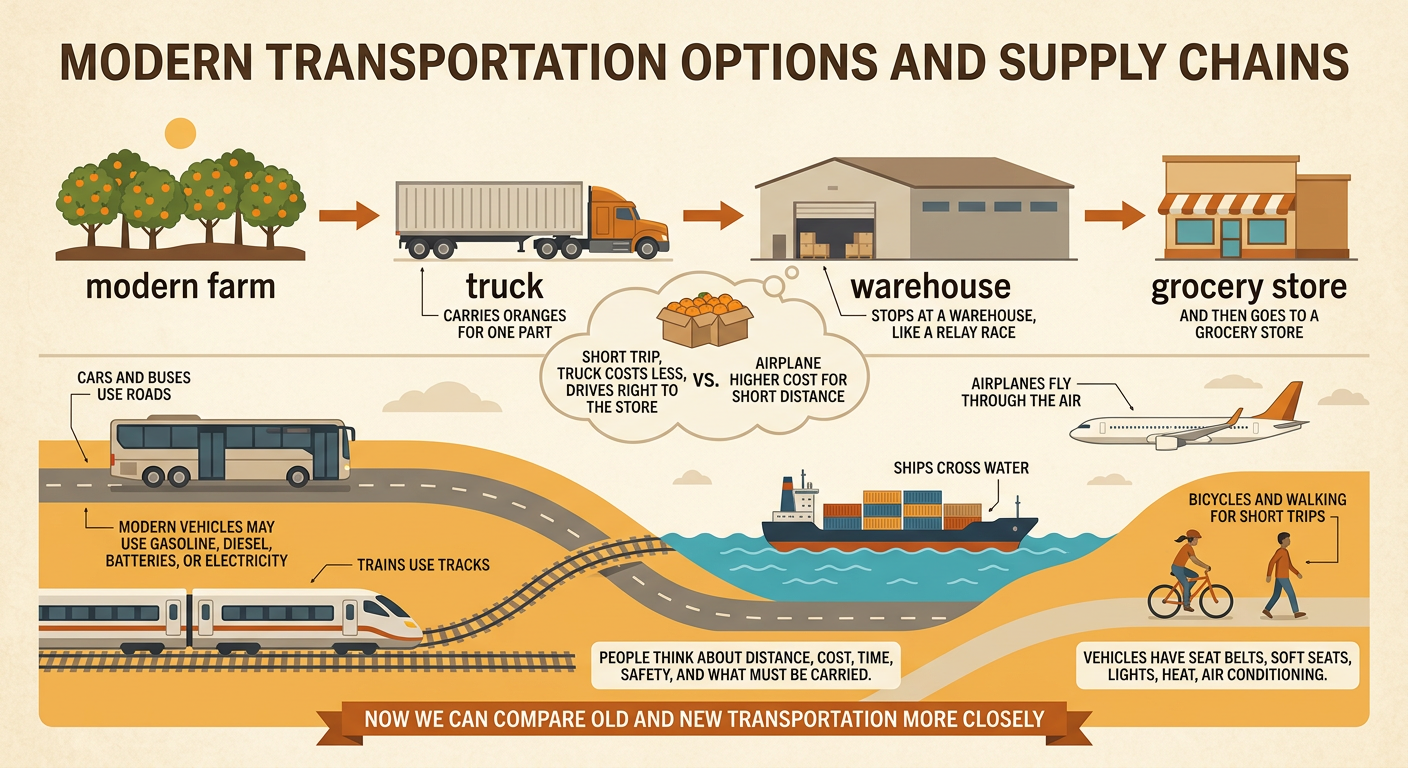
Today, people use many kinds of transportation. Cars and buses travel on roads, trains run on tracks, ships cross water, and airplanes fly through the air. Bicycles and walking are still important, especially for short trips. Many modern vehicles use gasoline, diesel fuel, batteries, or electricity. They often include features such as seat belts, padded seats, lights, heating, and air conditioning. Trucks, cargo trains, ships, and airplanes can move goods over long distances. For example, oranges may travel from a farm by truck to a warehouse and then to a grocery store. Different forms of transportation work together to complete the trip. People choose transportation based on distance, cost, time, safety, and what needs to be carried.
Compare Speed, Comfort, and Use
We can compare transportation by examining speed, comfort, and use. Speed tells how quickly something moves. Comfort describes how pleasant or easy the ride may feel. Use explains the job the transportation does. Imagine that one source is an old picture of a family riding in an open wagon. Another source is a present-day picture of a family riding in a car. Both vehicles carry people on land and use wheels. The wagon is pulled by a horse and offers little protection from rain. The car has an engine, seat belts, padded seats, and a roof. It usually travels faster than the wagon. However, a car needs a suitable road and energy. Comparing important points from both sources shows what stayed the same and what changed.

Why Transportation Changed
Transportation designs changed because people wanted to solve problems. Travelers wanted to go farther, arrive sooner, carry heavier loads, and stay safer and more comfortable. Designers first gather information and ask questions. Who needs help? What must be moved? How far must it go? What problems happen with the old design? For example, an open wagon does not protect passengers from rain. A designer could define the problem as keeping riders dry. Adding a strong roof or cover could improve the wagon, but the cover should not block the driver’s view or make the wagon unsafe. Designers make observations, plan solutions, build models, and test them. New designs may solve one problem, but people must also consider cost, safety, energy use, and effects on the environment.

Share a Then-and-Now Example
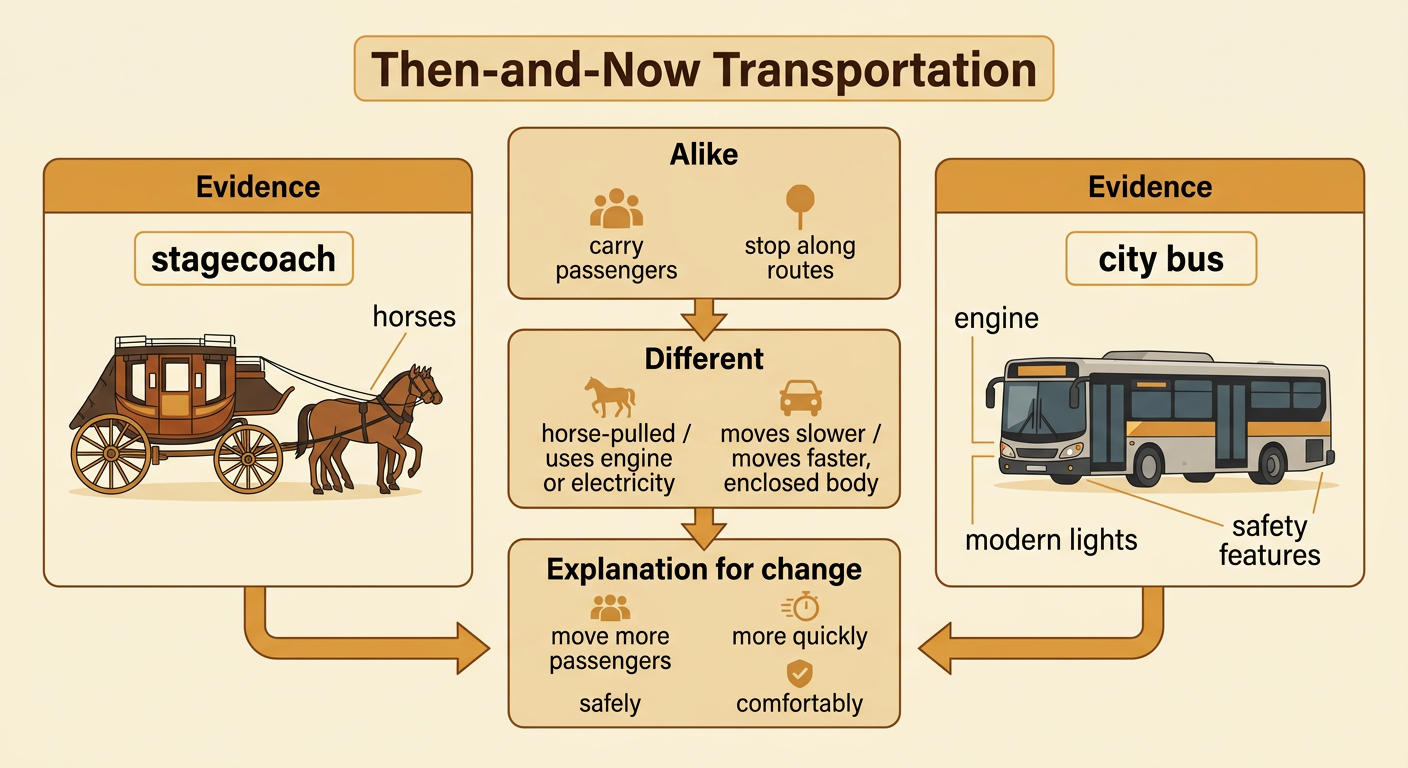
Choose one form of transportation from the past and one from today. Explain at least one way they are alike and two ways they are different. Use details from two informational sources, such as a photograph, book, map, timeline, or chart. You might compare a stagecoach with a city bus. Both carry groups of passengers and stop at places along a route. A stagecoach was pulled by horses, while a bus is powered by an engine or electricity. A bus usually travels faster and protects riders with a strong enclosed body and modern safety features. End by explaining why the design changed. You could say that people wanted to move more passengers more quickly and comfortably. Point to evidence in both sources as you share your then-and-now example.