Understanding Characters’ Points of View
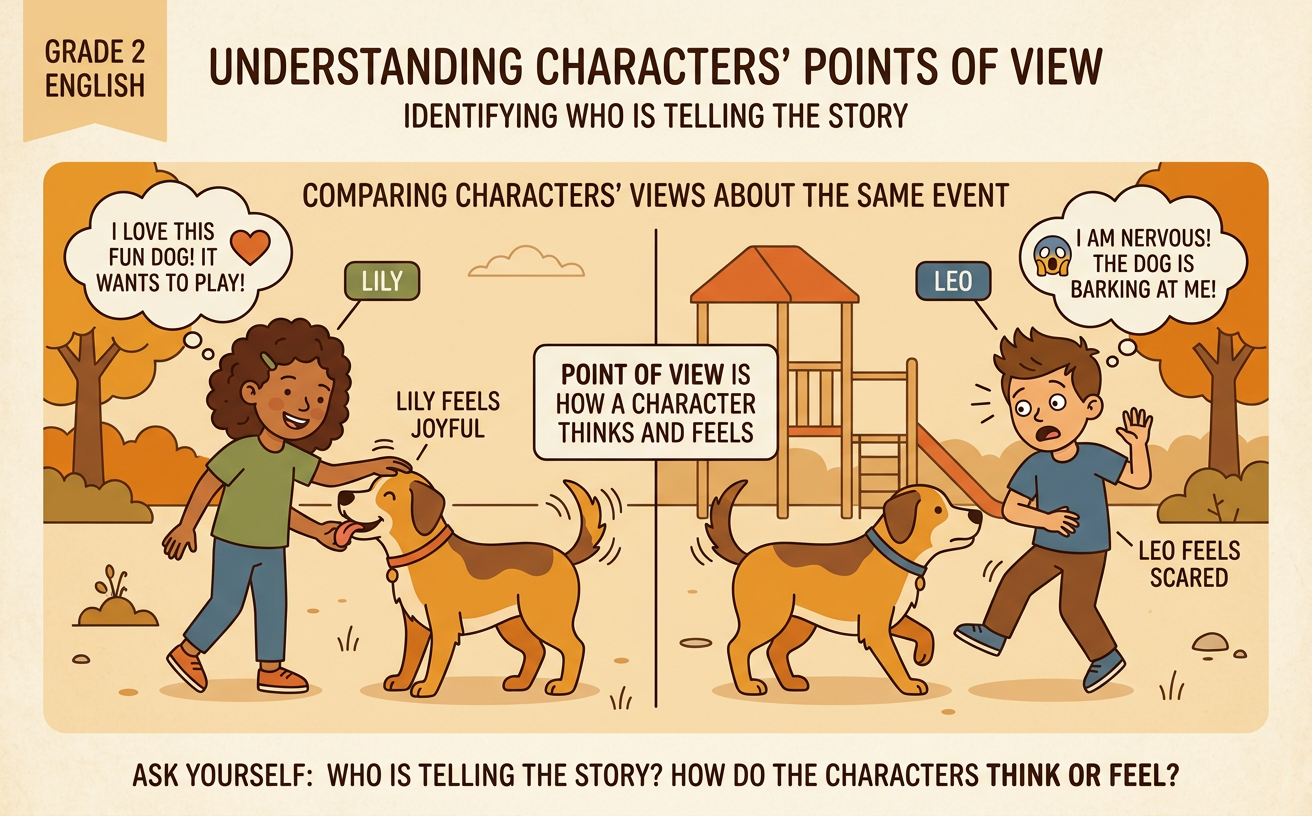
Students identify who is telling a story and compare how different characters think or feel about the same event.
Illustrations are auto-generated and may be placeholders. They can be refreshed to match the narration.
Meet the Characters
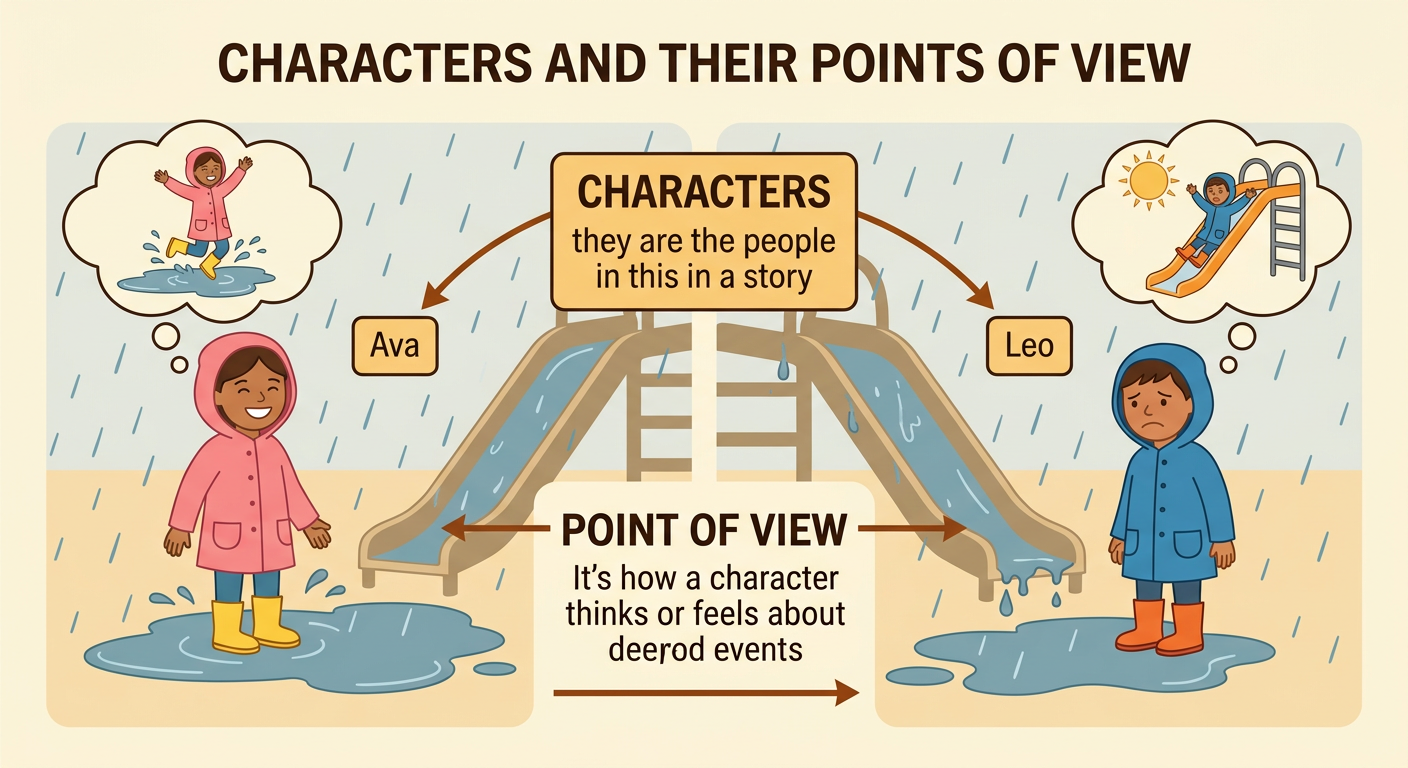
Characters are the people or animals in a story. Each character may see the same event in a different way. Before you read, notice each character’s name, actions, words, and expressions. Imagine a story about Ava and Leo visiting a park. Rain begins just as they reach the playground. Ava smiles because she loves jumping in puddles. Leo frowns because he wanted to use the dry slide. Both characters are at the same rainy park, but they react differently. Their reactions help you understand their points of view. A point of view is how a character thinks or feels about what happens. As you read, ask, “Who are the characters?” and “What does each character care about?”
Identify the Speaker
The speaker is the person or character whose words you are reading or hearing. Quotation marks often show the exact words a character says. Look for a dialogue tag, such as “Ava said” or “Leo asked,” to identify the speaker. For example, read: “This rain is perfect!” Ava shouted. Ava is the speaker because the words after the quotation tell us that Ava shouted. Now read: Leo asked, “Can we come back on a sunny day?” Leo is the speaker. If there is no dialogue tag, use the order of the conversation and clues about what each character wants. Identifying the speaker helps you avoid mixing up the characters’ ideas and feelings. Ask, “Who said these words?”

Notice Thoughts and Feelings
A character’s point of view includes thoughts and feelings about an event. Authors give clues through words, actions, facial expressions, and thoughts. In the park story, Ava splashes into a puddle and laughs. Her actions show that she feels excited. She thinks, “The rain makes the park more fun!” Leo stands under a tree and hugs his jacket around himself. He says, “I feel cold and disappointed.” His words and actions show that he is unhappy. Do not guess without a clue from the story. Look closely at what the character says, does, thinks, or feels. Then name the feeling and explain the clue. You might say, “Ava feels joyful because she laughs and jumps in the puddle.”

Compare Points of View
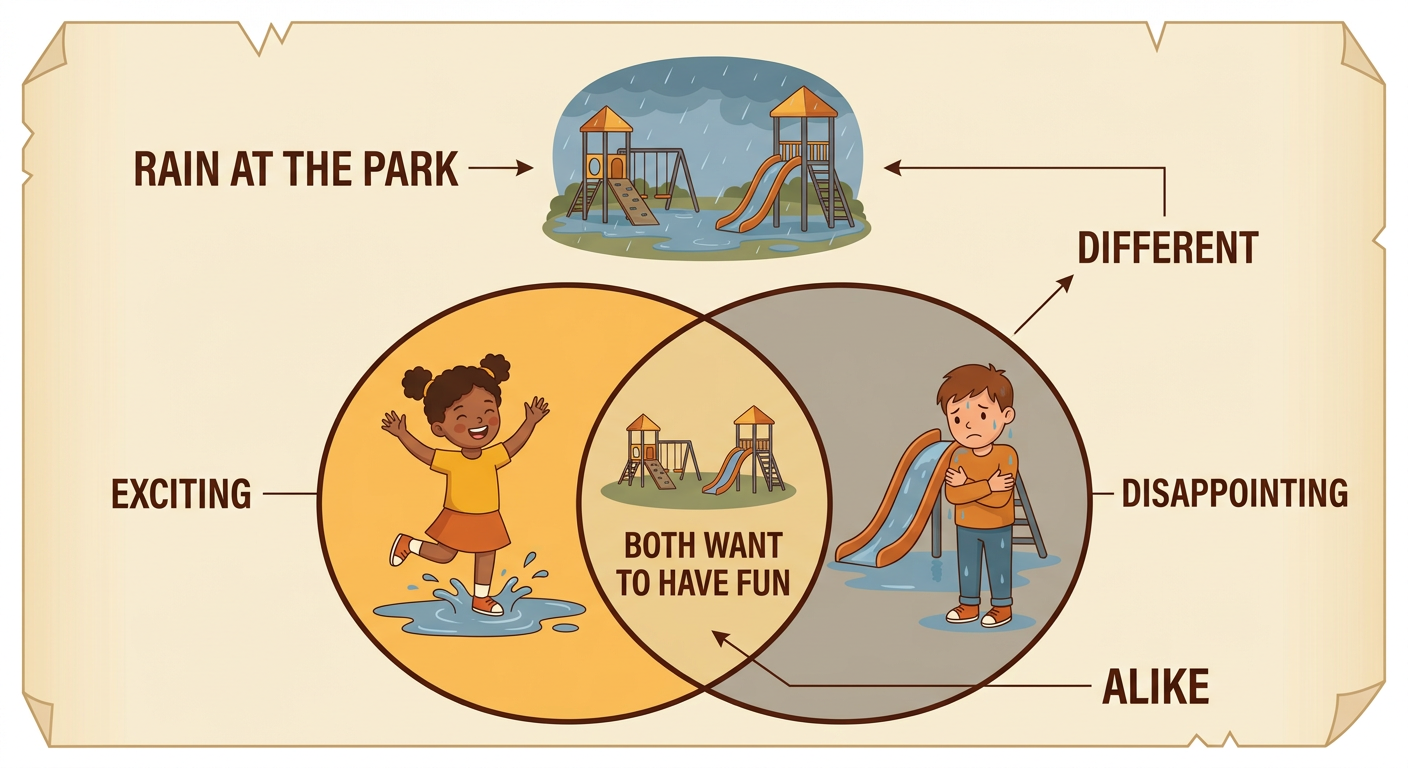
To compare points of view, tell how two characters think or feel about the same event. First, name the event. Next, explain each character’s response. Finally, tell how their responses are alike or different. At the rainy park, Ava thinks the rain is exciting because she can splash in puddles. Leo thinks the rain is disappointing because the slide is wet and he feels cold. Their points of view are different, even though they are in the same place at the same time. They are alike because both characters want to have fun at the park. You can use a sentence frame: “Ava thinks ___, but Leo thinks ___.” Comparing points of view helps you understand why characters may make different choices.
Read Dialogue in Character
When you read dialogue aloud, change your voice to match each character’s point of view. Think about the character’s feelings, then adjust your tone, volume, speed, and expression. Ava is excited about the rain, so her voice might sound bright, lively, and quick. Read her line with energy: “Look at that enormous puddle!” Leo is cold and disappointed, so his voice might sound quieter and slower. Read his line gently: “I wish the sun would come out.” Do not make every character sound the same. Pause when the speaker changes, and use a voice that fits the story clues. Reading in character helps listeners hear how each person thinks and feels. Practice each line, but keep your voice clear enough for others to understand.

Share Text Evidence
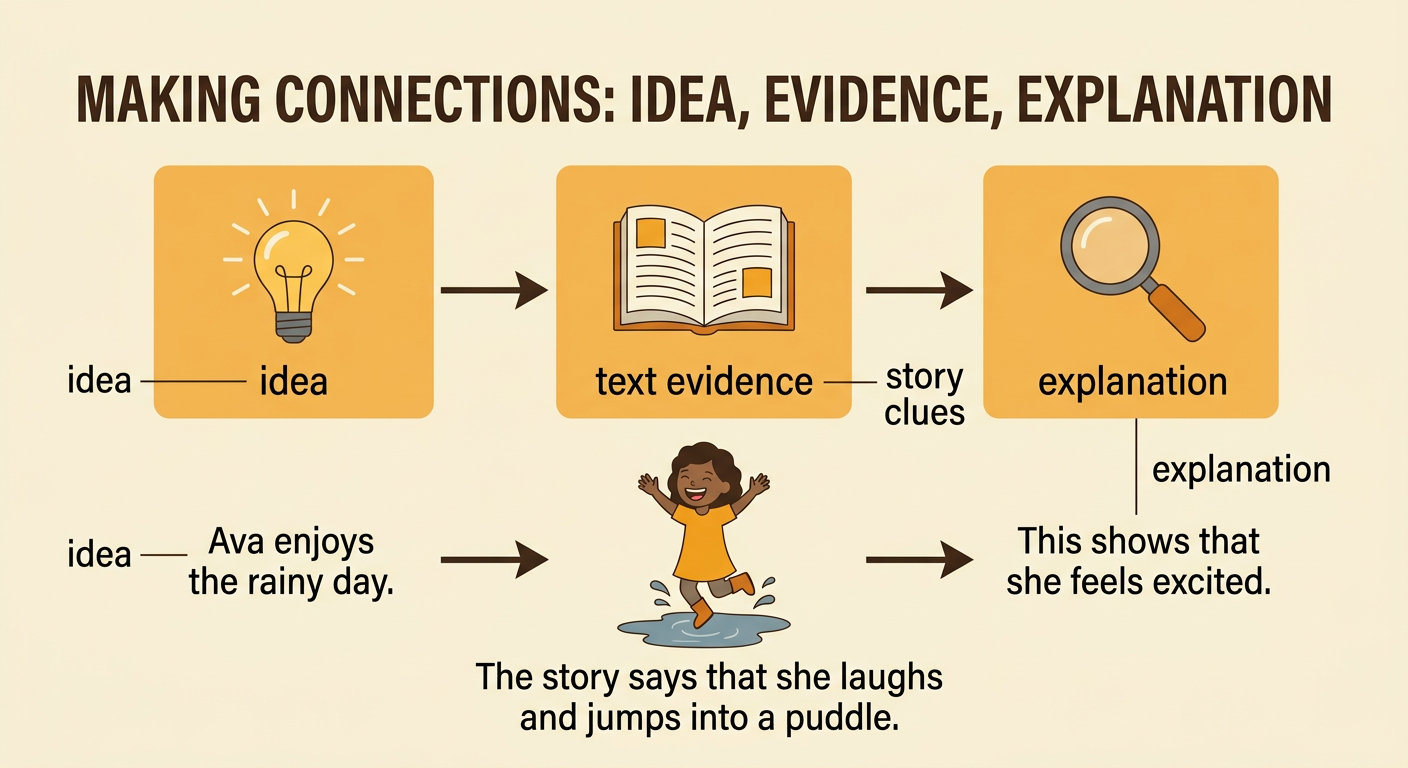
Text evidence is a word, sentence, or action from the story that supports your idea. When you explain a character’s point of view, include a clue from the text. Start with your idea, add the evidence, and explain what it shows. For example: “Ava enjoys the rainy day. The story says that she laughs and jumps into a puddle. This shows that she feels excited.” For Leo, you could say: “Leo dislikes the rain because he says, ‘I wish the sun would come out.’ This shows that he would rather play on a dry day.” Use phrases such as “The story says,” “In the text,” or “This shows.” Strong readers do more than name a feeling. They point to evidence that explains how they know.