Understanding Figurative Language in Literature
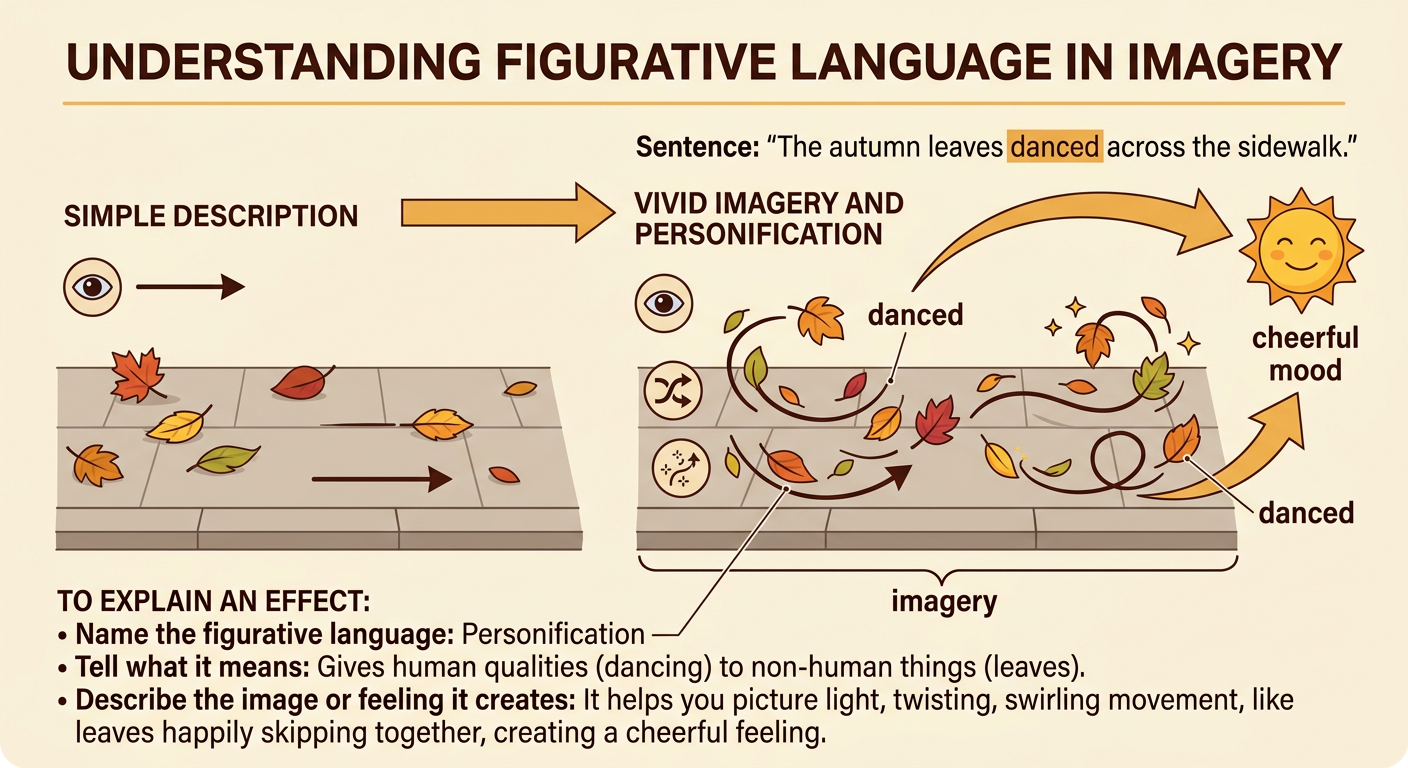
Students identify similes, metaphors, and personification and explain how these expressions shape meaning and imagery in a literary text.
Illustrations are auto-generated and may be placeholders. They can be refreshed to match the narration.
Literal and Figurative Meanings
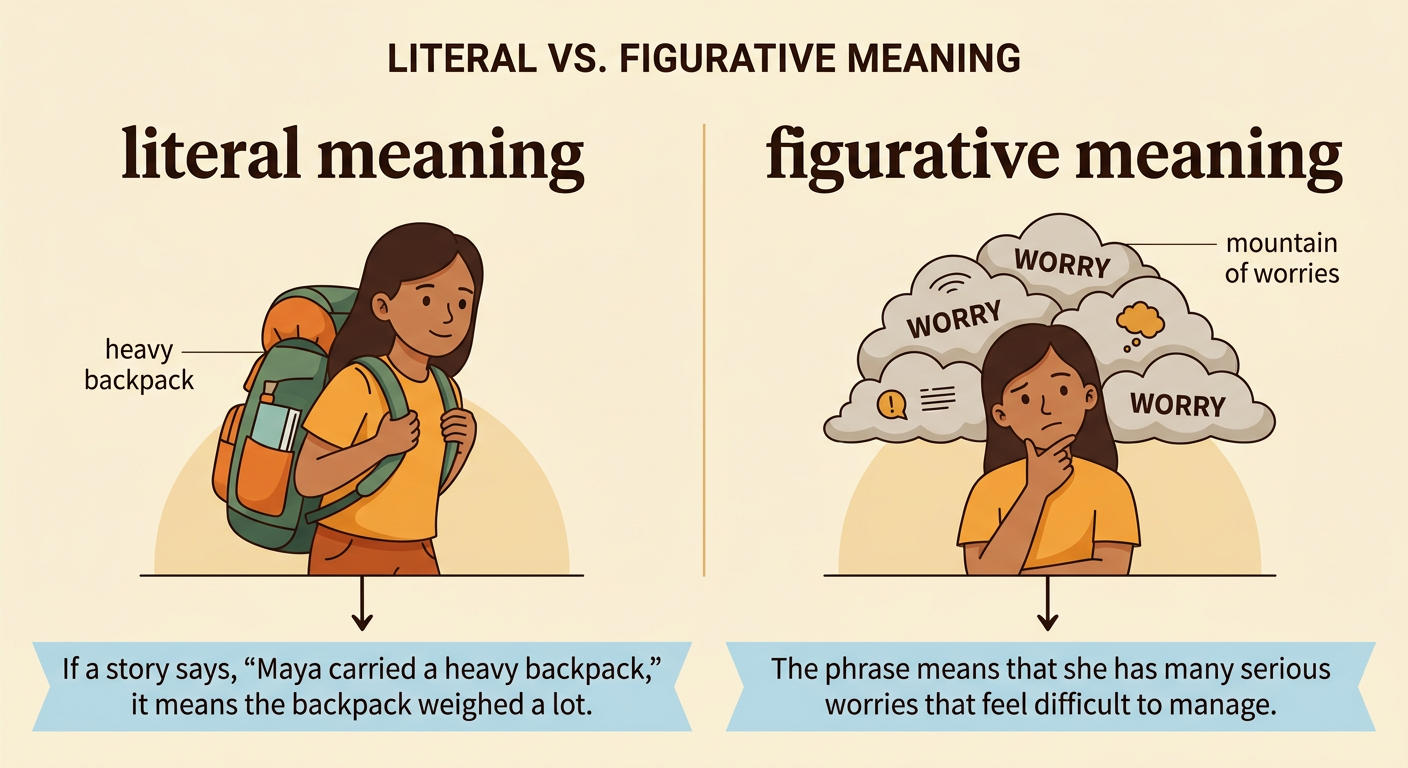
A literal meaning is the exact, ordinary meaning of the words. If a story says, “Maya carried a heavy backpack,” it means the backpack weighed a lot. A figurative meaning uses words in an imaginative way to suggest an idea or create a picture. If the story says, “Maya carried a mountain of worries,” she is not carrying a real mountain. The phrase means she has many serious worries that feel difficult to manage. Readers should ask whether the words describe something that could truly happen. They should also consider what feeling or idea the author may be suggesting. Understanding the difference between literal and figurative language helps readers avoid confusion and notice the deeper meaning of a literary text.
Recognizing Similes and Metaphors
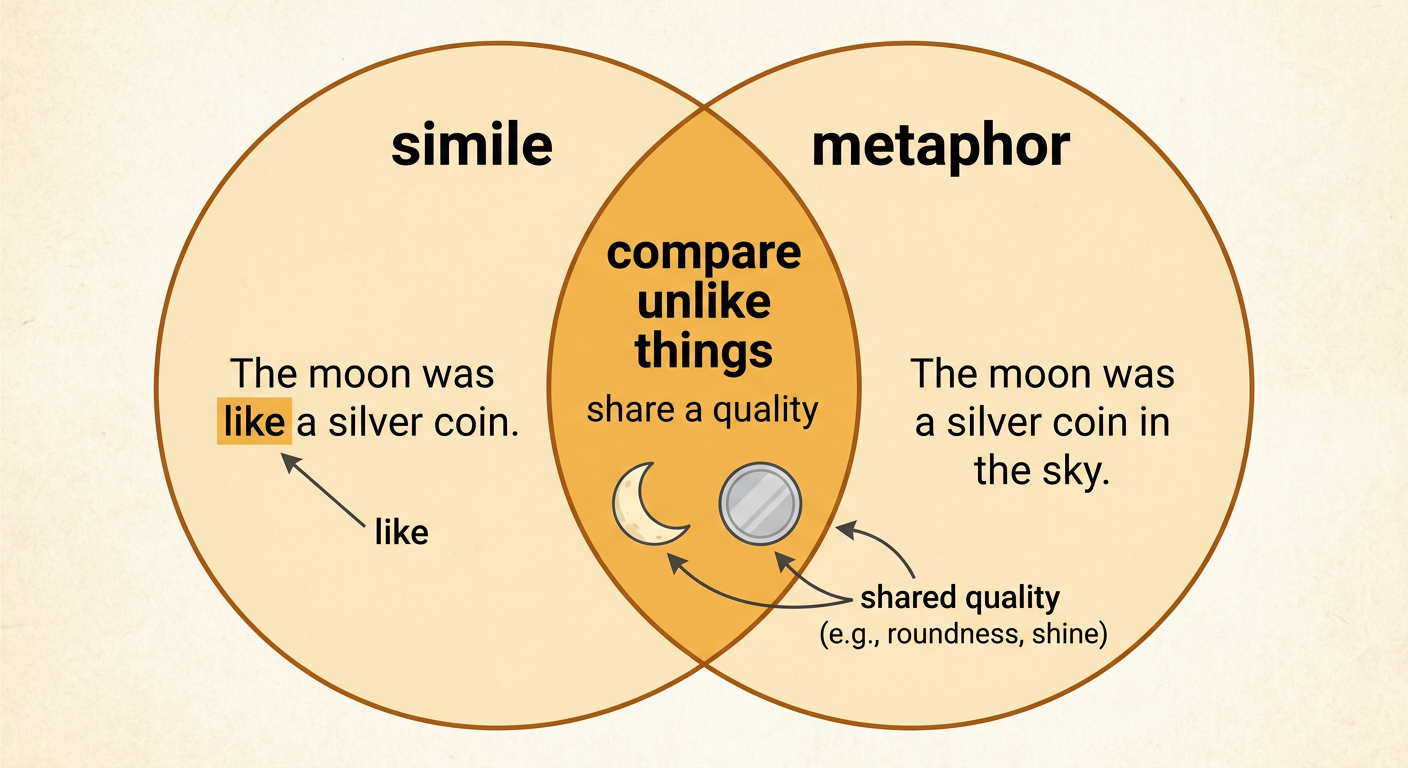
Similes and metaphors compare two unlike things to help readers understand a quality they share. A simile usually uses “like” or “as.” In the sentence, “The moon was like a silver coin,” the moon is compared to a coin because both can look round and shiny. A metaphor makes a direct comparison without using “like” or “as.” In “The moon was a silver coin in the sky,” the moon is called a coin, but it does not become one. To recognize either device, identify the two things being compared and determine their shared quality. Be careful: not every sentence with “like” is a simile. “I like the moon” expresses a preference and does not compare two things.
Identifying Personification
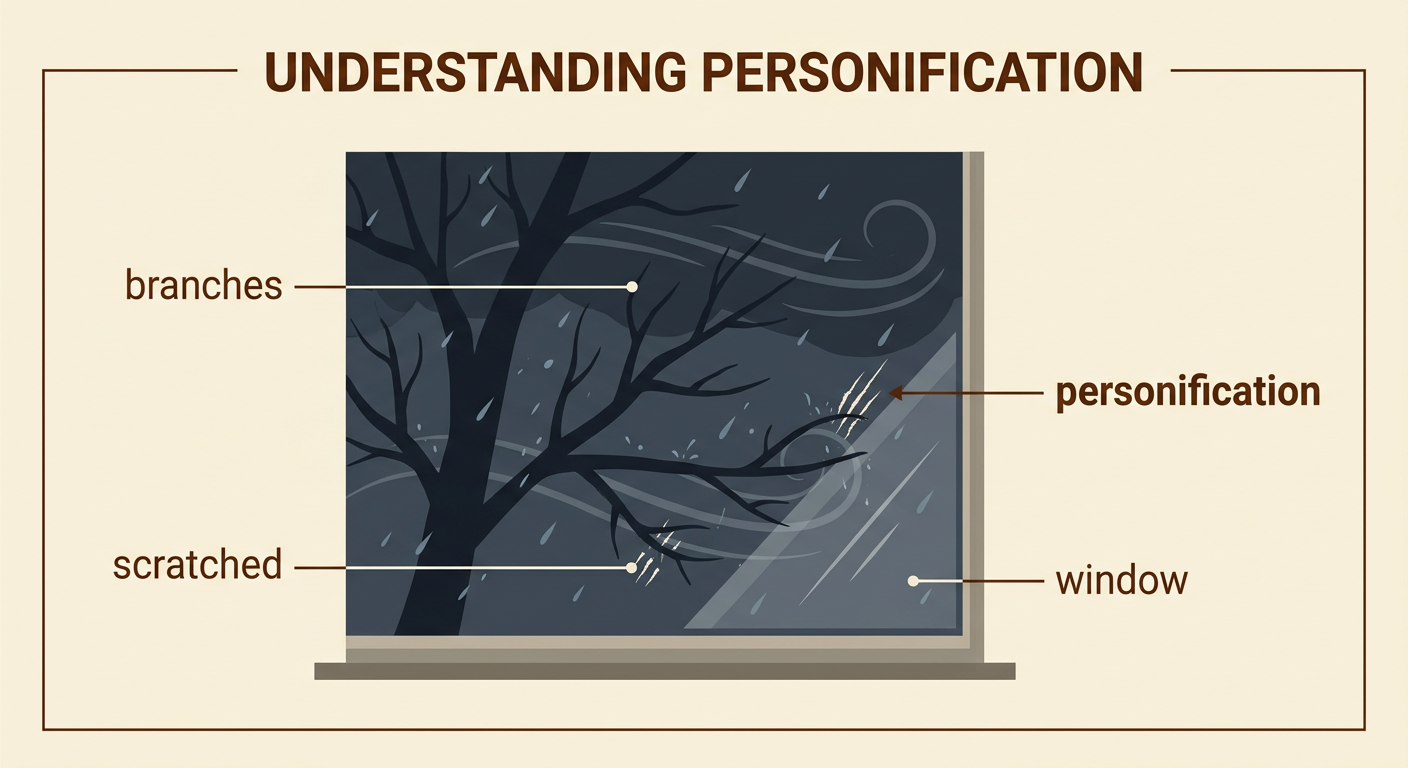
Personification gives a human action, feeling, or quality to an animal, object, or idea. Authors use it to make a setting or event feel lively and expressive. Consider the sentence, “The tired branches scratched at the window.” Branches cannot truly feel tired or decide to scratch. Wind may be moving them against the glass, but the humanlike description makes them seem restless or threatening. To identify personification, first find the nonhuman subject. Then look for a human behavior or emotion connected to it. Ask, “Can this thing really do or feel that?” If the answer is no, the author may be using personification. Personification is figurative, so readers should interpret the image rather than take every word as a fact.
Using Context to Interpret Meaning
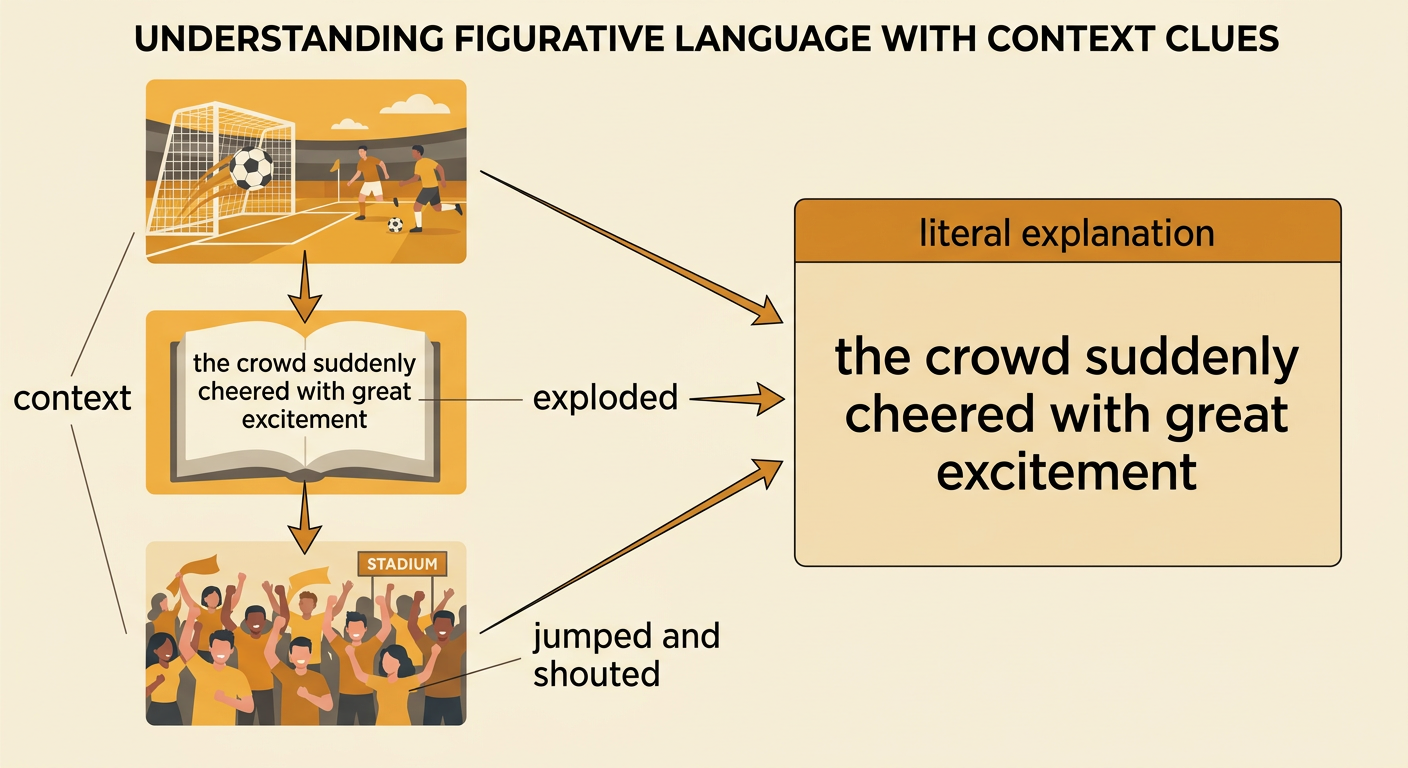
Context is the information surrounding a word or phrase. It includes nearby sentences, events, descriptions, and characters’ reactions. Readers use these clues to interpret figurative language. Suppose a story says, “After the winning goal, the crowd exploded. Fans jumped, shouted, and waved their arms.” The crowd did not literally burst apart. The next sentence shows that “exploded” means the crowd suddenly became very loud and excited. To interpret a figurative phrase, reread the sentences before and after it. Look for details that describe what happened, how someone felt, or how others reacted. Then replace the figurative phrase with a literal explanation. Check whether your explanation fits the scene. Context helps readers choose a meaning supported by the text instead of making an unsupported guess.
Explaining the Effect on Imagery
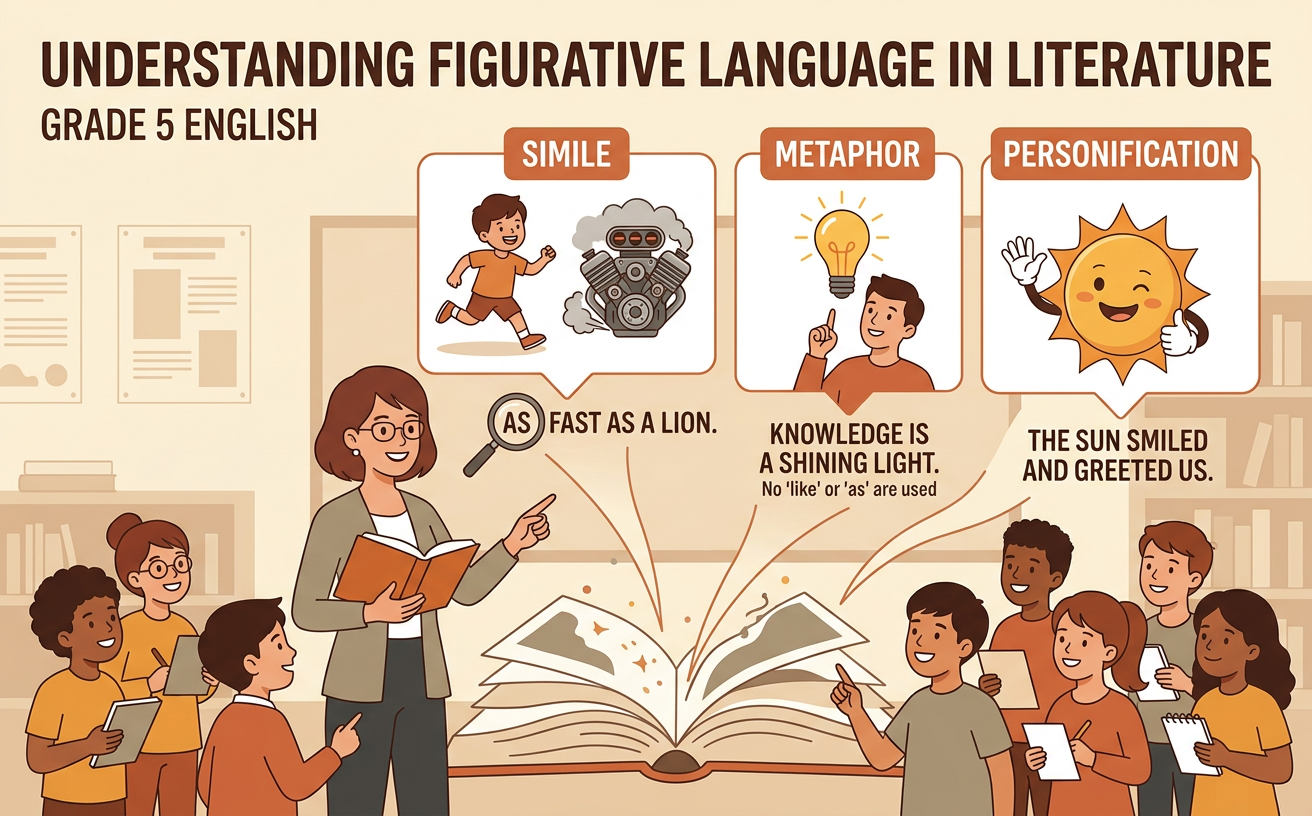
Imagery is language that helps readers imagine sights, sounds, smells, tastes, textures, or movement. Figurative language can make imagery stronger and shape the mood of a scene. In “The autumn leaves danced across the sidewalk,” personification helps readers picture leaves twisting and skipping in the wind. The word “danced” creates more graceful, joyful imagery than a literal phrase such as “The leaves moved.” When explaining an effect, name the figurative language, state what it means, and describe the image or feeling it creates. For example: “The personification compares the leaves’ movement to dancing, helping the reader picture light, swirling motion and creating a cheerful mood.” A strong explanation connects the author’s exact words to the mental picture and meaning they produce.