Understanding Point of View in a Story
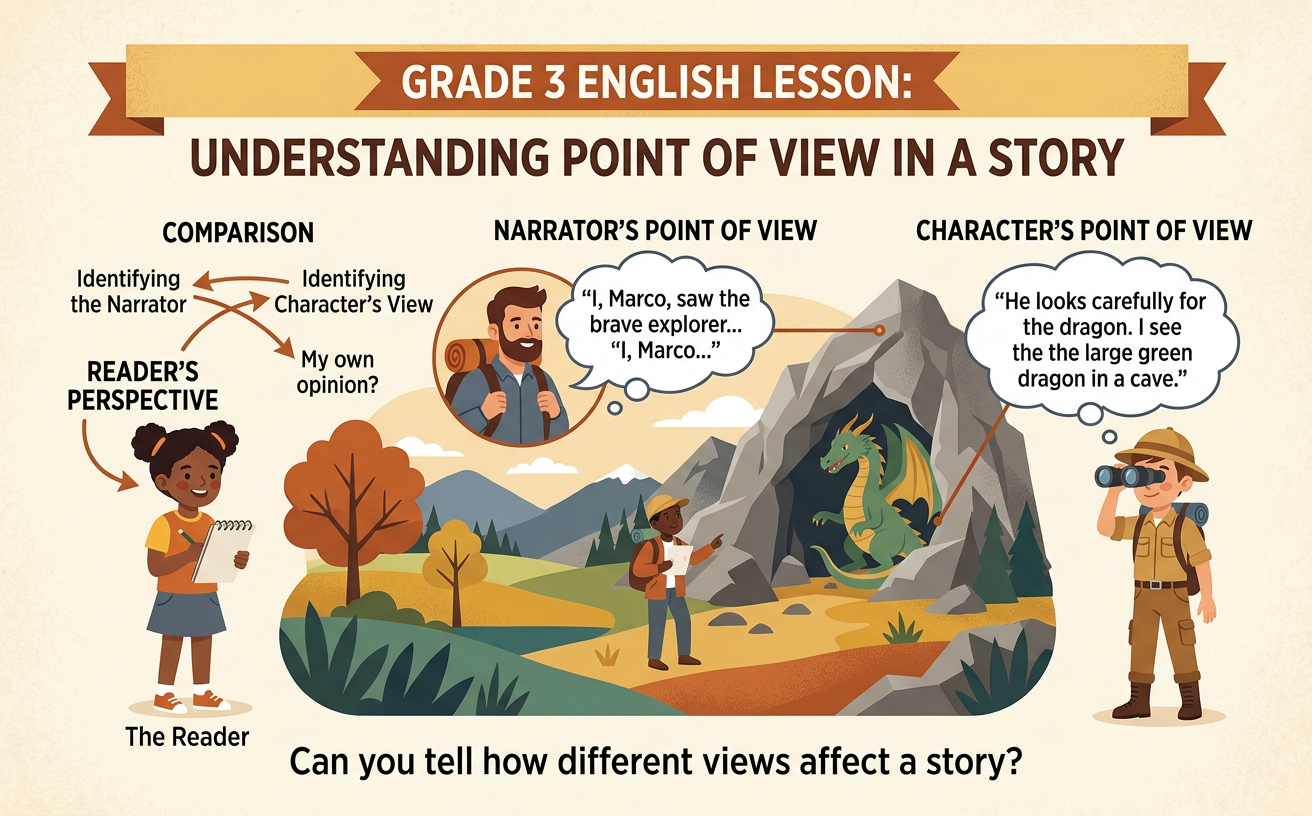
Students identify the narrator’s or a character’s point of view and explain how it differs from their own perspective.
Illustrations are auto-generated and may be placeholders. They can be refreshed to match the narration.
What Is Point of View?
Point of view is the way a narrator or character sees and thinks about what happens in a story. The narrator is the voice that tells the story. Different people can experience the same event but have different feelings about it. For example, imagine that a class trip is canceled because of heavy rain. Mia may feel disappointed because she wanted to visit the zoo. Her friend Leo may feel relieved because thunderstorms make him nervous. You might feel differently from both characters. You may be excited to have the trip on another day. As you read, ask, “Who is sharing this view?” and “What does this person think or feel?” These questions help you understand each point of view.

Identify Who Is Speaking
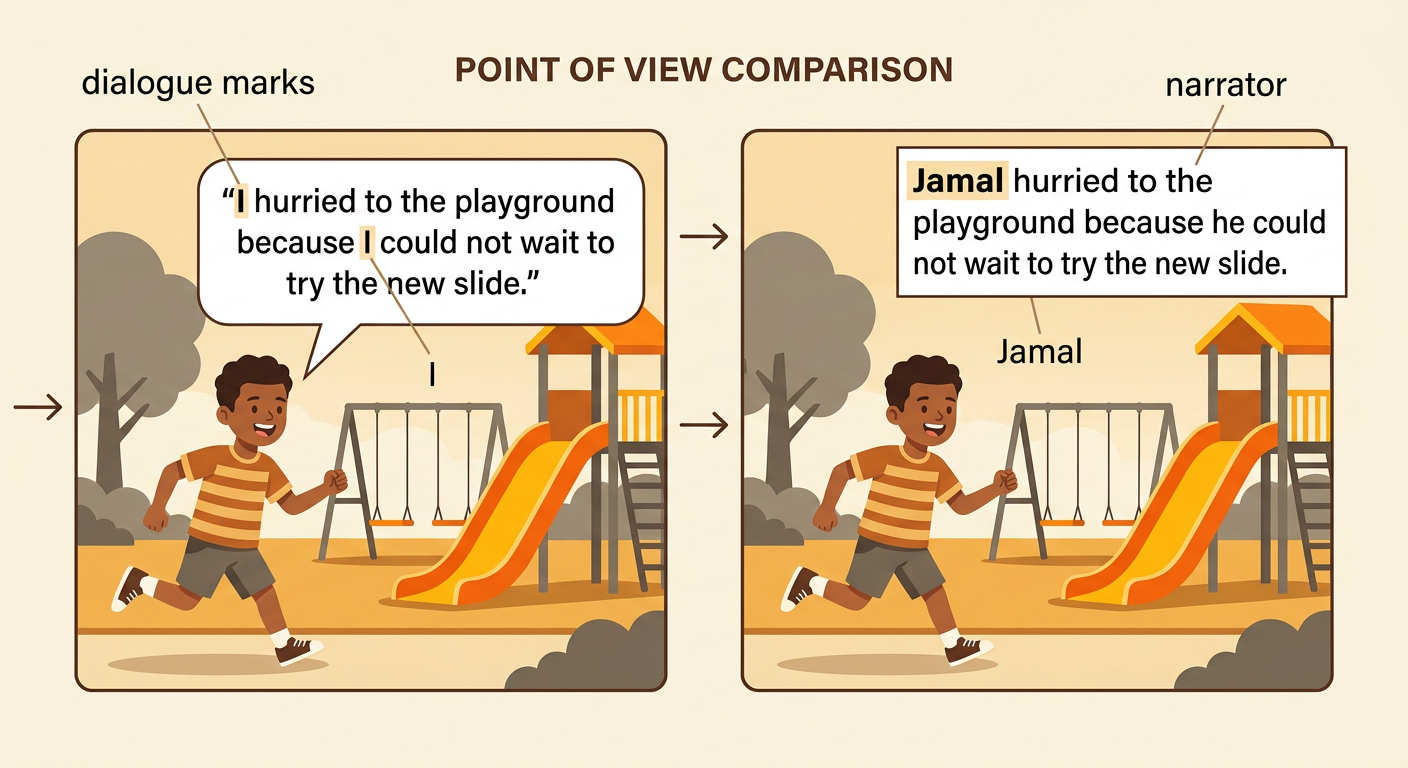
To understand point of view, first identify who is speaking or telling the story. A character may tell the story using words such as I, me, my, and we. For example, “I hurried to the playground because I could not wait to try the new slide.” The word I shows that a character is telling what happened. In another story, a narrator outside the action might say, “Jamal hurried to the playground because he could not wait to try the new slide.” This narrator uses Jamal and he instead of I. Dialogue marks also help you notice when a character speaks. Ask yourself whether the words belong to the narrator or to a character. Knowing who is speaking helps you decide whose thoughts, feelings, and experiences are being shared.
Find Clues About the Speaker’s Perspective
A speaker’s perspective is shown through thoughts, feelings, words, and actions. Look for details that reveal what the narrator or character believes about an event. Suppose a story says, “Nora stepped back from the large dog. Its bark sounded like thunder, and her hands began to shake.” Nora’s actions and shaking hands suggest that she feels afraid. Another character might say, “What a friendly dog! I hope I can pet it.” That character sees the same dog as friendly rather than frightening. Pay attention to descriptive words, too. Words such as enormous and thunder may make the dog seem scary, while playful and gentle may make it seem safe. Gather several clues before deciding on the speaker’s perspective. Strong readers use what a character says, does, thinks, and feels.

Compare the Speaker’s View with Your Own
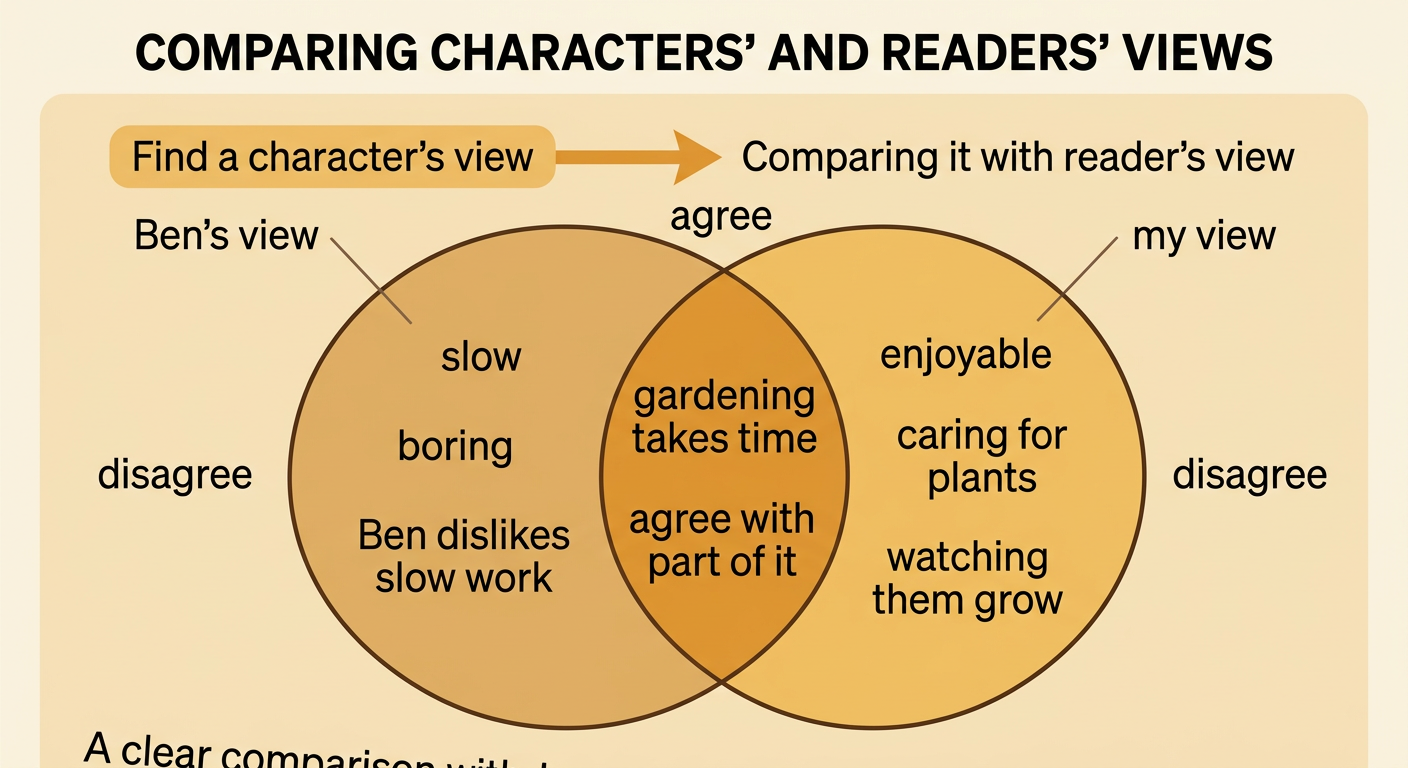
After you understand the speaker’s view, compare it with your own point of view. Think about whether you agree, disagree, or have partly the same opinion. In a story, Ben may say, “Working in the community garden is boring because planting takes too long.” His words show that he dislikes the slow work. You might think gardening is enjoyable because you like watching plants grow. Your view is different from Ben’s. Another reader might agree with Ben because that reader prefers fast activities. There is not always one correct personal response. However, you must describe the character’s view accurately before comparing it with yours. Try using this sentence frame: “Ben thinks gardening is boring, but I think it is enjoyable because I like caring for plants.”
Explain Your Thinking with Text Evidence
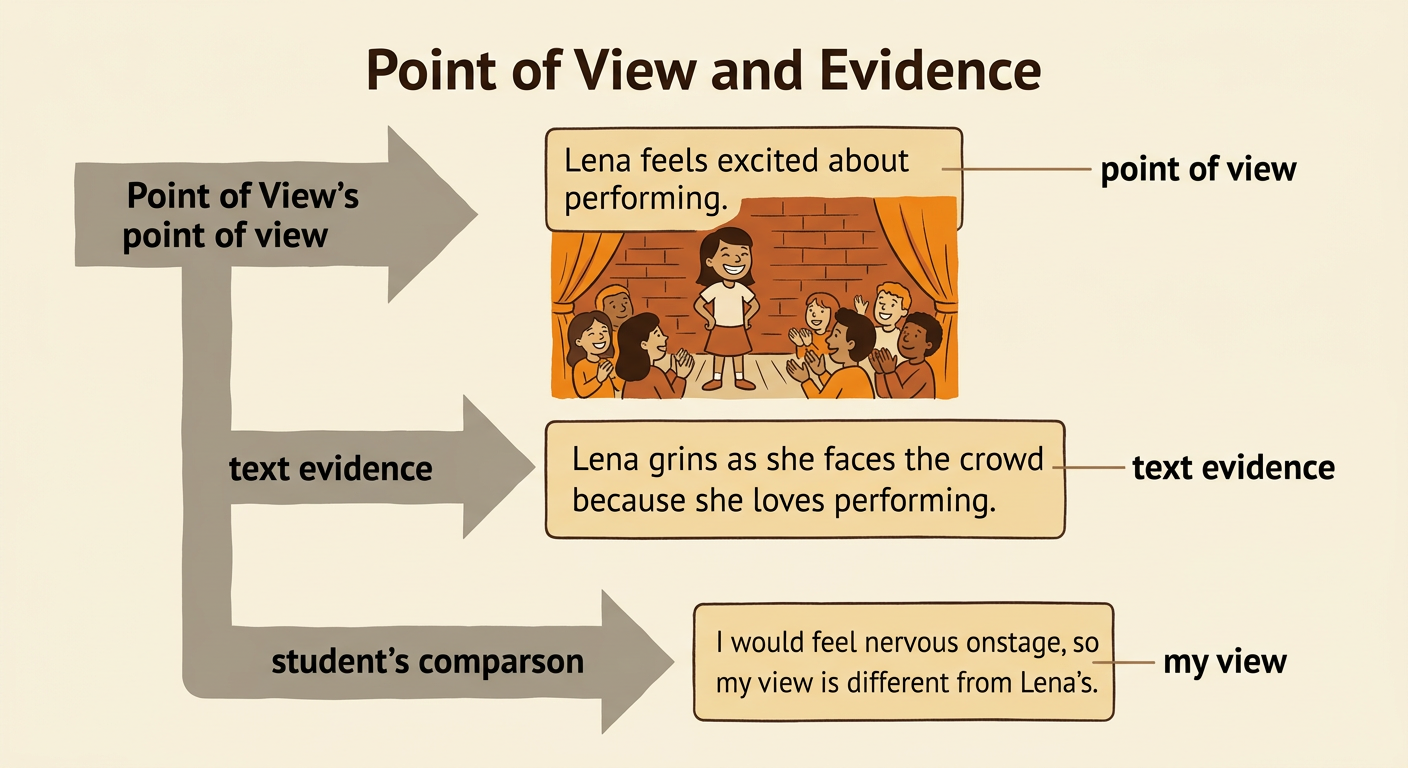
Text evidence is a word, phrase, sentence, or story detail that supports your thinking. Begin by stating the narrator’s or character’s point of view. Next, give evidence from the story. Then explain how your own view is similar or different. For example, a story says, “Lena grinned as she climbed onto the stage. She loved performing for a crowd.” You could write, “Lena feels excited about performing. The text says that she grinned and loved performing for a crowd. I would feel nervous onstage, so my point of view is different from Lena’s.” The details about Lena’s grin and love of performing support the answer. Do not give only your opinion. Connect your idea to exact words or clear details from the text so readers can follow your reasoning.