Understanding the Structure of a Drama
Students identify acts, scenes, stage directions, and dialogue and explain how these elements work together to organize and develop a drama.
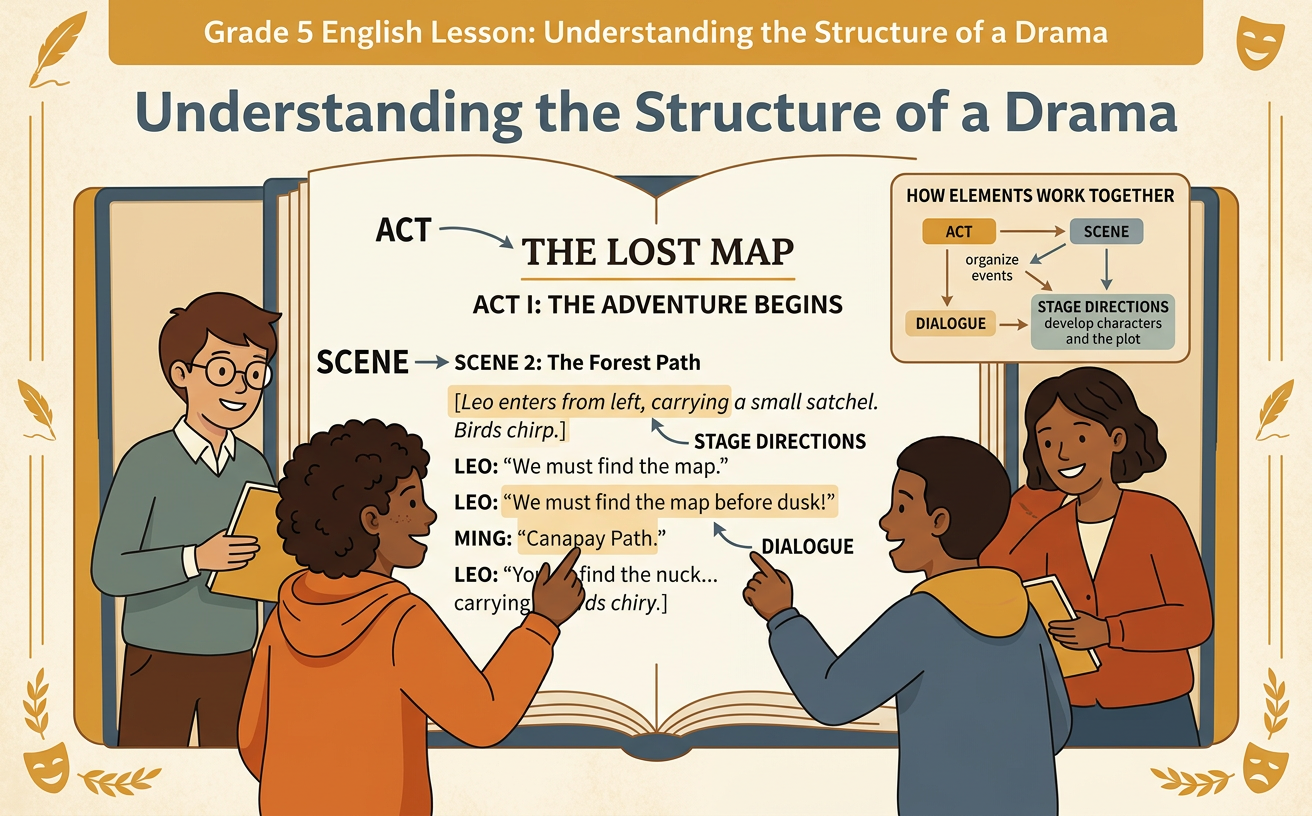
Illustrations are auto-generated and may be placeholders. They can be refreshed to match the narration.
Review Drama as a Genre
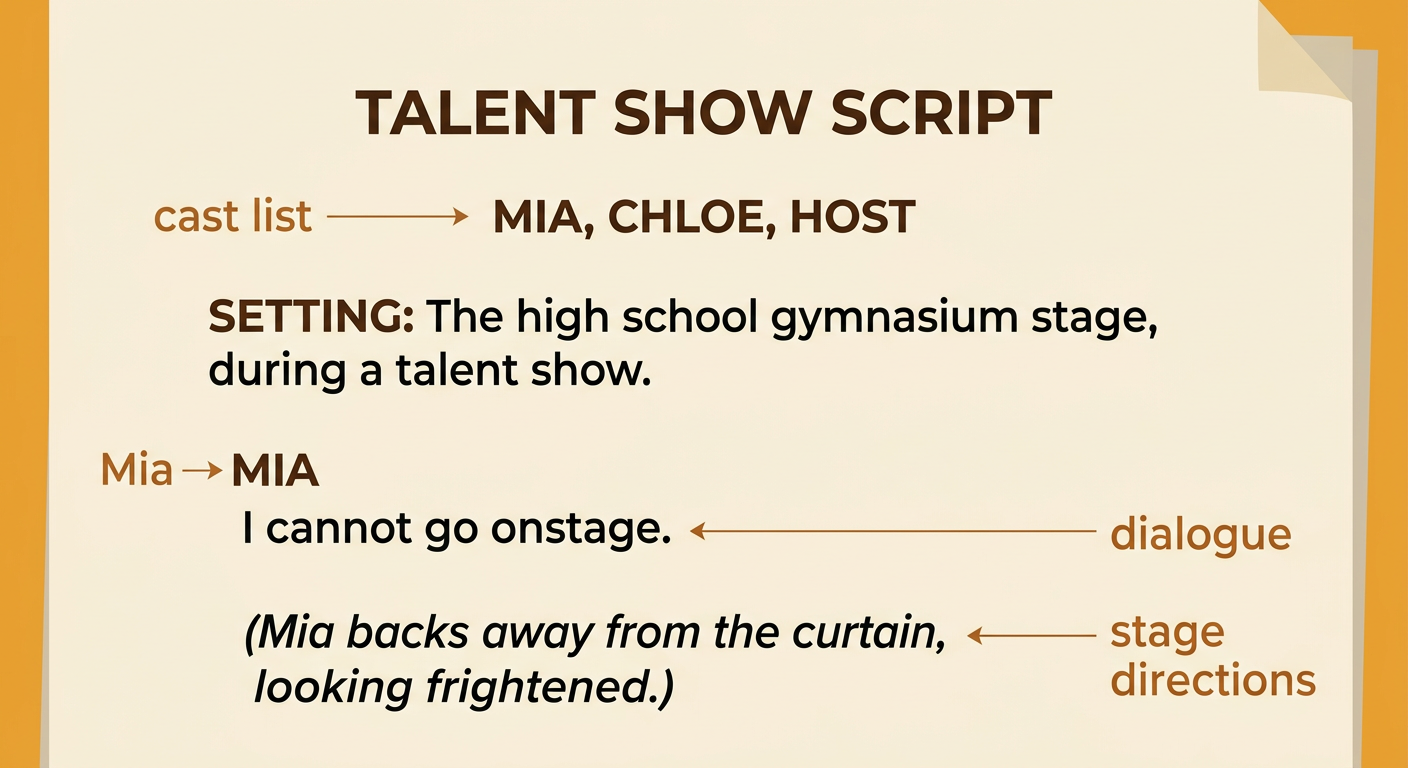
A drama is a story written to be performed by actors for an audience. Like other stories, a drama usually has characters, a setting, a conflict, and a plot. However, its script is organized to show what actors say and do. The cast list names the characters, dialogue gives their spoken words, and stage directions guide actions, movements, or changes in the setting. For example, a drama about a school talent show might introduce Mia, who is nervous about singing. Instead of a narrator describing everything, the audience learns about Mia through her words, expressions, and actions. When Mia says, “I cannot go onstage,” and slowly backs away from the curtain, both her dialogue and movement reveal her fear. These features help readers imagine the performance.
Identify Acts and Scenes
Acts and scenes divide a drama into manageable parts. An act is a major section of a play, similar to a large part of a story. A scene is a smaller section within an act. A new scene often begins when the setting changes, time passes, or different characters enter. For example, Act 1 of The Missing Map might introduce two friends searching an attic. Scene 1 takes place in the attic, where they discover a locked box. Scene 2 takes place later in the library, where they research the symbol on the box. Both scenes belong in Act 1 because they introduce the mystery and begin the search. Act 2 could show the friends following clues and solving the mystery. The order of acts and scenes helps the plot progress clearly.

Examine Dialogue and Stage Directions
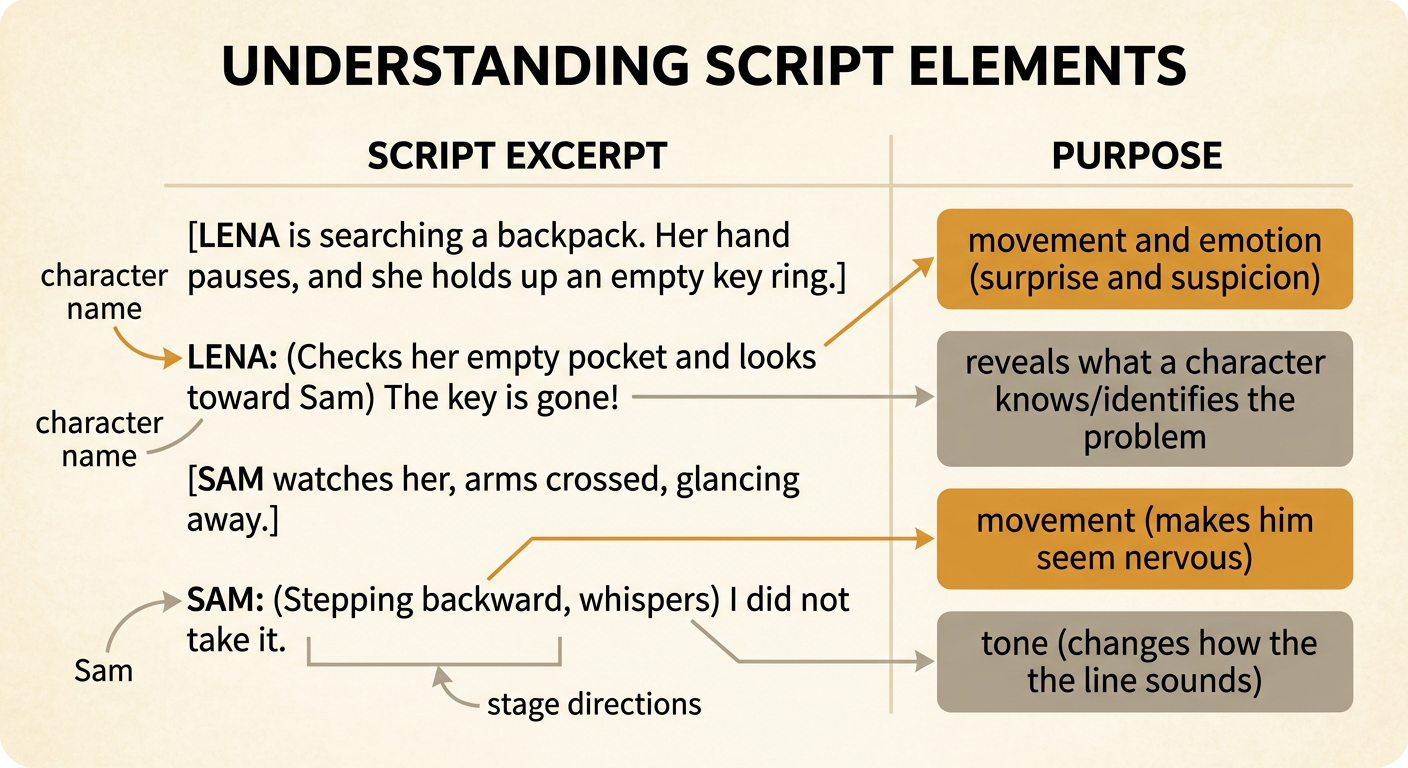
Dialogue is the exact speech spoken by characters. It reveals what characters think, feel, want, and know. Stage directions are instructions that tell actors how to move, speak, react, or use objects. They may also describe lighting, sound, or the setting. Stage directions are usually not spoken aloud. Imagine this script: Lena says, “The key is gone!” Then the stage direction states that she checks her empty pocket and looks toward Sam. Lena’s dialogue identifies the problem, while the stage direction shows her surprise and suspicion. Sam might whisper, “I did not take it,” while stepping backward. The word whisper and the backward movement affect how the audience interprets his response. By studying both dialogue and stage directions, readers gather details that a narrator might provide in a short story.
Trace How a Scene Develops the Plot
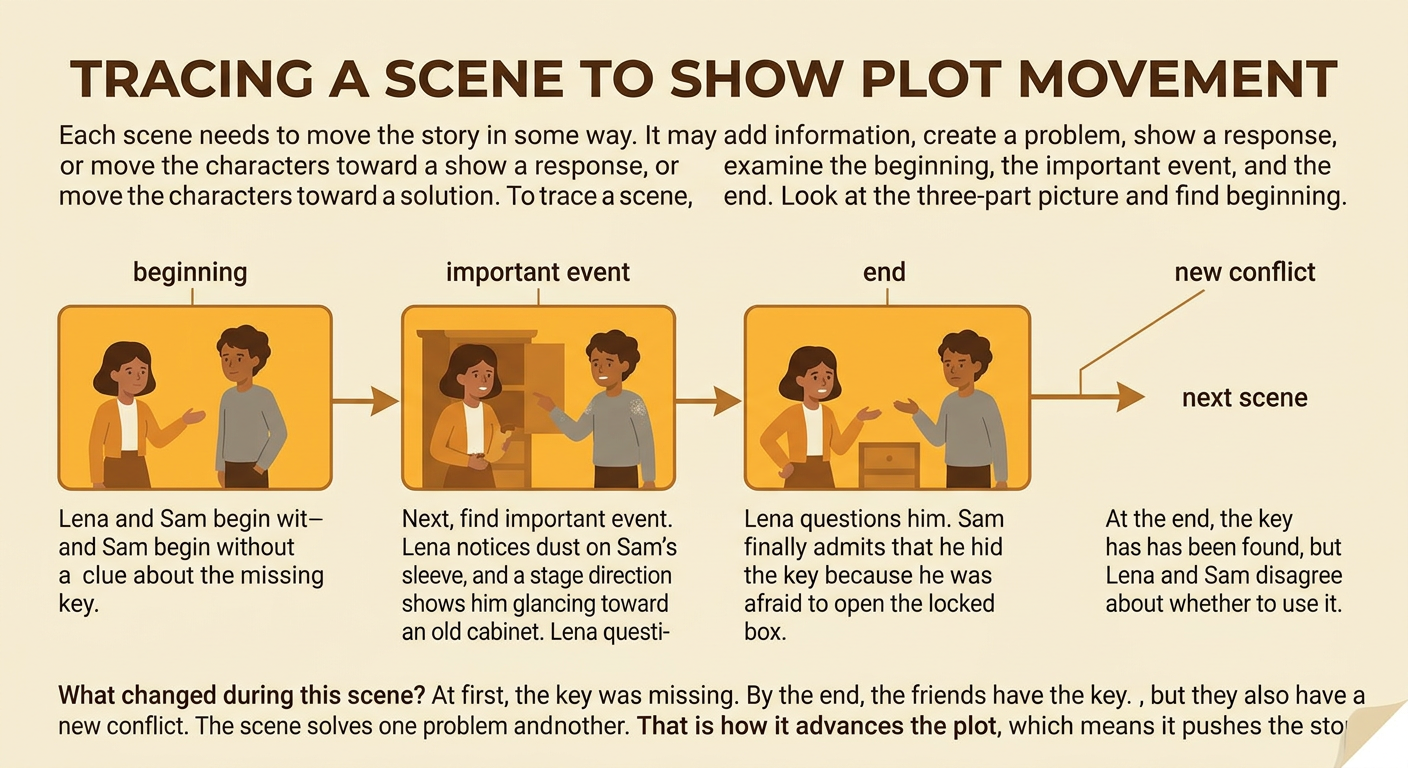
Each scene should add information, create a problem, show a response, or move characters toward a solution. To trace a scene, identify what is true at the beginning, what important event occurs, and what changes by the end. In a scene from The Missing Map, Lena and Sam begin without a clue to the key’s location. Lena notices dust on Sam’s sleeve, and a stage direction shows Sam glancing toward an old cabinet. After Lena questions him, Sam admits that he hid the key because he feared opening the box. By the end of the scene, the key has been found, but the friends now disagree about using it. The scene advances the plot by solving one problem and creating another. This new conflict gives the audience a reason to continue to the next scene.
Explain How Dramatic Elements Fit Together
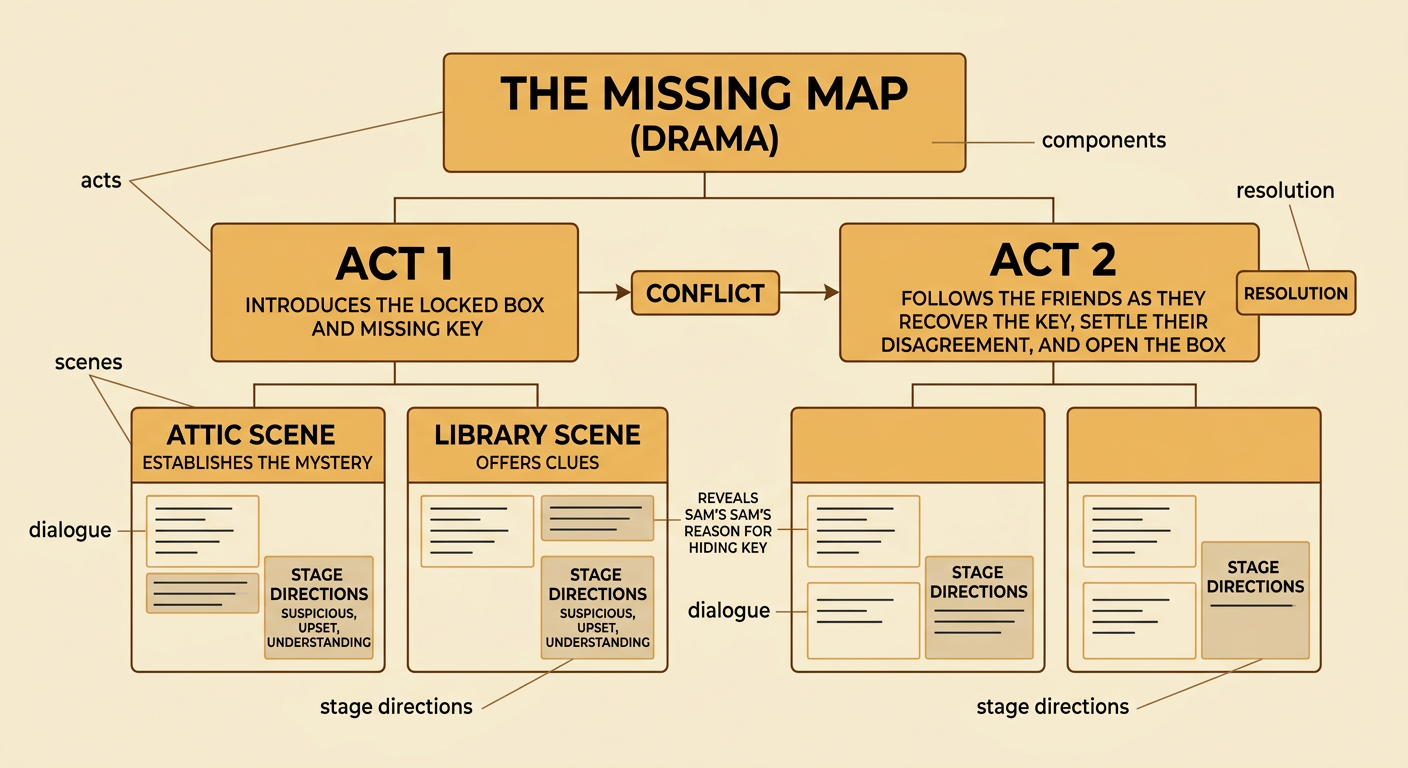
The parts of a drama work together to create its overall structure. Acts arrange the major stages of the plot, and scenes present the smaller events within those stages. Dialogue develops characters and conflicts, while stage directions show actions, reactions, and performance details. Consider The Missing Map. Act 1 introduces the locked box and the missing key. Its attic and library scenes establish the mystery and provide clues. Act 2 follows the friends as they recover the key, resolve their disagreement, and open the box. Dialogue reveals why Sam hid the key, while stage directions show Lena’s changing reactions. No single element tells the whole story. Together, the ordered acts, connected scenes, spoken lines, and physical actions move the drama from introduction through conflict to resolution. Explaining these connections shows how the drama is built as one complete work.