Fractions: Halves, Thirds, and Beyond
Understand fractions as equal parts of a whole, compare them, and add and subtract with unlike denominators.
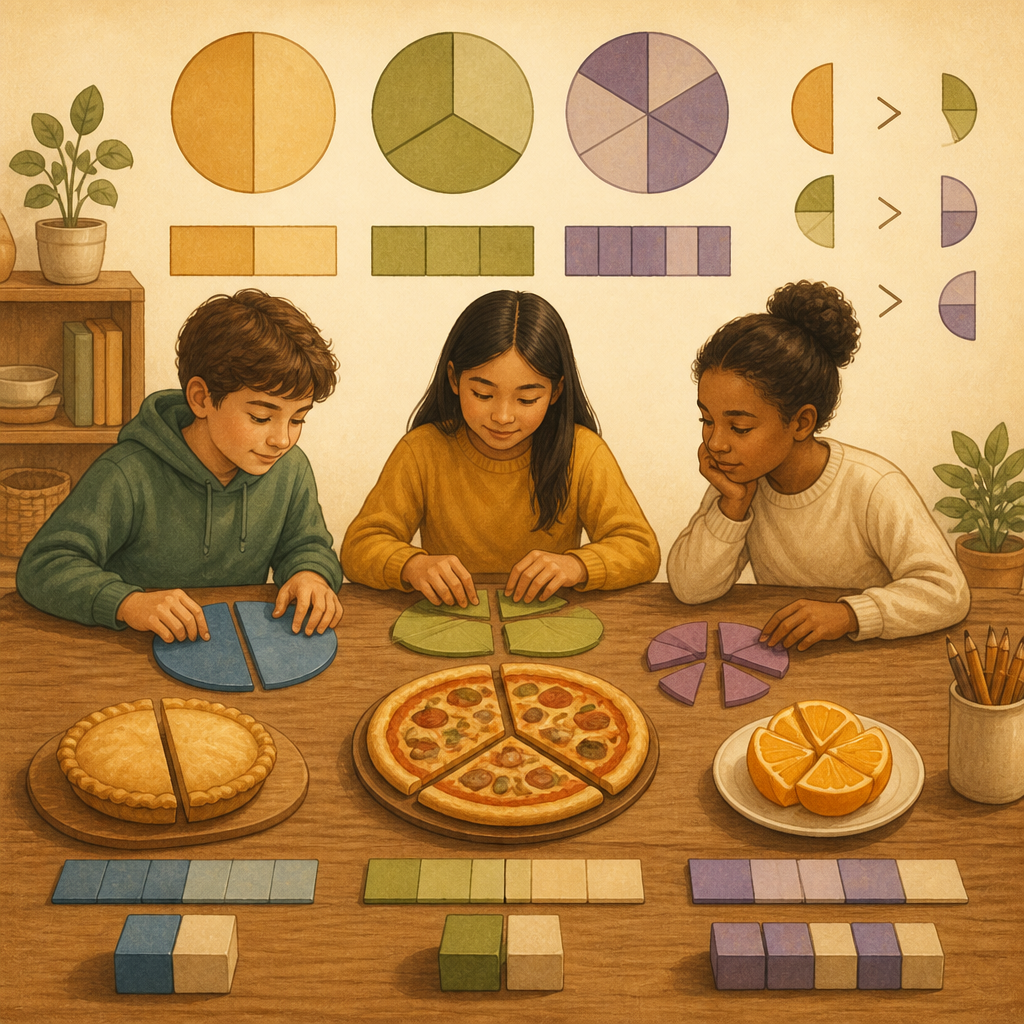
Illustrations are auto-generated and may be placeholders. They can be refreshed to match the narration.
What a fraction means
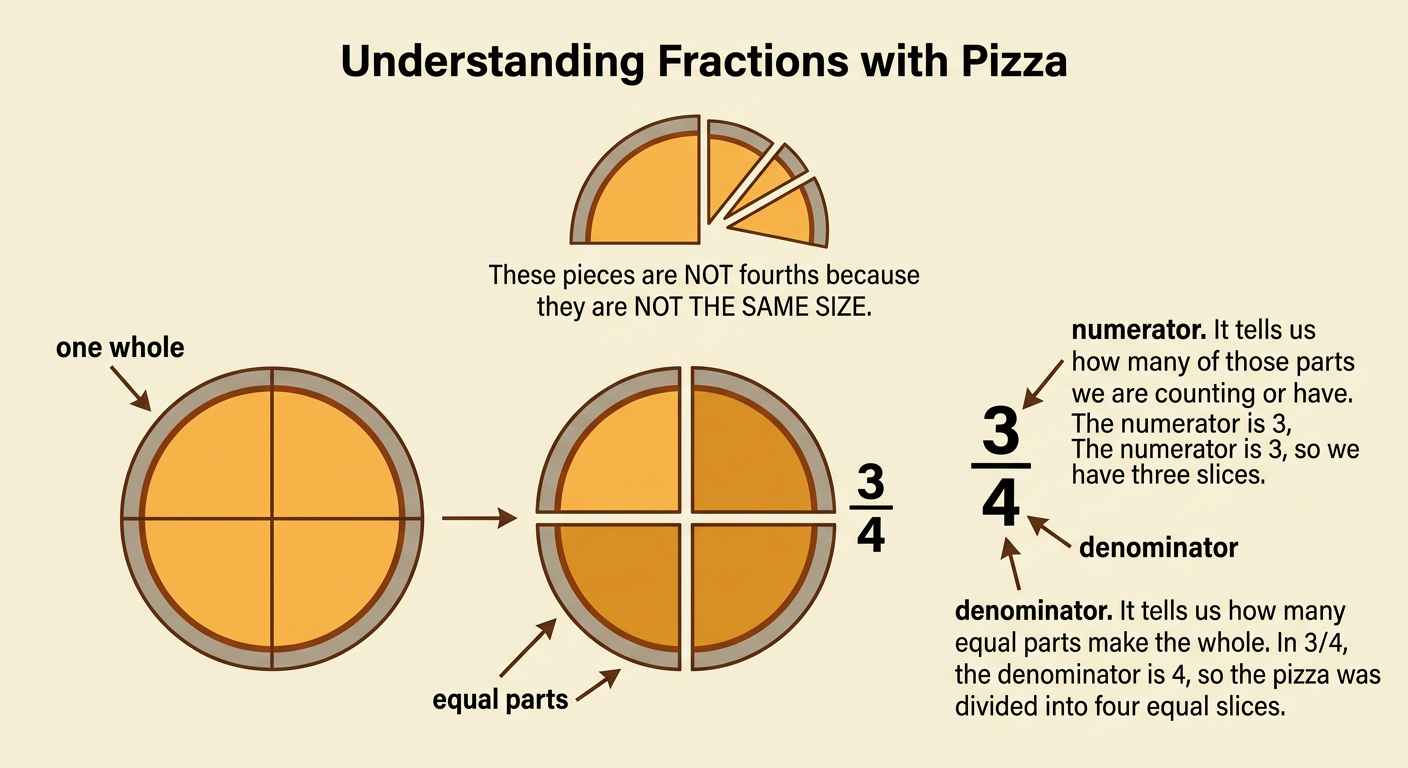
A fraction names equal parts of a whole. The denominator tells how many equal parts the whole is cut into; the numerator tells how many of those parts you have. 3/4 of a pizza means the pizza was cut into 4 equal slices and you have 3 of them.
Comparing and equivalent fractions
Two fractions are equivalent when they name the same amount: 1/2 = 2/4 = 5/10. Multiply or divide the numerator and denominator by the same number to find equivalents. To compare fractions, rewrite them with a common denominator and compare numerators.
Adding and subtracting
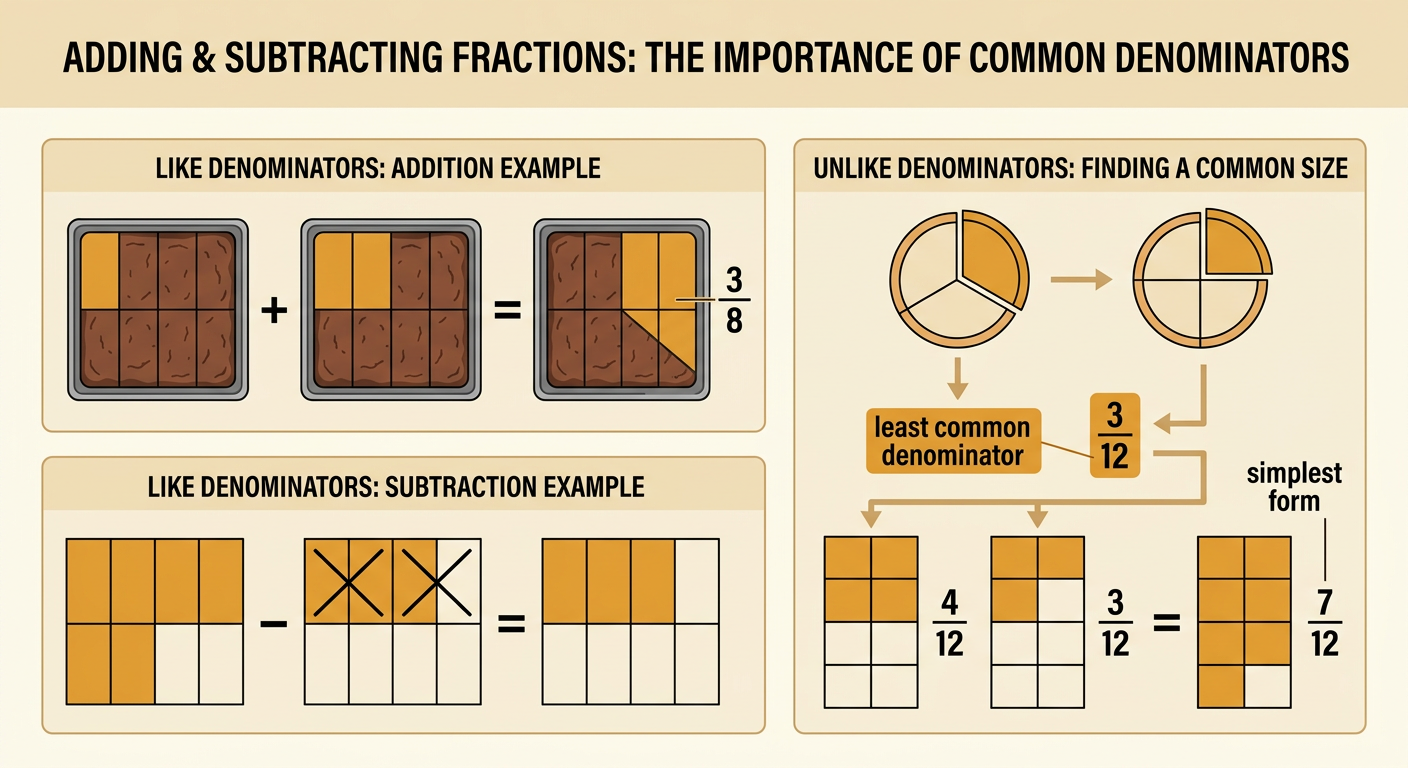
With like denominators, add or subtract the numerators and keep the denominator. With unlike denominators, first rewrite both fractions with the least common denominator: 1/3 + 1/4 becomes 4/12 + 3/12 = 7/12. Always simplify the result.