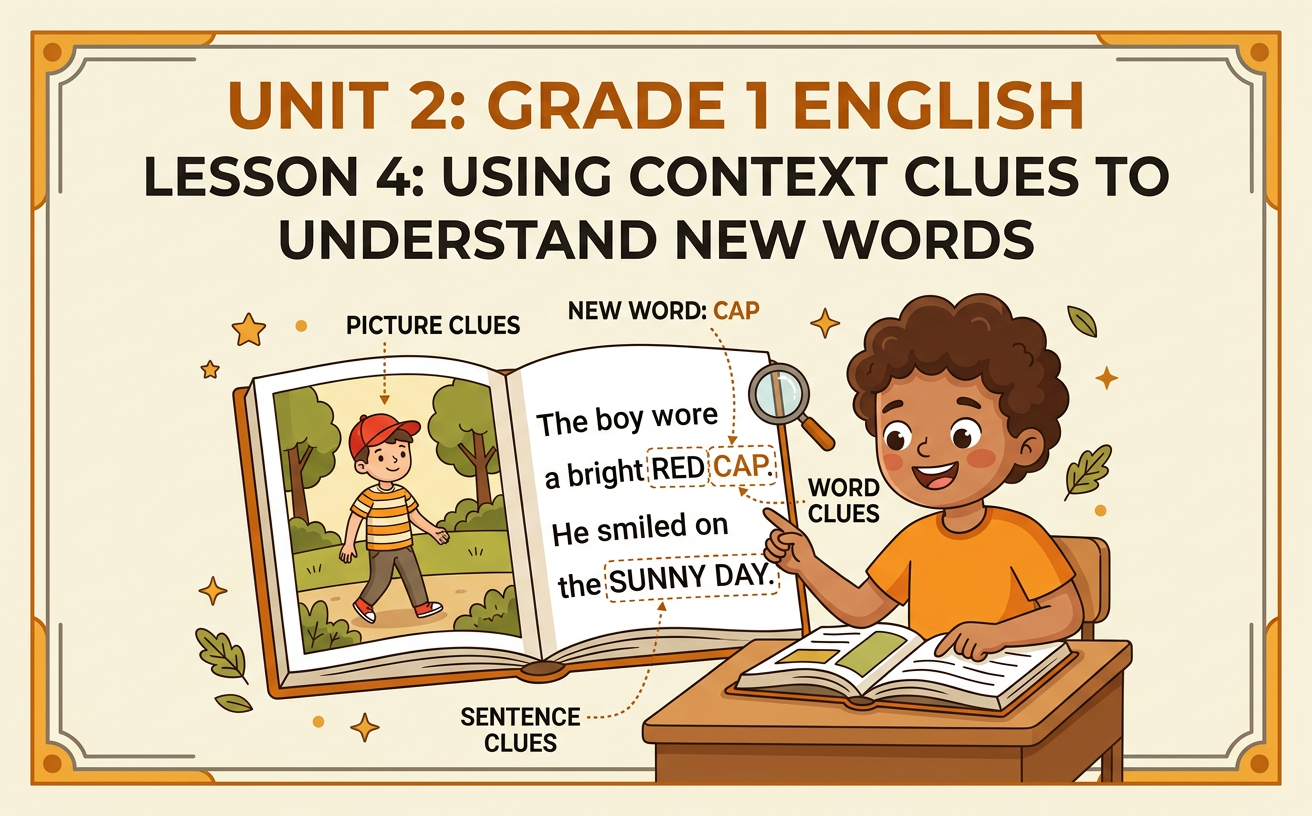
Using Context Clues to Understand New Words
Students use nearby words, sentences, and pictures to determine the meaning of an unfamiliar word in a grade-level text.
Illustrations are auto-generated and may be placeholders. They can be refreshed to match the narration.
Meet the Mystery Word
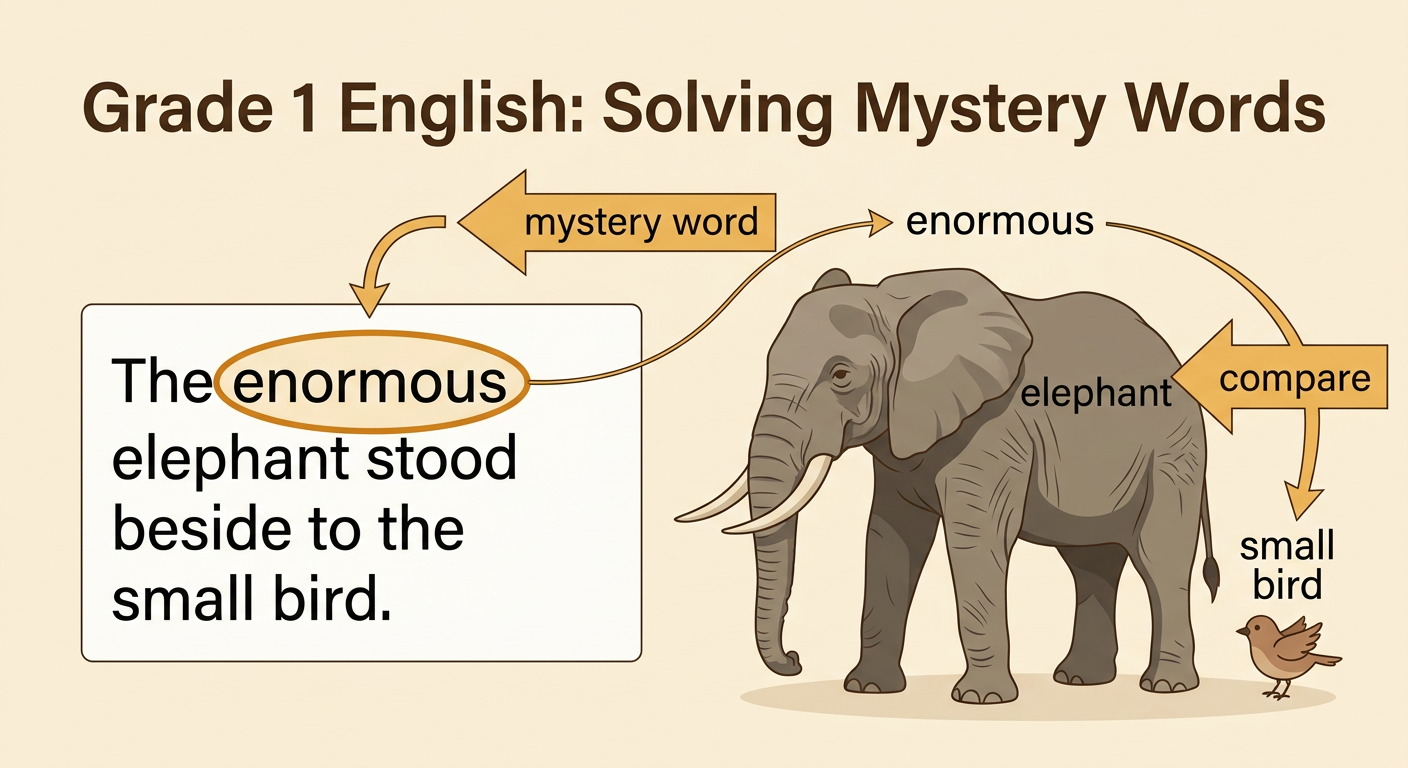
Sometimes you will see a word that you do not know. That word is a mystery word. Do not stop reading or worry. First, say the word slowly and read the whole sentence. In the sentence “The enormous elephant stood beside the small bird,” the word “enormous” may be new. Notice where it appears and what it describes. It describes the elephant. The words “small bird” also give you something to compare with the elephant. These details can help you begin solving the mystery. You do not need to know the meaning right away. Circle the new word in your mind, read the sentence again, and get ready to search for clues.
Read the Words Around It
Words near a mystery word can give clues about its meaning. Read the words before and after the new word. Then ask, “What is happening?” Read this sentence: “Mia put on her coat and mittens because the snowy air was chilly.” Suppose “chilly” is the mystery word. The words “coat,” “mittens,” and “snowy” are helpful clues. People wear coats and mittens when the air is cold. Snow is also connected to cold weather. These nearby words help you understand that “chilly” means cold. Be a word detective. Look through the entire sentence, not only at the mystery word. One clue may help, but several clues can make your answer stronger.

Look for Picture Clues
A picture can help you understand a new word. First, read the sentence. Then study the picture for actions, faces, objects, and places that match the words. Read this sentence: “The kitten peered into the fishbowl.” The word “peered” may be unfamiliar. In the picture, the kitten leans close to the bowl and looks carefully at the fish. The picture gives a clue that “peered” means looked closely. Be sure the picture and sentence work together. Do not guess only from the picture. Ask, “What do I see, and how does it fit the sentence?” A good picture clue supports the meaning suggested by the other words in the sentence.

Try a Possible Meaning
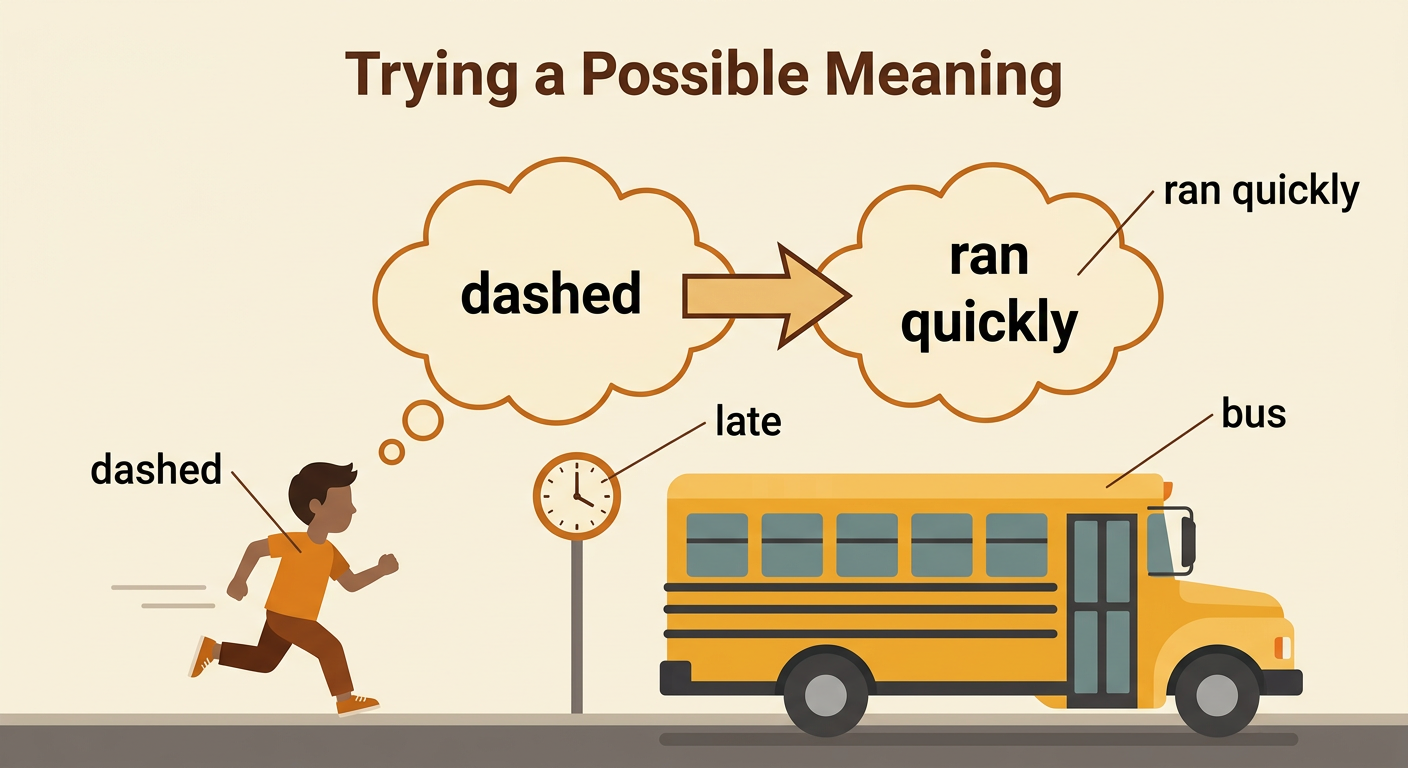
After you find clues, think of a possible meaning for the mystery word. A possible meaning is your best idea based on the sentence. Read: “Sam dashed to the bus because he did not want to be late.” The words “bus” and “did not want to be late” are clues. They suggest that Sam needed to move fast. You can try “ran quickly” as the meaning of “dashed.” Now say the idea in your own words: “Sam ran quickly to the bus because he did not want to be late.” The sentence makes sense. Your first idea may not always be correct, and that is okay. Use every clue, choose a meaning, and be ready to change it if needed.
Check the Meaning in the Sentence
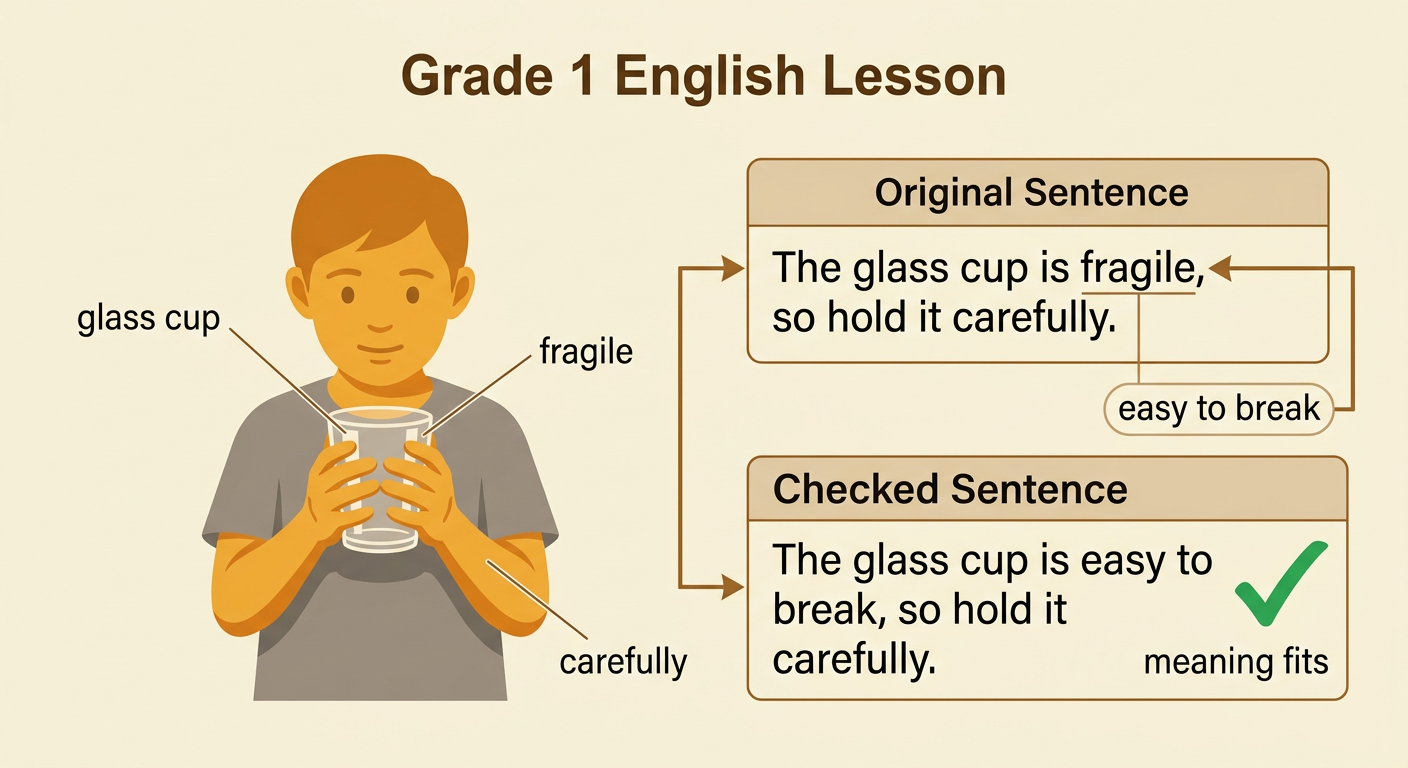
The last step is to check your possible meaning. Replace the mystery word with your meaning and read the sentence again. Try this sentence: “The glass cup is fragile, so hold it carefully.” The words “glass cup” and “hold it carefully” are clues. You may think “fragile” means easy to break. Put that meaning into the sentence: “The glass cup is easy to break, so hold it carefully.” The sentence still makes sense, so the meaning fits. If your new sentence sounds wrong or does not match the clues, try another meaning. Good readers check instead of making a quick guess. Read, replace, and ask, “Does this meaning make sense in the whole sentence?”