Using Evidence to Match Organisms to Biomes
Students analyze abiotic conditions and organism traits to determine which biome can support each organism.
Illustrations are auto-generated and may be placeholders. They can be refreshed to match the narration.
Reviewing Biotic and Abiotic Factors
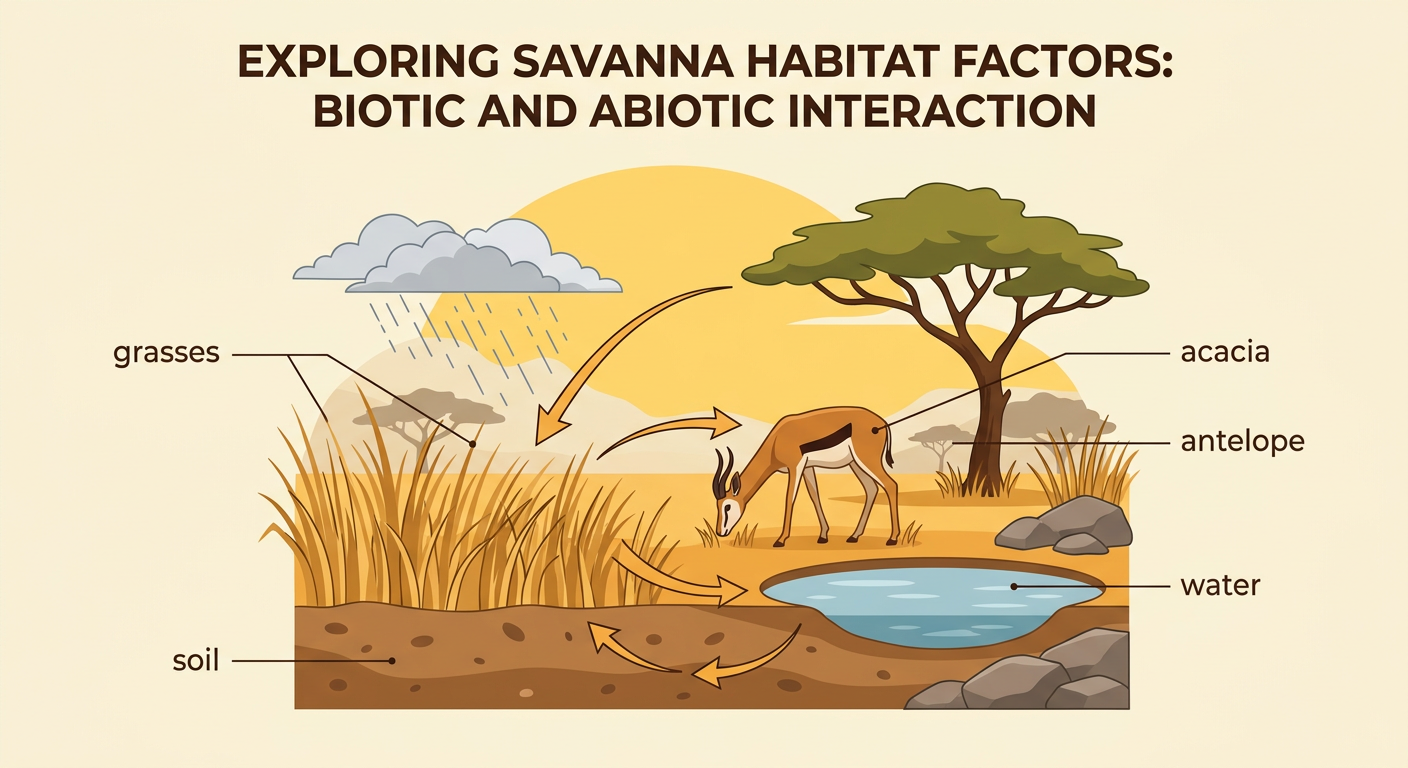
A habitat contains biotic and abiotic factors. Biotic factors are living or once-living parts, such as plants, animals, fungi, dead leaves, and bacteria. Abiotic factors are nonliving conditions, including sunlight, water, air, soil, temperature, and rocks. These factors interact. For example, grasses in a Great Plains prairie need sunlight, soil, and seasonal rain. The grasses provide food for grasshoppers and pronghorn, while decomposers break down dead material and return nutrients to the soil. A change in an abiotic factor can affect many biotic factors. During a drought, less water may reduce grass growth. With less grass available, some plant-eating animals may move away or have less food. Identifying both types of factors helps scientists explain why certain organisms live in a habitat.
Examining Biome Evidence
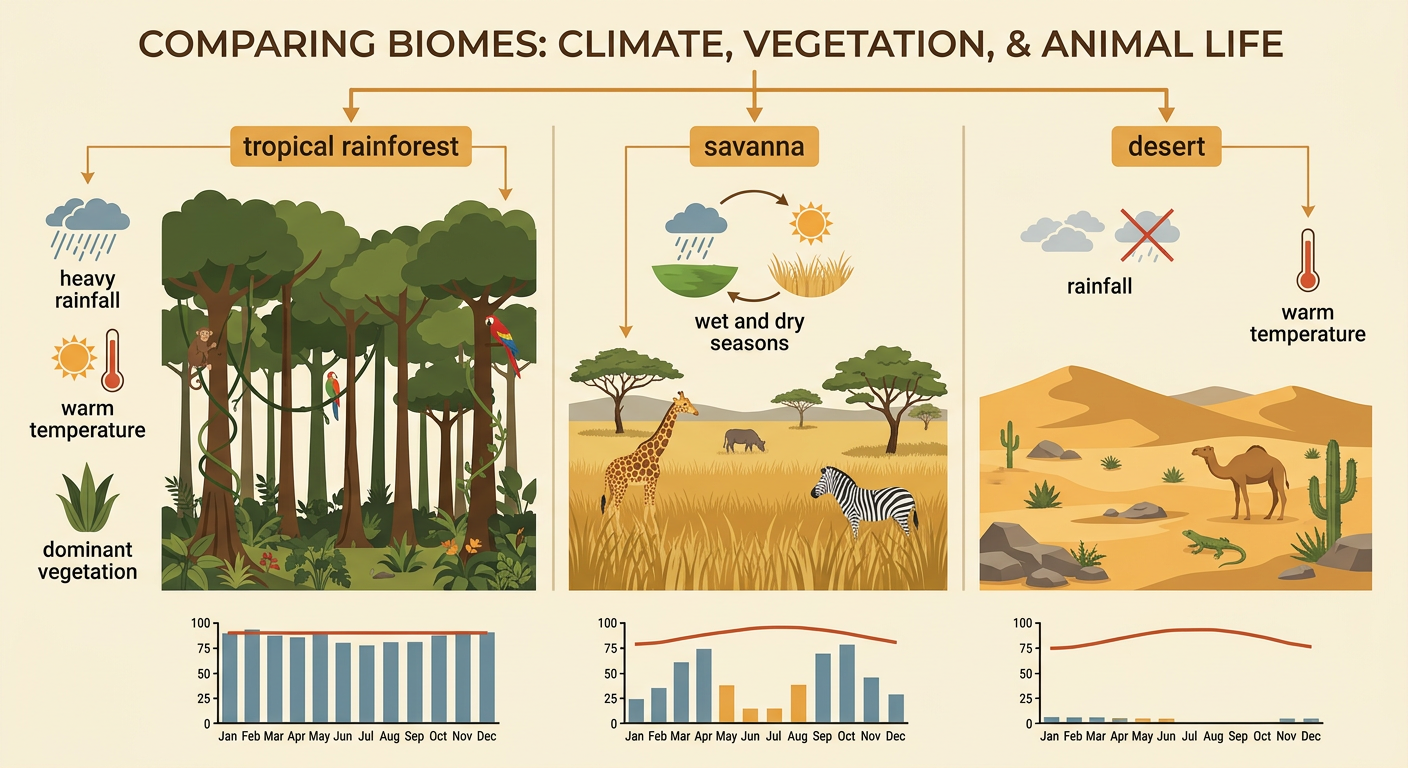
A biome is a large region identified by its climate and common types of plants and animals. To identify a biome, scientists examine evidence rather than relying on one clue. Important evidence includes average temperature, annual rainfall, length of dry or cold seasons, soil condition, and dominant vegetation. A tropical rainforest is warm and receives heavy rainfall during much of the year, so it supports tall, closely spaced trees and many vines. A savanna is also warm, but it has distinct wet and dry seasons, so grasses are common and trees are scattered. A desert receives very little rain and has sparse vegetation. Climate graphs provide useful evidence by showing monthly rainfall and temperature. Reading several types of evidence together produces a more reliable biome identification.
Connecting Traits to Environmental Conditions
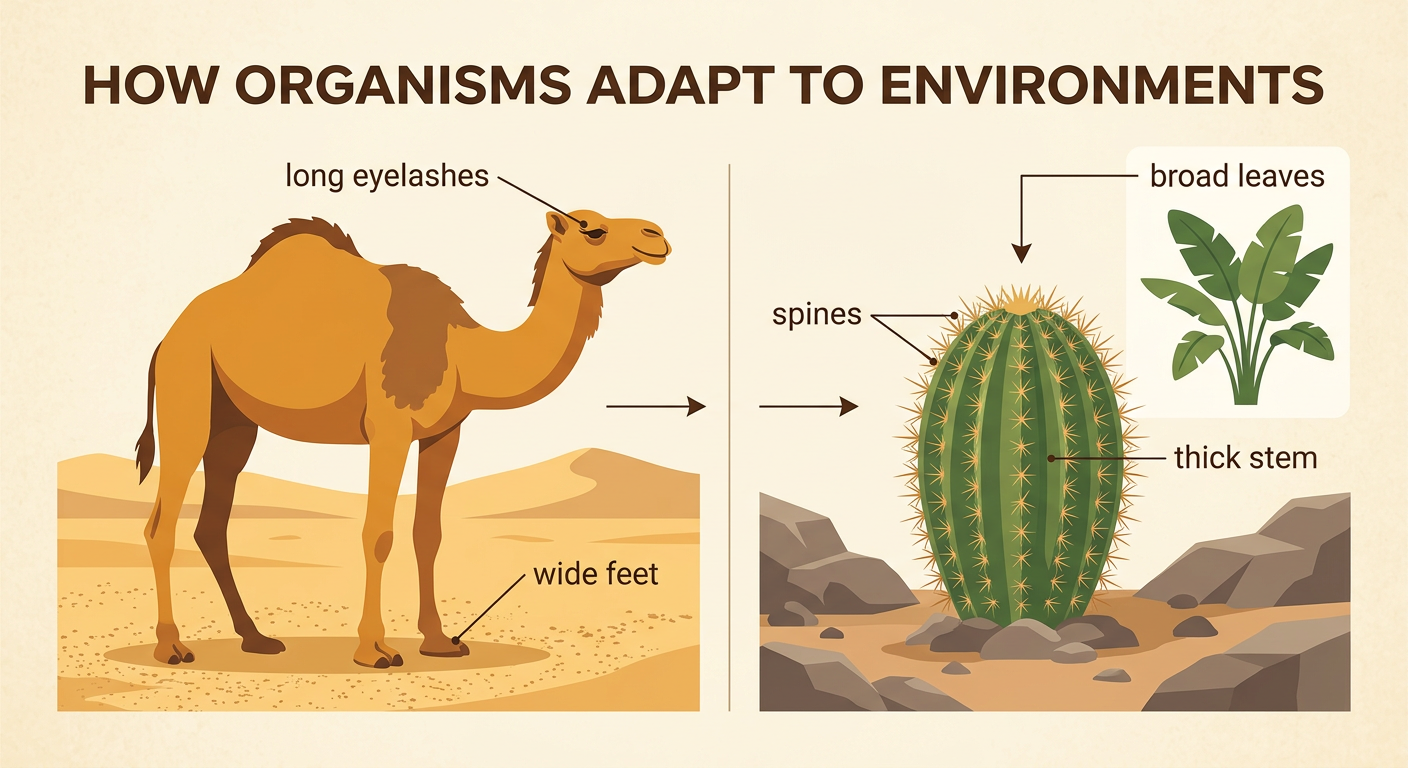
An organism’s traits can provide evidence about the conditions it can survive. A trait is a characteristic, such as body covering, root depth, leaf shape, or behavior. Traits that improve survival in a particular environment are called adaptations. For example, a camel has wide feet that help it walk on loose sand, long eyelashes that help protect its eyes, and the ability to conserve water. These traits suit dry environments, but they do not prove that every camel lives in every desert. Plant traits also reveal environmental connections. A cactus has a thick stem that stores water and spines that reduce water loss and discourage animals from feeding on it. In contrast, broad leaves may help rainforest plants collect sunlight beneath a shaded forest canopy. Scientists connect each trait to a specific environmental challenge.
Matching Organisms to Biomes
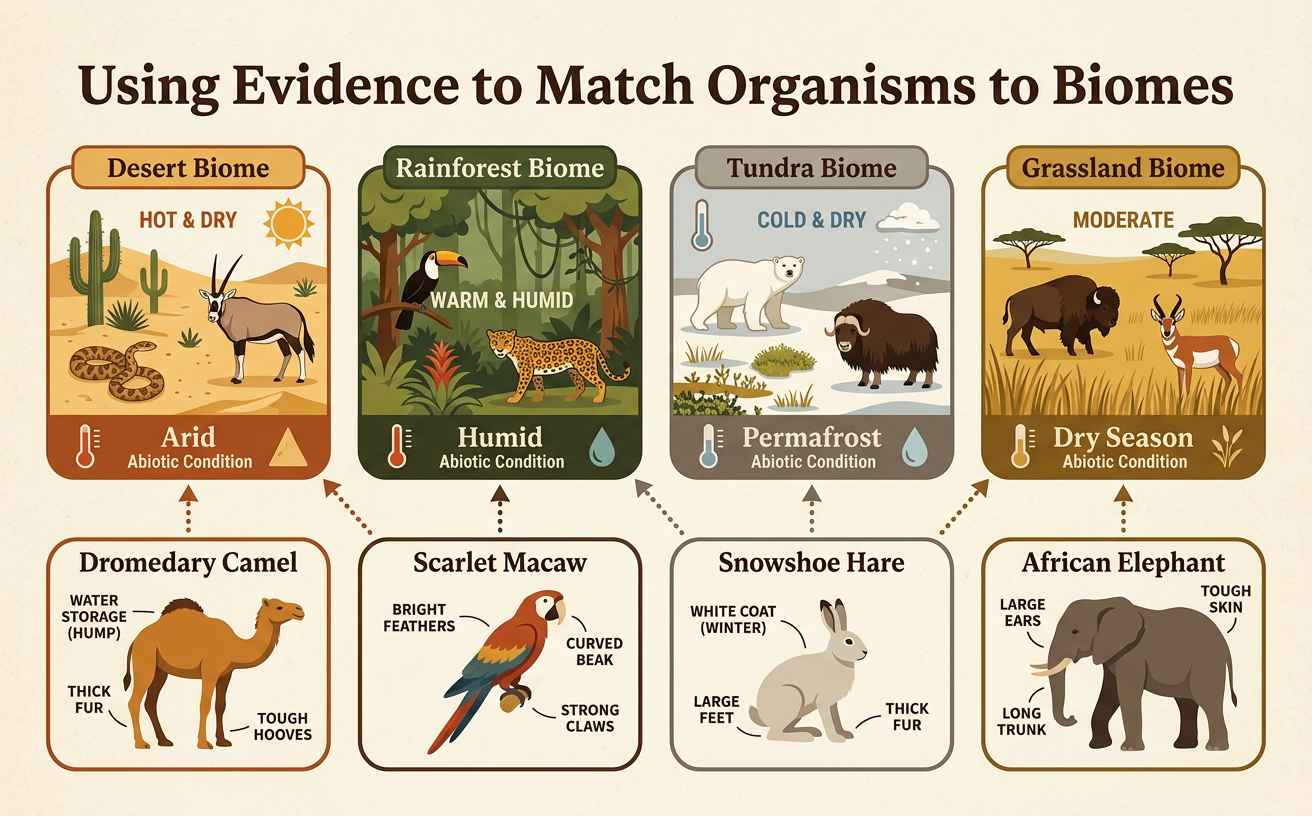
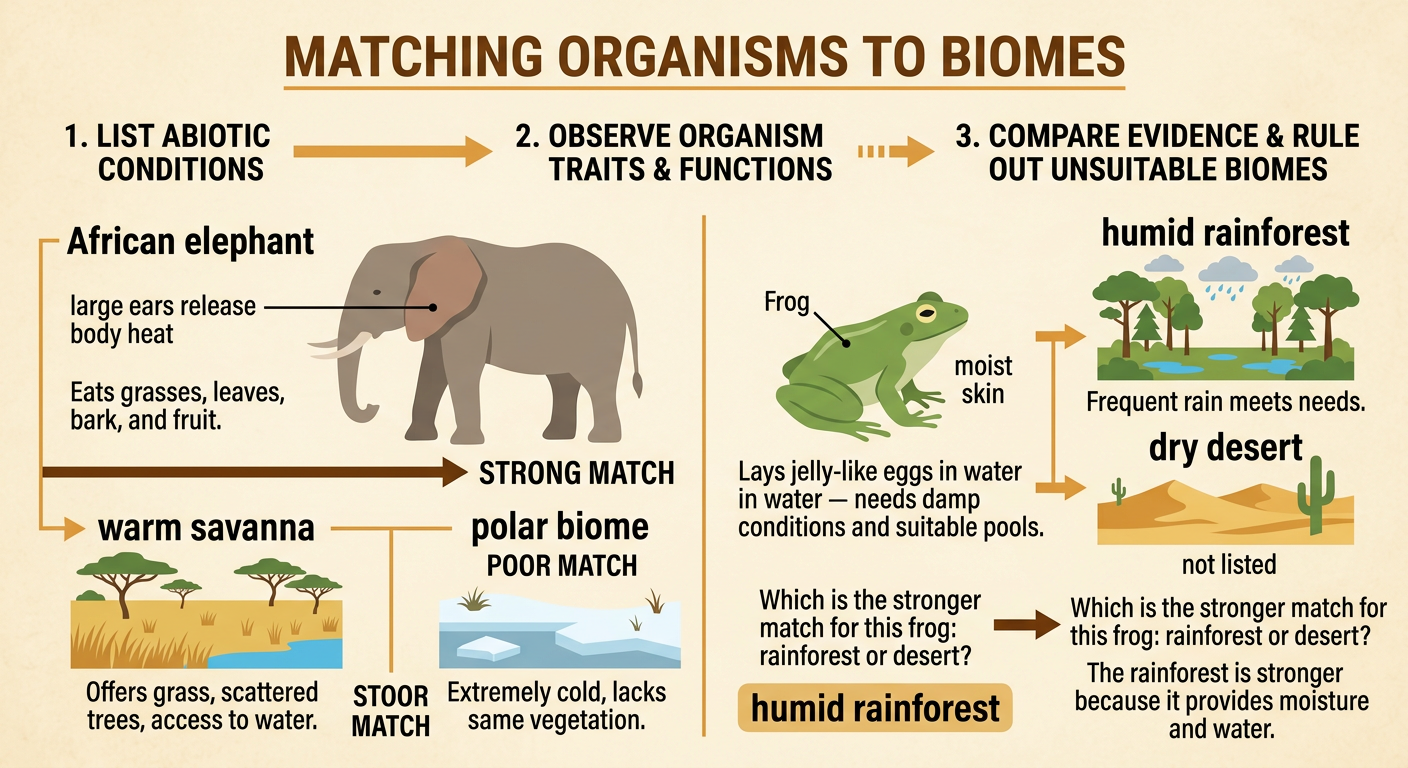
To match an organism to a biome, first list the biome’s abiotic conditions. Next, observe the organism’s traits and decide what each trait helps it do. Finally, compare the evidence and rule out biomes that do not provide suitable conditions. Consider an African elephant. Its large ears release body heat, and its diet includes grasses, leaves, bark, and fruit. A warm savanna with grass, scattered trees, and access to water can provide these resources. A polar biome would be a poor match because it is extremely cold and does not supply the same vegetation. Now consider a frog with moist skin that lays jelly-like eggs in water. A humid rainforest with frequent rain and pools may be a stronger match than a dry desert. A good match must account for several needs, including food, water, shelter, temperature, and reproduction.
Explaining Choices with Evidence
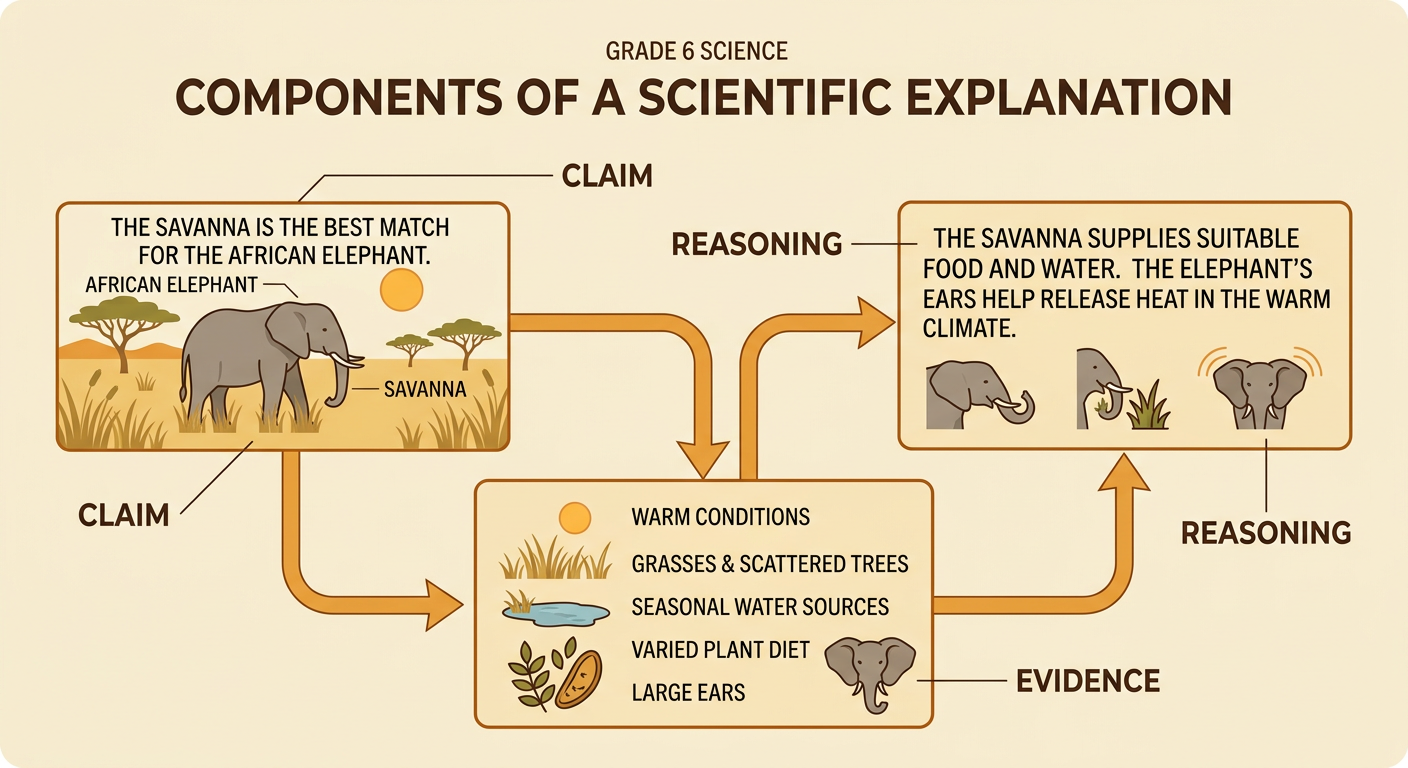
A scientific explanation should include a claim, evidence, and reasoning. The claim states which biome best supports the organism. The evidence gives relevant observations or data about the organism and the biome. The reasoning explains how the evidence supports the claim. For example: “The savanna is the best match for the African elephant. The biome is warm, contains grasses and scattered trees, and has seasonal water sources. Elephants eat grasses and leaves, need drinking water, and use their large ears to release heat. Therefore, the savanna provides suitable food, water, and temperature conditions.” Strong explanations use more than one piece of evidence and avoid unsupported statements such as “It looks right.” Scientists may revise a claim when new evidence appears. Comparing explanations helps students decide which conclusion is best supported by the available information.