Using Illustrations and Words to Describe the Setting
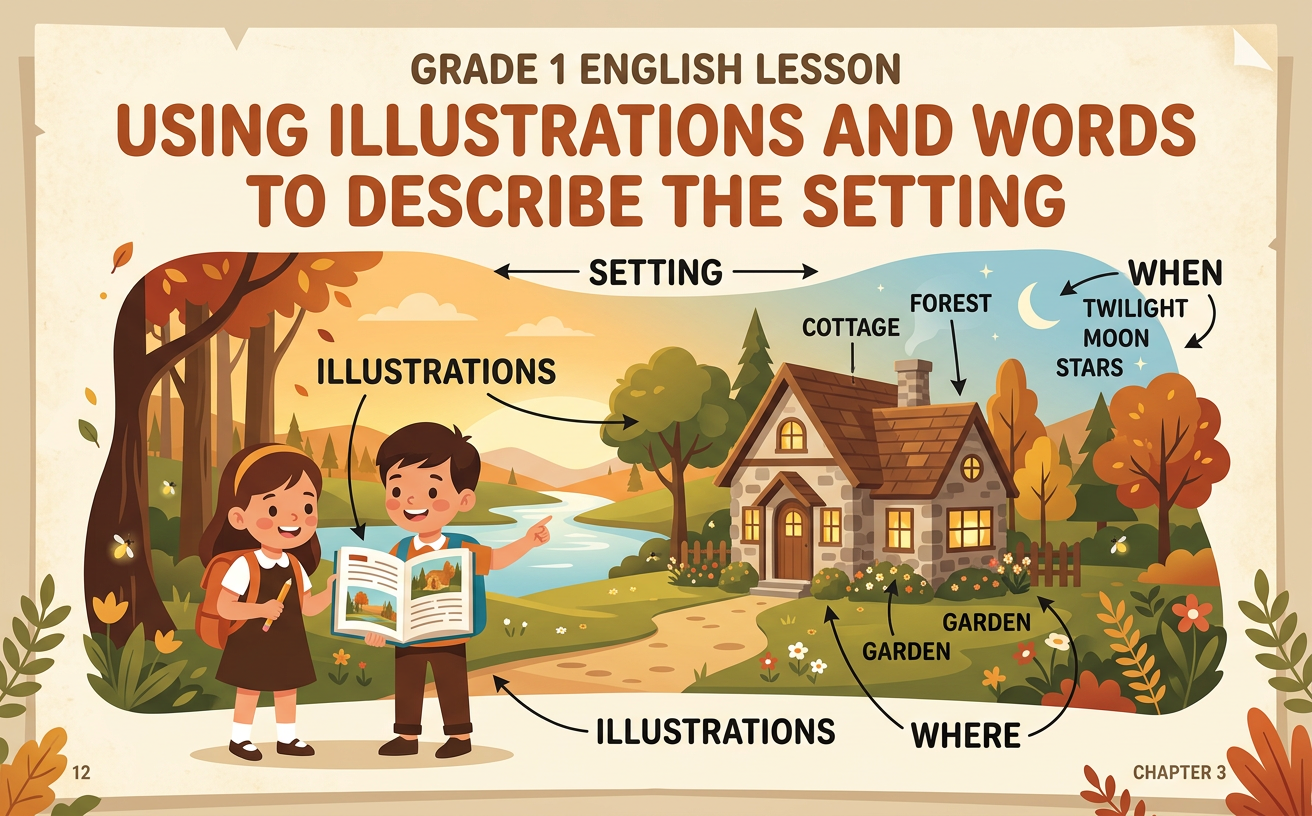
Students use details from a story’s illustrations and words to describe where and when the story takes place.
Illustrations are auto-generated and may be placeholders. They can be refreshed to match the narration.
What Is a Setting?
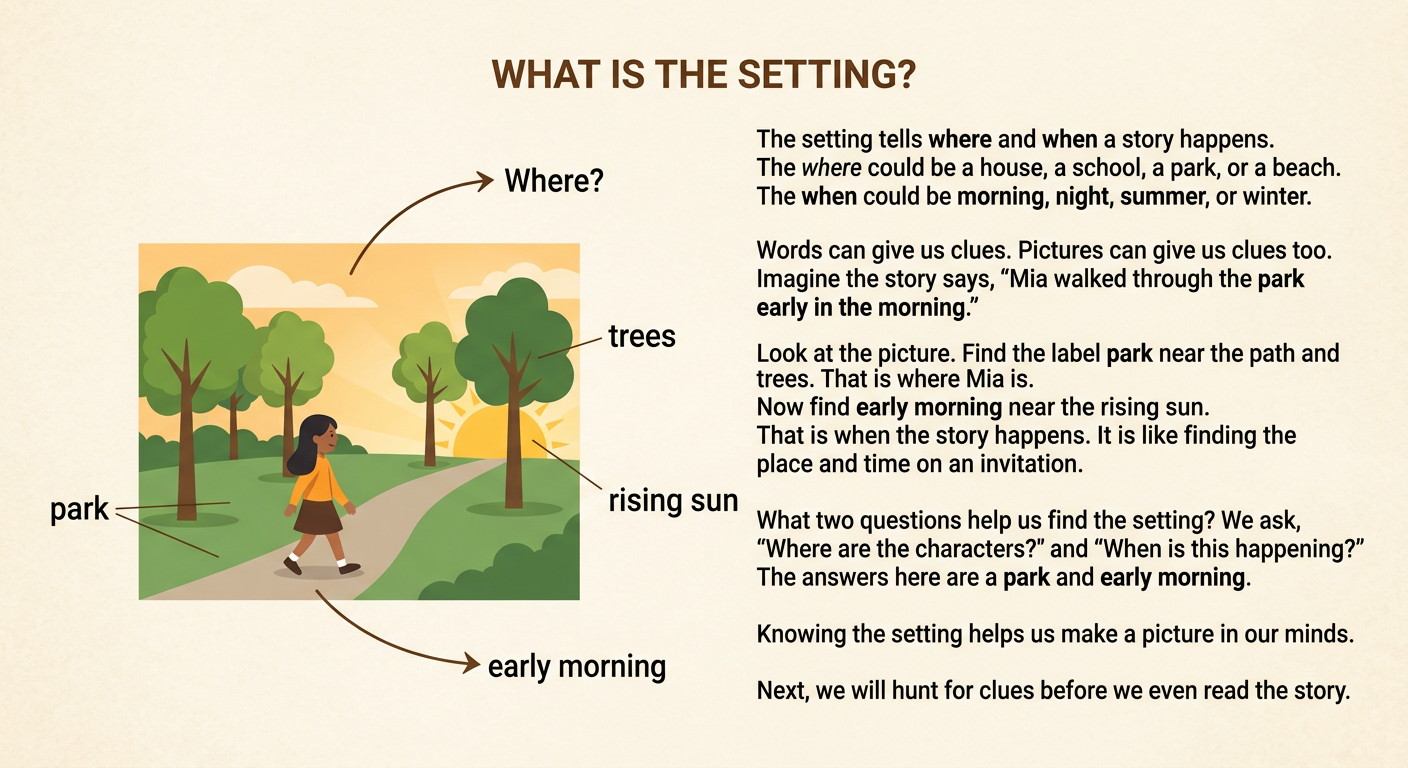
The setting tells where and when a story happens. Where might be a house, a school, a park, or a beach. When might be morning, night, summer, or winter. Both the words and the pictures can give setting clues. Imagine a story that says, “Mia walked through the park early in the morning.” The picture shows Mia near trees, a path, and a rising sun. The park is where the story happens. Early morning is when it happens. Knowing the setting helps you picture the story in your mind. Ask yourself two questions as you read: Where are the characters? When is this happening? Look closely and listen carefully to find the answers.
Picture Walk
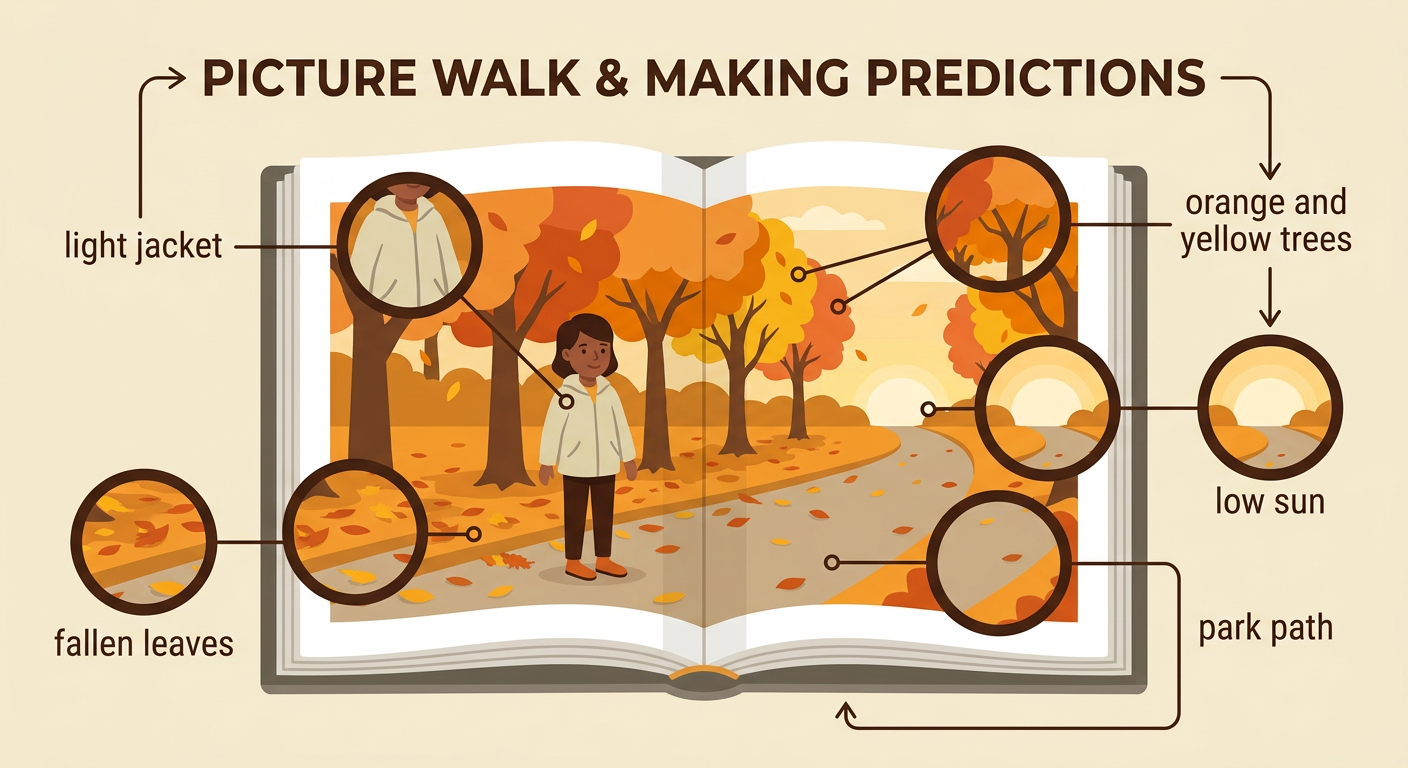
Before reading, take a picture walk. Look through the illustrations without reading every word yet. Notice places, weather, light, clothing, and objects. These details can help you predict the setting. Suppose an illustration shows Mia wearing a light jacket beside orange and yellow trees. Fallen leaves cover the park path, and the sun is low in the sky. You might predict that the story happens in a park during a cool fall morning. Point to each clue that helped you. Do not worry if your prediction changes later. The story’s words may give you more information. A picture walk prepares your brain to listen, read, and check whether your setting prediction is correct.
Listen for Setting Clues
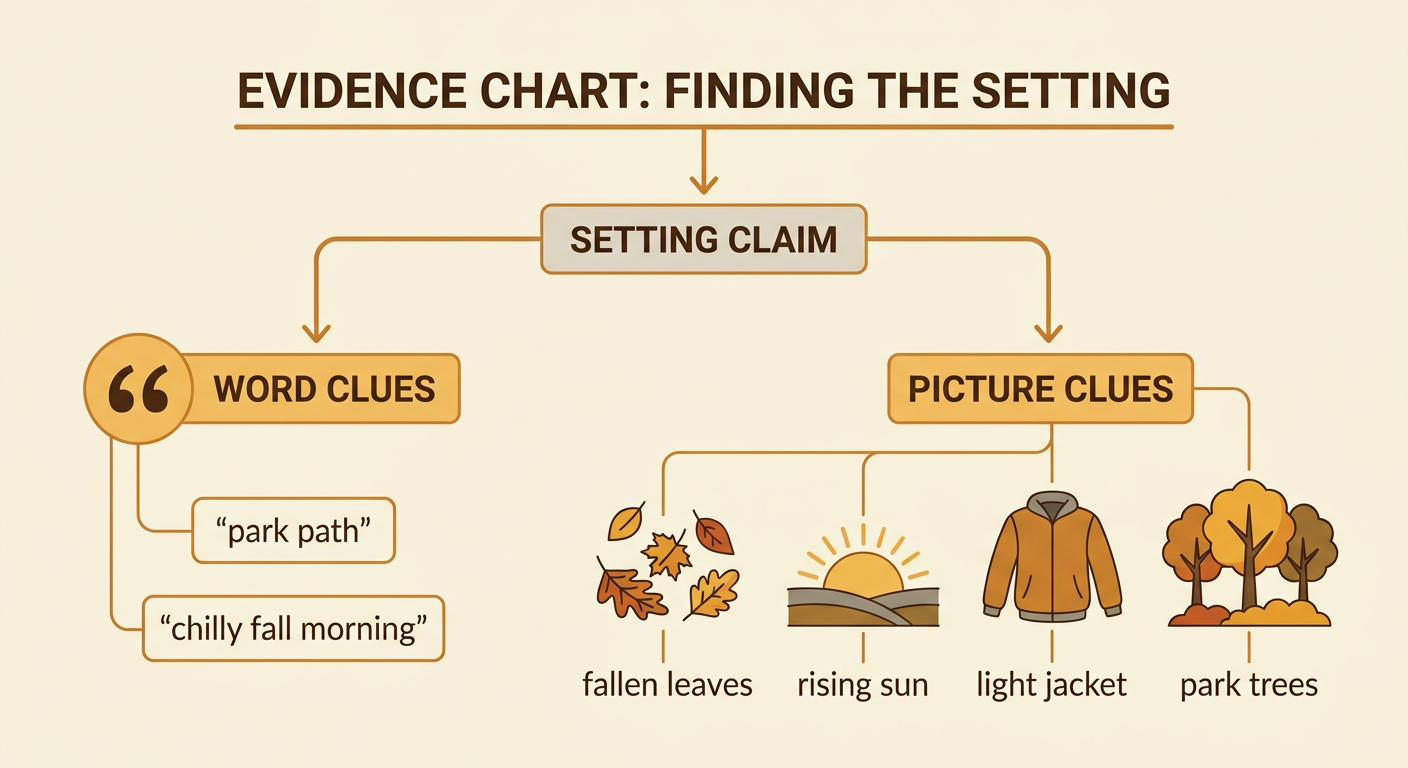
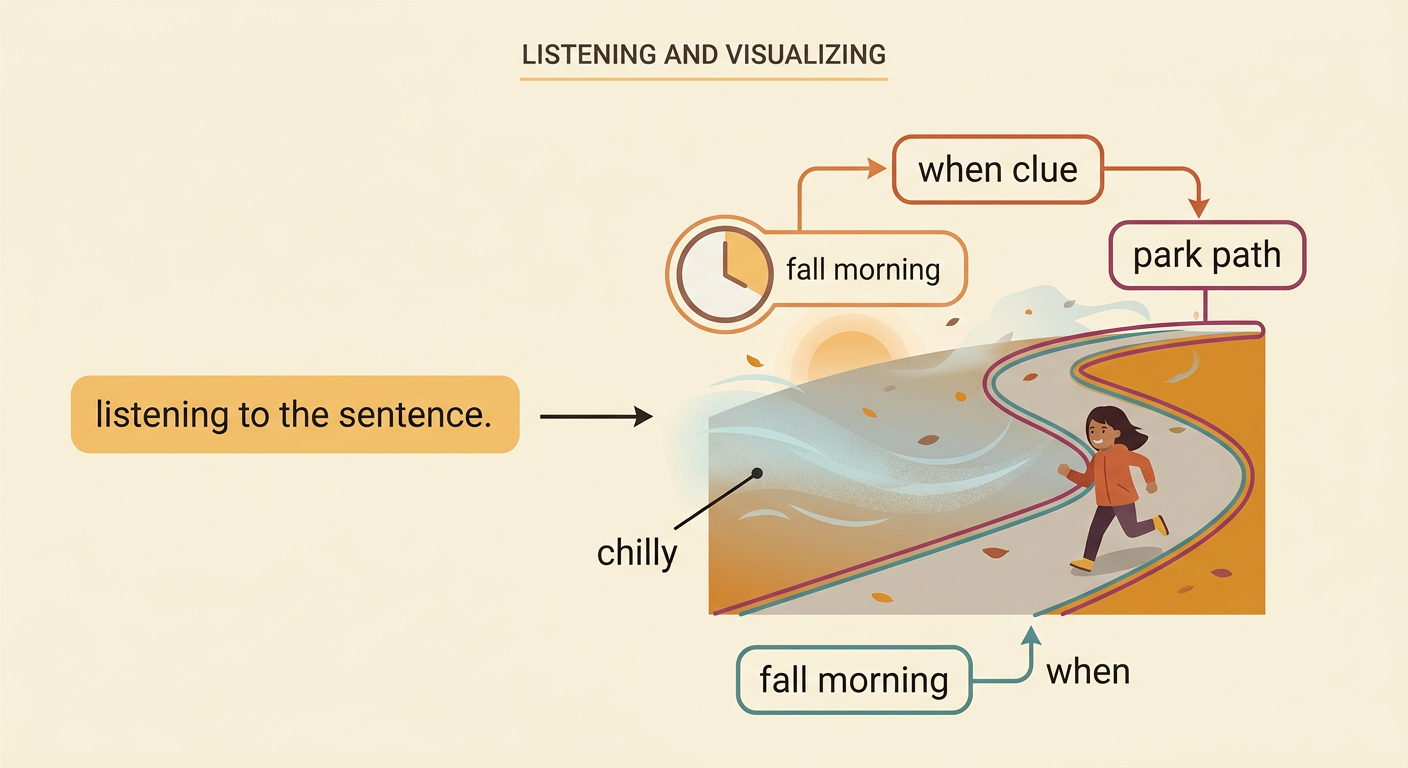
As the story is read aloud, listen for words that tell where and when. Place words may name a park, classroom, kitchen, farm, or other location. Time words may name morning, afternoon, night, a season, or a day. Listen to this example: “On a chilly fall morning, Mia hurried along the park path.” The words “park path” tell where Mia is. The words “fall morning” tell when the event happens. The word “chilly” gives another clue about the season and weather. You can quietly picture the scene as you listen. When you hear a setting clue, remember it or point to a matching detail in the illustration. Strong readers use clues from both sources.
Match Words and Illustrations
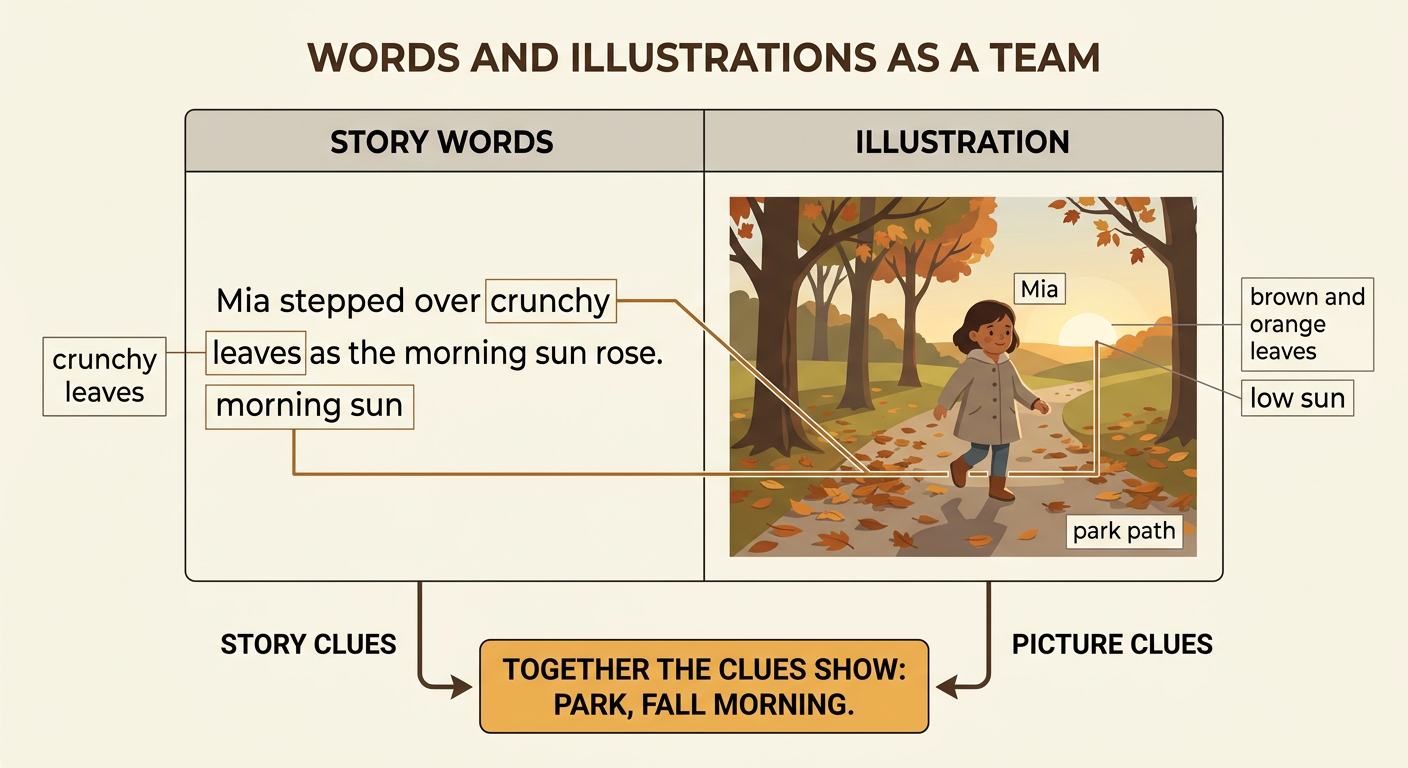
Words and illustrations can work together to show the setting. First, find a setting clue in the words. Next, look for a picture detail that matches it. The story says, “Mia stepped over crunchy leaves as the morning sun rose.” In the illustration, brown and orange leaves cover the path, and the sun appears near the horizon. The leaves match the words “crunchy leaves.” The low sun matches “morning sun rose.” These matching details support the idea that the story happens outdoors in a park on a fall morning. Sometimes a picture adds a detail that the words do not name. Sometimes the words explain a detail more clearly. Use both to build a complete description of the setting.
Describe the Setting
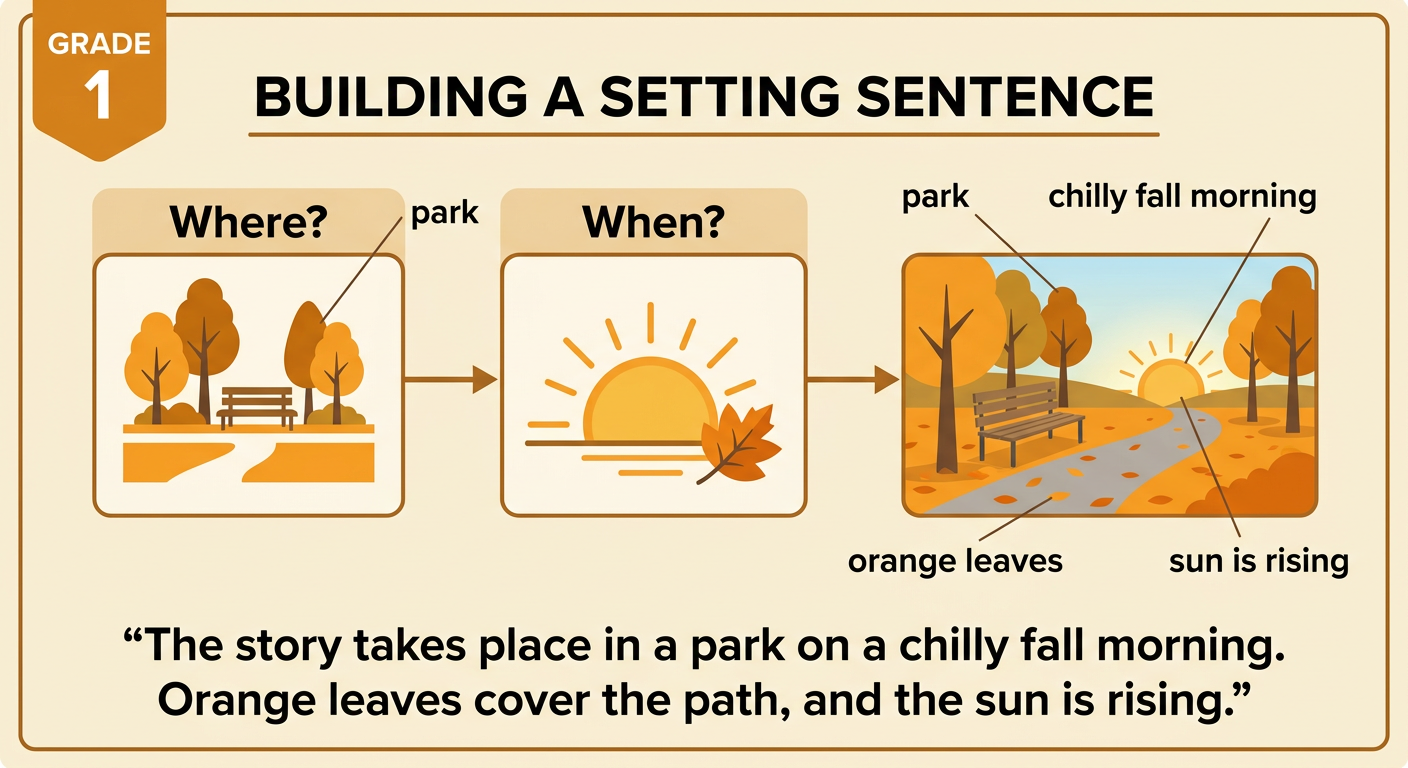
Now use the clues to describe the setting in a complete sentence. Start by naming where the story happens. Then tell when it happens. You may add useful details about weather, light, sounds, or objects. For example, say, “The story takes place in a park on a chilly fall morning.” You can add, “Orange leaves cover the path, and the sun is rising.” This description is clear because it gives both place and time. Avoid saying only, “It is outside,” because that does not give enough information. Check that your description agrees with the story’s words and illustration. A strong setting description helps another reader imagine the scene even without seeing the picture.
Share Evidence
Evidence is a detail that shows how you know your answer is correct. When you share your setting description, name evidence from the words and the illustration. You might say, “The story takes place in a park on a fall morning. The words say ‘park path’ and ‘chilly fall morning.’ The picture shows trees, fallen leaves, and a rising sun.” This answer tells the setting and supports it with clear clues. A classmate may notice different evidence, such as Mia’s light jacket. Listen respectfully and compare the clues. Ask, “Which word or picture detail helped you?” If the evidence matches the setting description, it makes the answer stronger. Readers explain not only what they think, but also how they know.