
Using Wave Patterns to Send Information
Students investigate how repeating sound or light patterns can be used to encode, transmit, and decode simple messages over a distance.
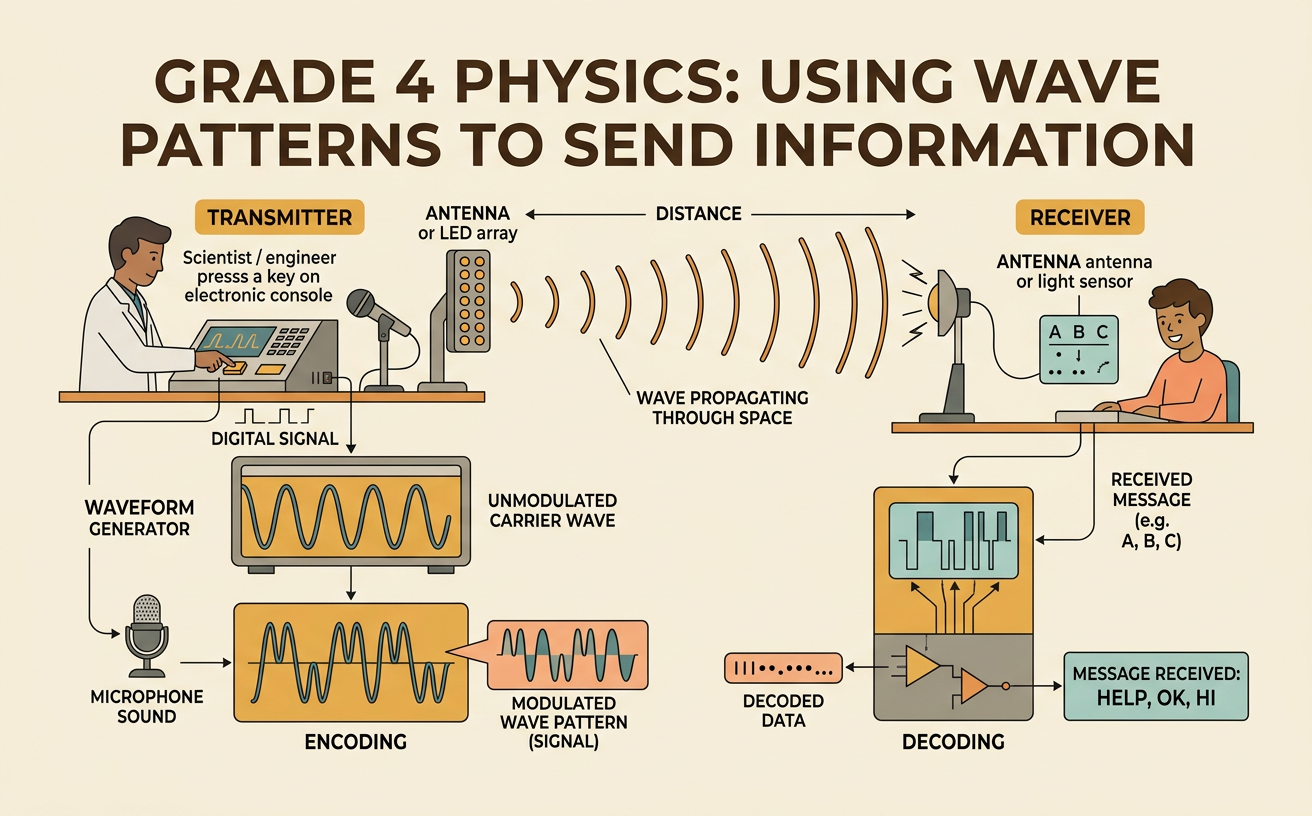
Illustrations are auto-generated and may be placeholders. They can be refreshed to match the narration.
What Is a Signal?
A signal is something that carries information from a sender to a receiver. A signal may be a sound, a flash of light, a hand motion, or another noticeable change. For example, a student can ring a bell once to mean “start” and twice to mean “stop.” The ringing sound travels through the air to the listeners. The listeners recognize the agreed-upon pattern and understand the message. Signals are useful when people are far apart or cannot speak directly. Long ago, people used drums, signal fires, flags, and flashing lamps to communicate over distances. Today, phones and computers also send information with patterns, although these patterns may travel as radio waves, electrical signals, or light. A signal works only when the sender and receiver understand what its pattern means.

Patterns in Sound and Light
A pattern is an arrangement that repeats or follows a rule. Sound patterns can use long and short sounds, loud and soft sounds, or different numbers of beats. Light patterns can use long and short flashes, bright and dim flashes, or different colors. Imagine that one short flashlight flash means “yes” and two short flashes mean “no.” A sender can repeat the chosen pattern so a receiver can observe and decode it. The spaces between sounds or flashes are important because they show where one part of a message ends and another begins. A sound signal needs matter, such as air, through which to travel. Light can travel through empty space as well as through air. Both kinds of patterns can carry information, but obstacles, distance, background noise, or bright sunlight may make a signal harder to detect.

Create a Message Code
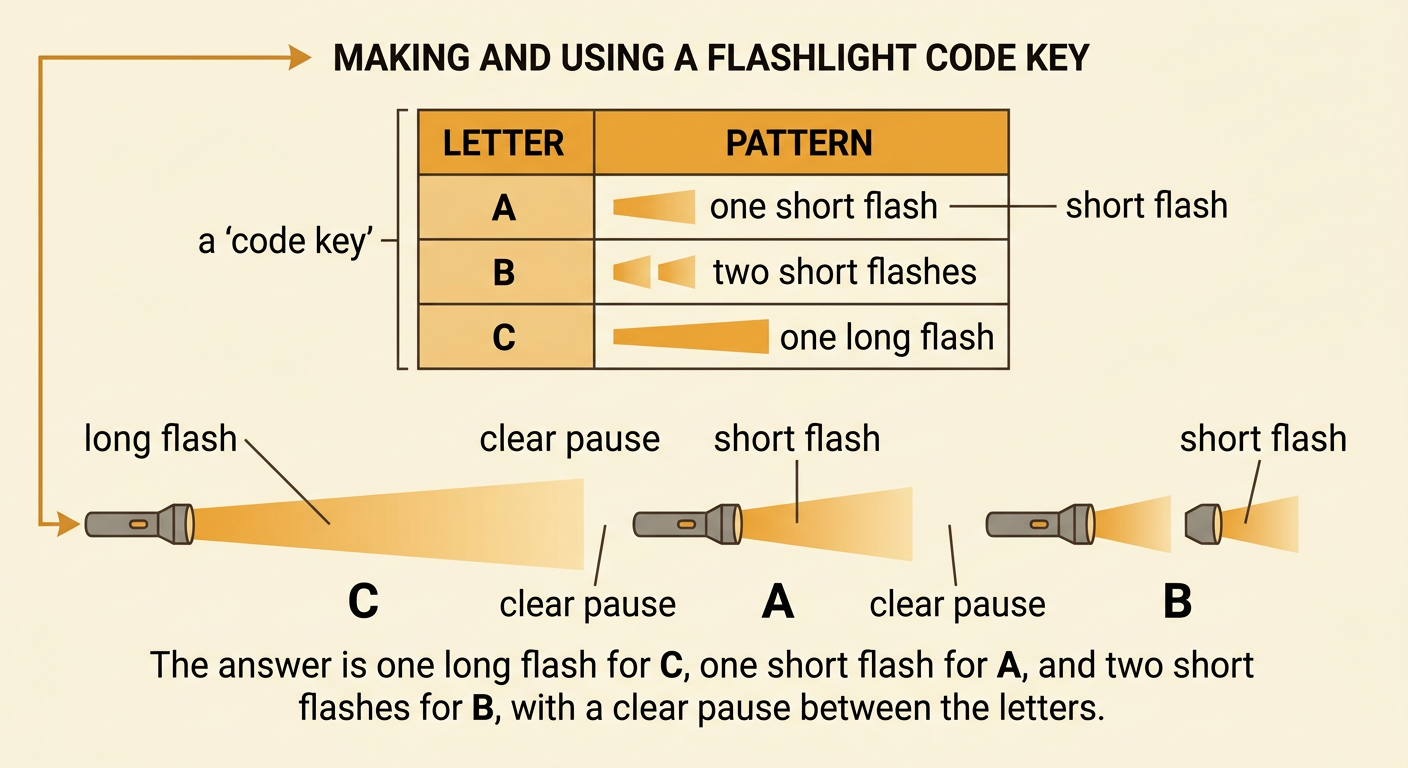
A code is a set of rules that gives meaning to signal patterns. To create a code, first choose a signal, such as claps or flashlight flashes. Next, assign a different pattern to each word or letter you need. For example, one short flash could mean “A,” two short flashes could mean “B,” and one long flash could mean “C.” Use a clear pause between letters and a longer pause between words. Record every rule in a code key so both partners use the same meanings. Then test the code with a short message, such as “CAB.” Good codes have patterns that are easy to tell apart. Compare two possible codes before choosing one. A code with very similar patterns may cause mistakes, while a code with clear differences may be easier to send and decode.
Transmit and Decode a Message
To transmit a message, the sender produces the coded patterns in the correct order. The receiver watches or listens carefully, records each pattern, and uses the code key to decode the message. Suppose a team uses claps: one clap means “go,” two claps mean “stop,” and three claps mean “help.” If the sender claps three times, pauses, and then claps once, the receiver writes “help, go.” Partners should compare the original message with the decoded message to check accuracy. If they differ, the team can discuss what happened. A clap may have been too quiet, a pause may have been too short, or background noise may have covered the signal. Team members can improve the system by slowing the pattern, repeating the message, increasing the signal strength, or choosing a quieter location. Everyone should share observations and listen to teammates’ ideas.

Compare Communication Solutions
Different communication solutions work better in different situations. Students can compare sound and light systems by considering distance, speed, accuracy, safety, and needed materials. A drum signal may be easy to hear at night, but wind or other sounds can interfere. A flashlight signal may be quiet and quick, but a wall can block it and sunlight can make it difficult to see. In the past, people used signal fires, drums, flags, and telegraph codes because they did not have mobile phones. A telegraph sent coded electrical pulses through wires, allowing messages to travel much faster than a person carrying a letter. Today, digital devices send coded patterns rapidly over great distances. No solution is best for every setting. Students should use test results to explain which design works best for a particular task and suggest evidence-based improvements.
