
Viking Longships and North Atlantic Expansion
Students examine how Viking ship technology, geography, and settlement goals enabled Norse exploration, trade, and expansion across the North Atlantic.

Illustrations are auto-generated and may be placeholders. They can be refreshed to match the narration.
The Viking World
From the late 700s through the 1000s, Norse communities in present-day Norway, Sweden, and Denmark became increasingly connected by sea. Scandinavia had long coastlines, deep fjords, many islands, and limited farmland in some regions. These geographic conditions encouraged skilled shipbuilding and sailing. Norse travelers had different goals: some raided wealthy sites, while others traded, explored, migrated, or searched for farmland. The word Viking often refers to people who joined overseas expeditions, not every person living in Scandinavia. In 793, raiders attacked the monastery at Lindisfarne off the coast of England. That event became famous, but Norse activity also included peaceful commerce and permanent settlement. Ships connected farms and ports to a much larger world.

Challenges of North Atlantic Travel
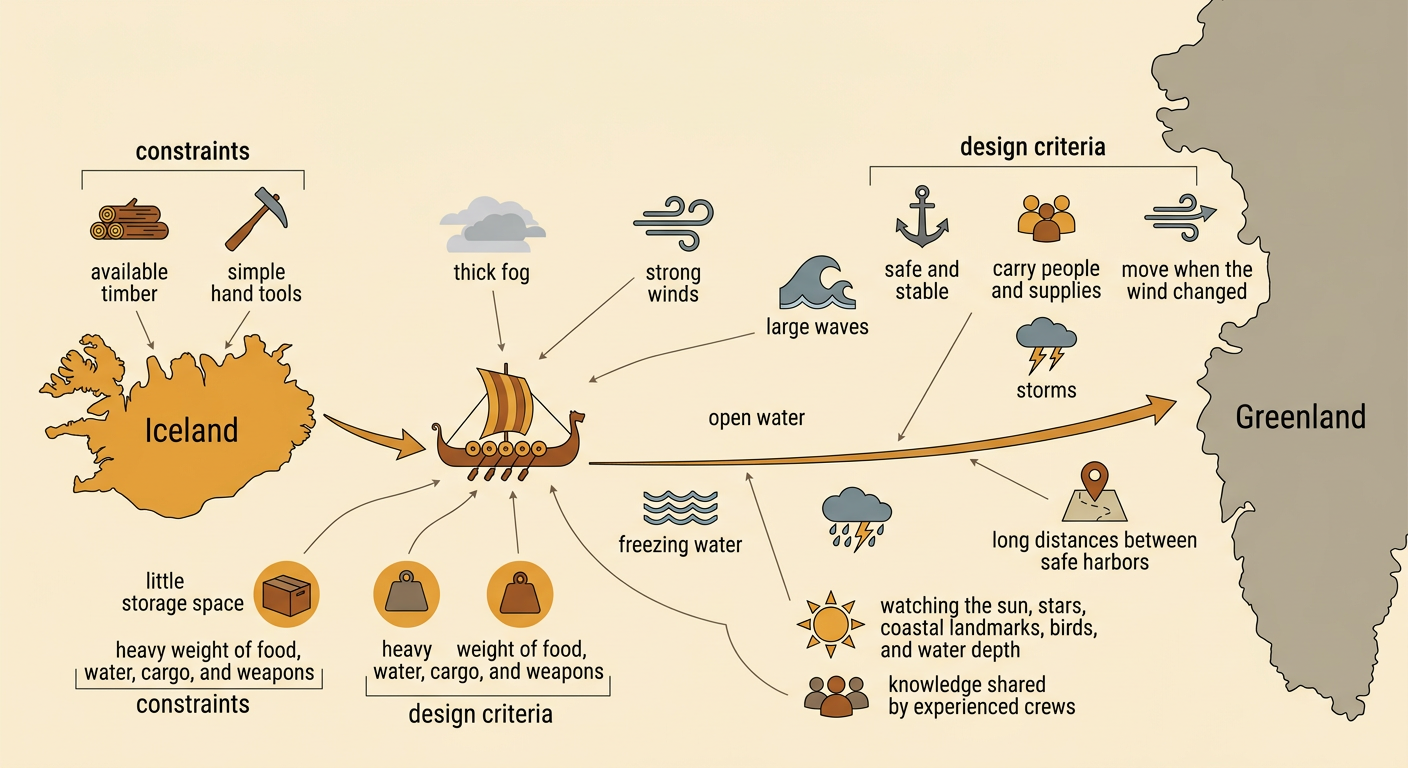
North Atlantic sailors faced cold water, strong winds, fog, storms, waves, and long distances between safe harbors. A successful ship had to remain seaworthy, carry people and supplies, and move under changing wind conditions. These were design criteria. Builders also faced constraints, including available timber, simple hand tools, limited storage space, and the weight of food, water, cargo, and weapons. Sailors could use the sun, stars, coastal landmarks, bird movements, water depth, and knowledge passed down by experienced crews to guide travel. For example, a voyage from Iceland to Greenland required crossing hundreds of miles of open water. A damaged sail, lost direction, or shortage of drinking water could turn the journey into a deadly emergency.
How Longships Worked
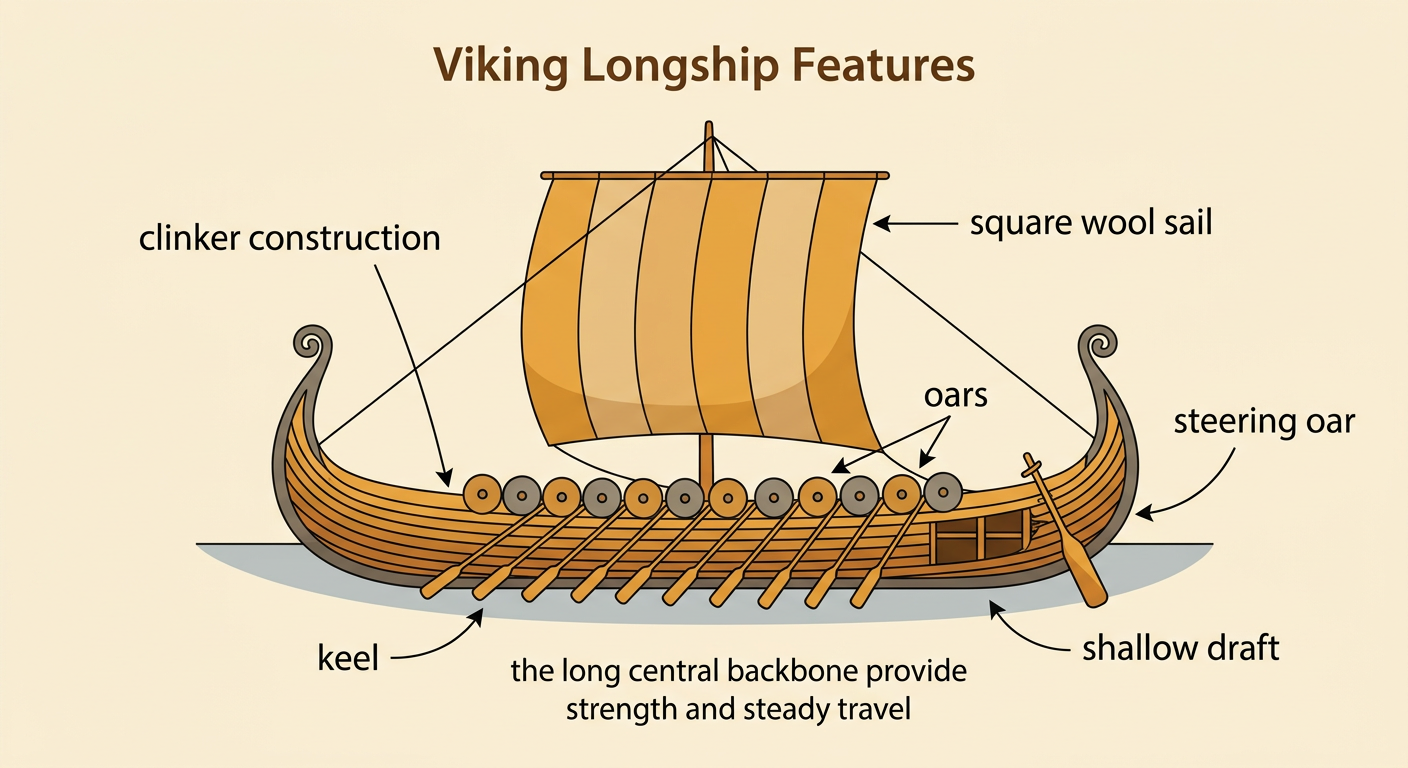
Viking longships combined several design features that made them fast and adaptable. Builders used clinker construction, overlapping wooden planks fastened together along the hull. This created a strong but somewhat flexible hull that could handle rough water. A long central keel improved strength and helped the ship move steadily. A square wool sail captured wind, while rows of oars allowed movement when winds were weak or when crews needed precise control. A steering oar was attached near the right rear side. The shallow draft let a longship enter rivers, approach beaches, and land without a deep harbor. For example, a crew could sail across the sea, row up a river, and pull the ship onto shore. Broader ships called knarrs carried more cargo on long voyages.
Routes of Trade and Exploration
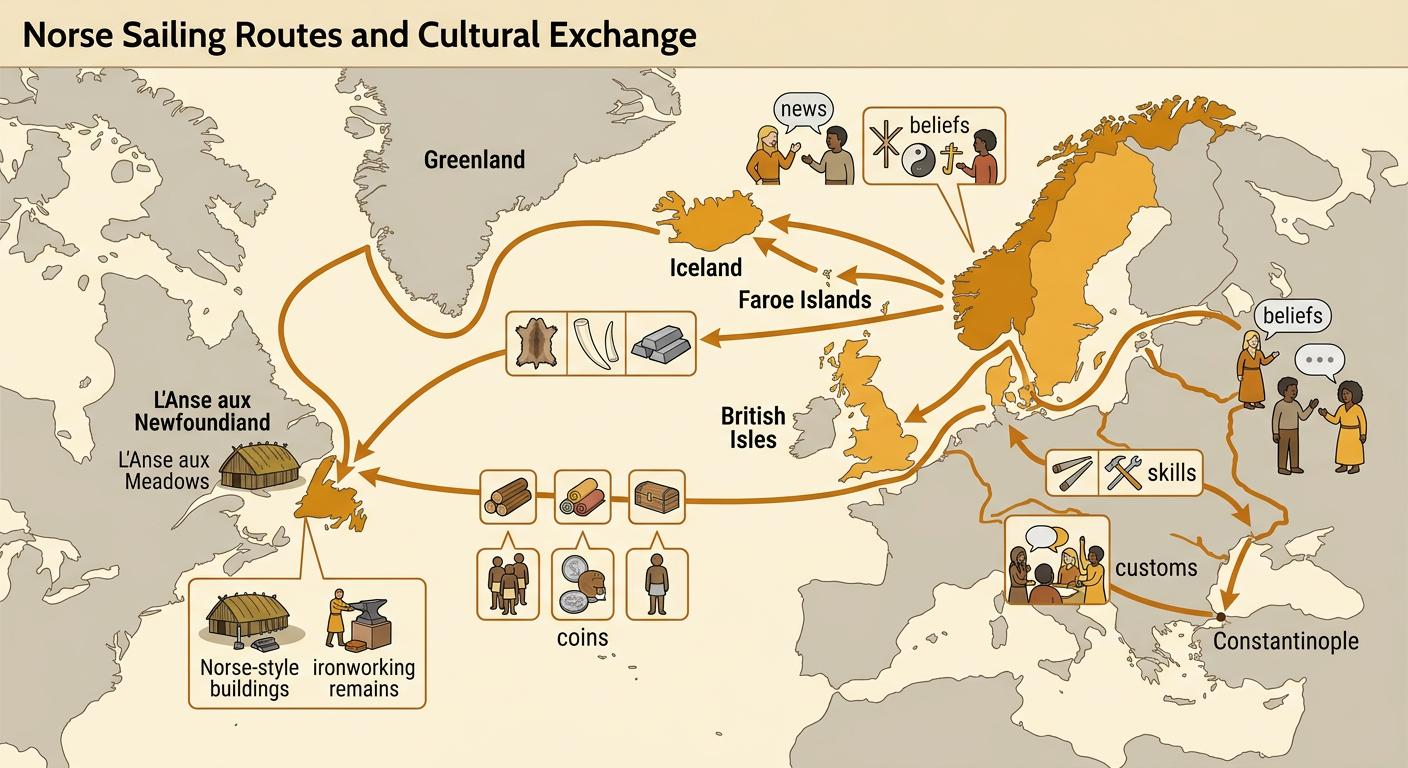
Norse sailing routes formed a network across the North Atlantic and beyond. Travelers from Scandinavia reached the British Isles, the Faroe Islands, Iceland, Greenland, and eventually the coast of North America. Other routes crossed the Baltic Sea and followed eastern European rivers toward the Black Sea and Constantinople. Ships carried furs, walrus ivory, iron, timber, cloth, enslaved people, silver, and other goods. Travelers also carried news, beliefs, skills, and customs between distant communities. Around the year 1000, Norse voyagers established a small site at L'Anse aux Meadows in present-day Newfoundland. Archaeological evidence there includes Norse-style buildings and ironworking remains. The settlement was not permanent, but it proves that Norse explorers reached North America centuries before Columbus's voyages.
Settlements and Cultural Exchange
Norse expansion created settlements linked by ships, but each settlement faced different conditions. Migrants established communities in Iceland during the late 800s and in Greenland during the late 900s. They built farms, raised animals, hunted, fished, and depended on imported materials that local environments could not provide. Regular sea travel carried tools, timber, luxury goods, messages, and new settlers between communities. Contact with other peoples sometimes produced trade and cultural exchange, but it could also cause conflict, conquest, and displacement. In parts of England, Scandinavian settlers lived near Anglo-Saxon communities. Their influence remains in place names ending in by, meaning a village or farm, and in words that entered English. These examples show how transportation technology connected settlements and helped spread cultural practices.
