
Voting on a Cleaner Classroom
Students discuss ways to reduce classroom waste, listen to classmates, and vote on one solution to try together.
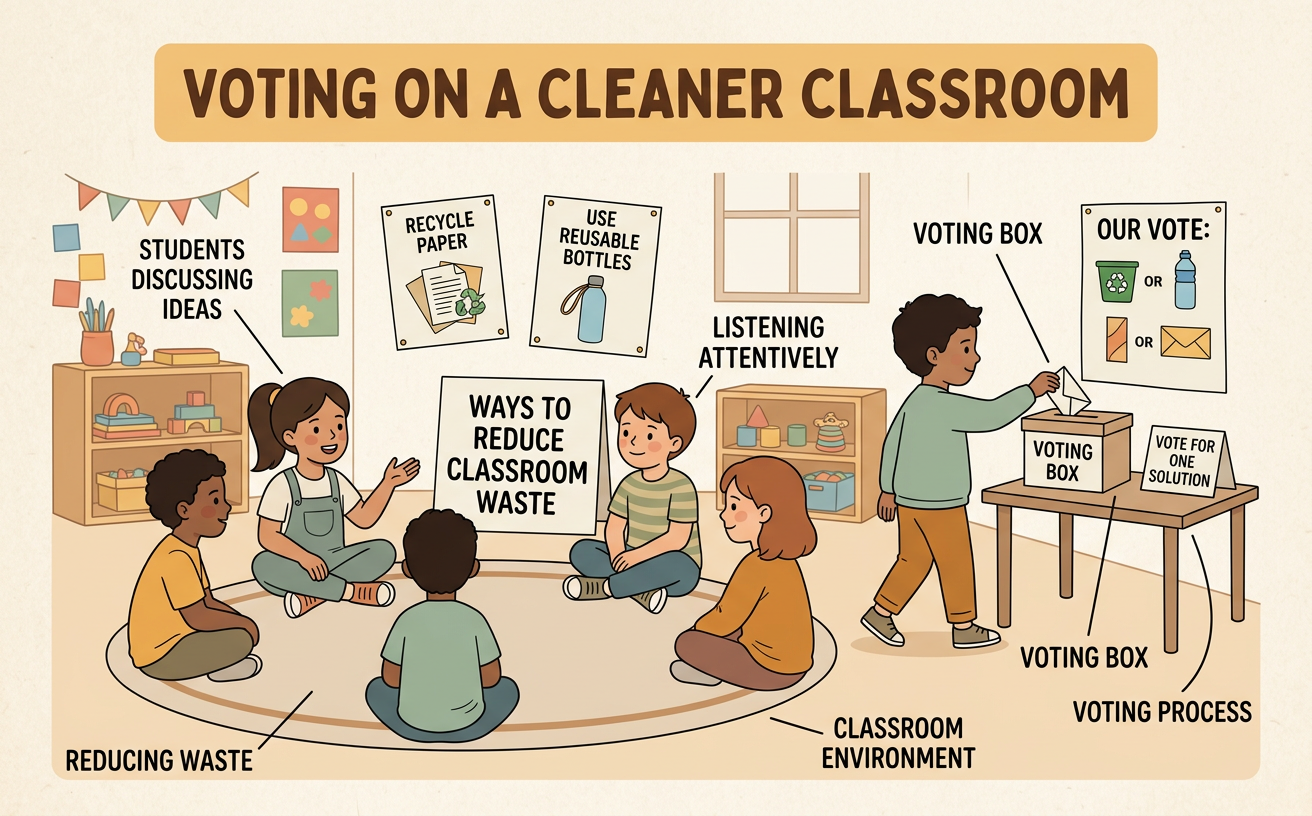
Illustrations are auto-generated and may be placeholders. They can be refreshed to match the narration.
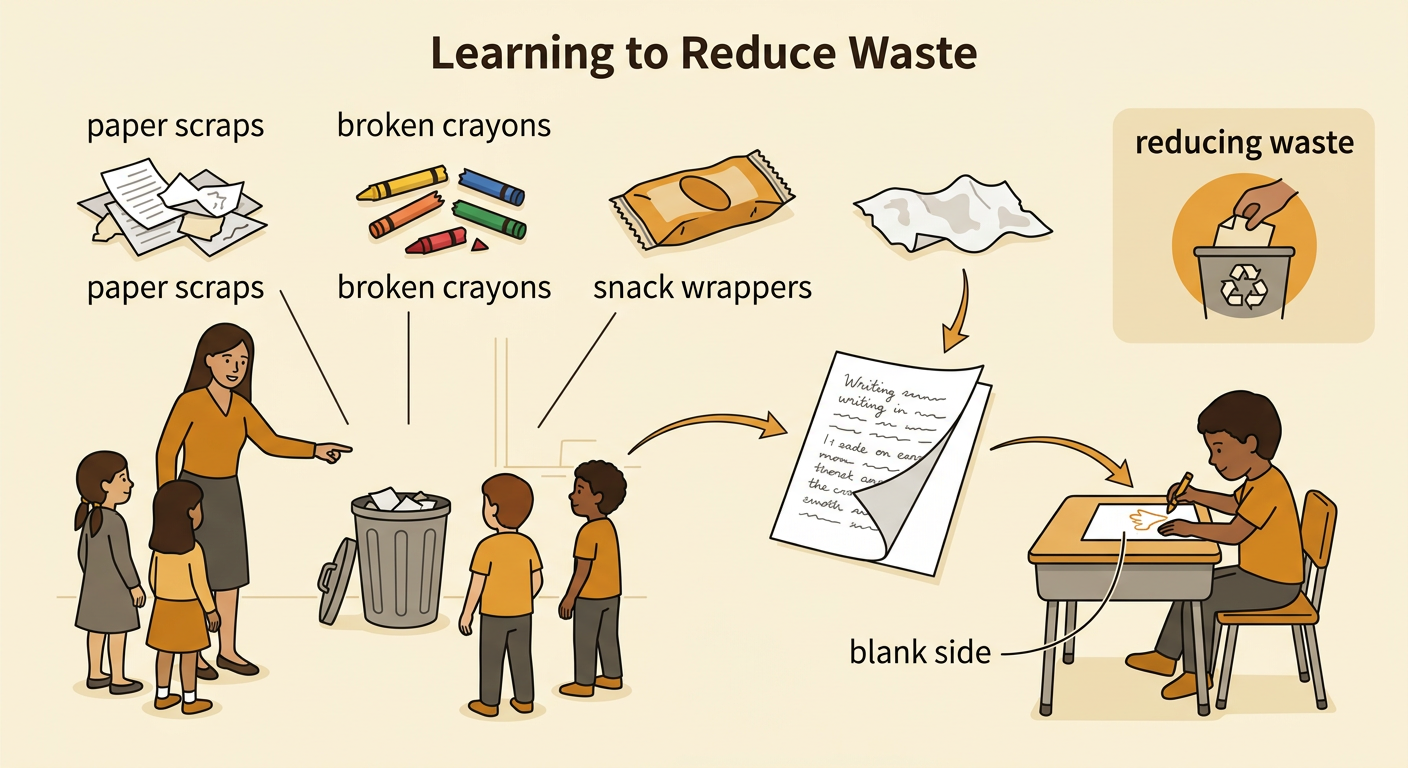
Notice Our Classroom Waste
Look around the classroom with your teacher. What things are being thrown away? You might notice paper scraps, broken crayons, snack wrappers, or paper towels. Do not touch anything in a trash can. Instead, look from a safe distance while the teacher helps. Think about which items could be used less, used again, or recycled according to your school’s rules. For example, if many sheets of paper have writing on only one side, the blank sides could be used for drawing. Reducing waste means making less trash. When we notice what we throw away, we can choose a helpful change for our classroom and the environment.
Share Possible Solutions
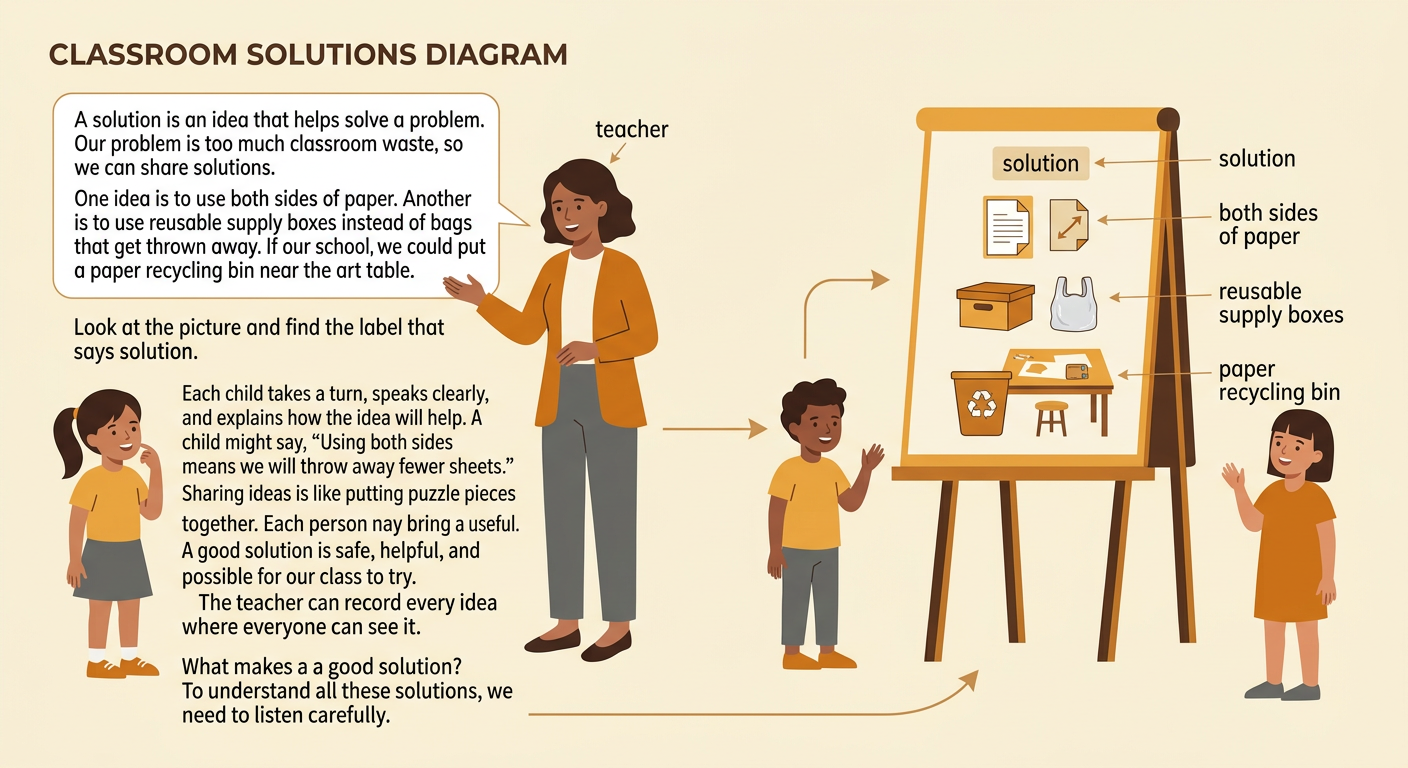
A solution is an idea that can help solve a problem. Take turns sharing ways to reduce classroom waste. One student might say, “We can use both sides of our paper.” Another might suggest using reusable supply boxes instead of disposable bags. A third student could suggest placing a paper recycling bin near the art table, if the school recycles paper. Speak clearly so classmates can hear your idea. Explain how your solution would help. You could say, “Using both sides of paper means we will throw away fewer sheets.” All ideas should be safe and possible for the class to try. The teacher can draw or write each idea where everyone can see it.
Practice Listening Rules
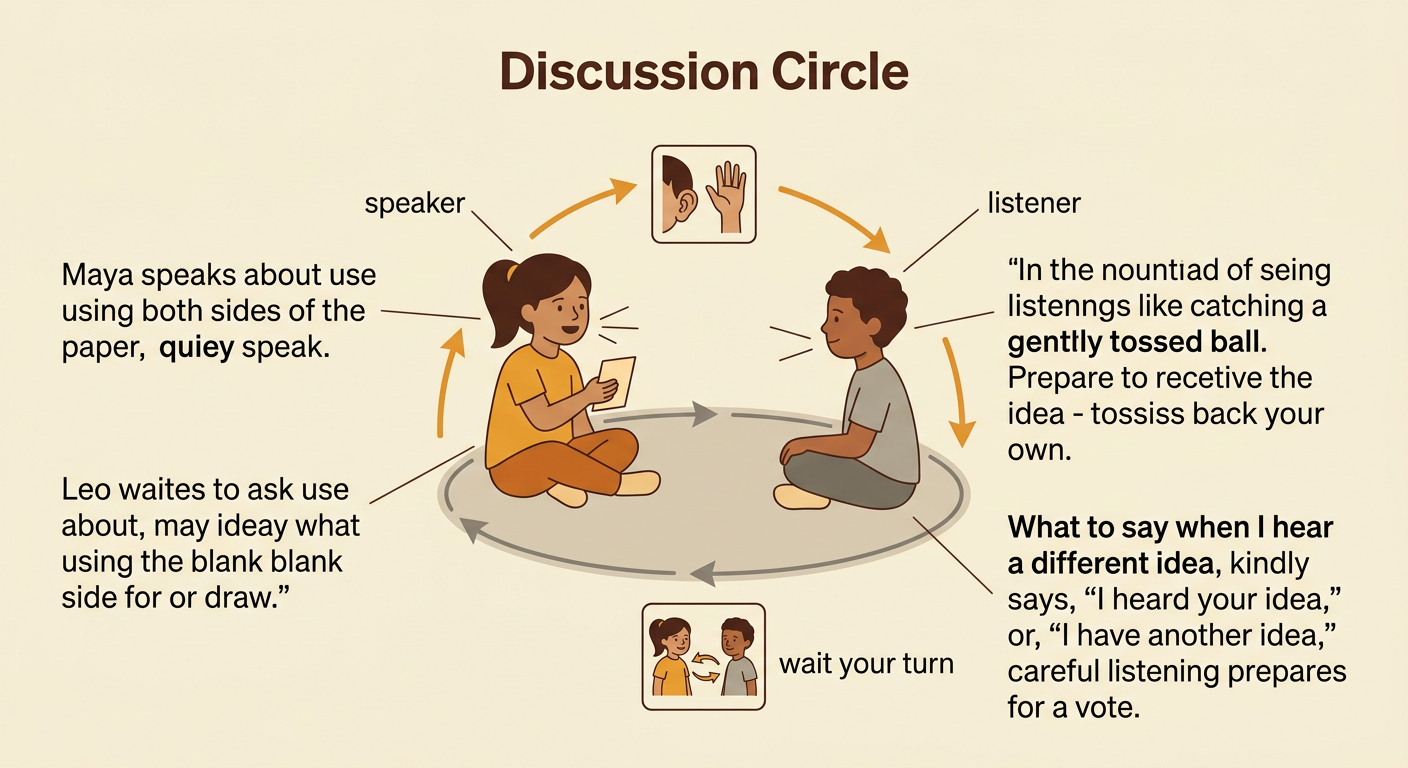
A class discussion works best when everyone follows the same rules. Look at the person who is speaking. Keep your voice quiet while you listen. Wait for your turn, and do not interrupt. Think about the speaker’s idea, even if it is different from yours. You can respond kindly by saying, “I heard your idea,” or “I have another idea.” Ask a question if you need help understanding. For example, Maya says, “Let’s use both sides of our paper.” Leo waits until she finishes and then asks, “Can we use the blank side for drawing?” Good listening helps every student feel included. It also helps the class understand the choices before making a group decision.
Vote for One Solution
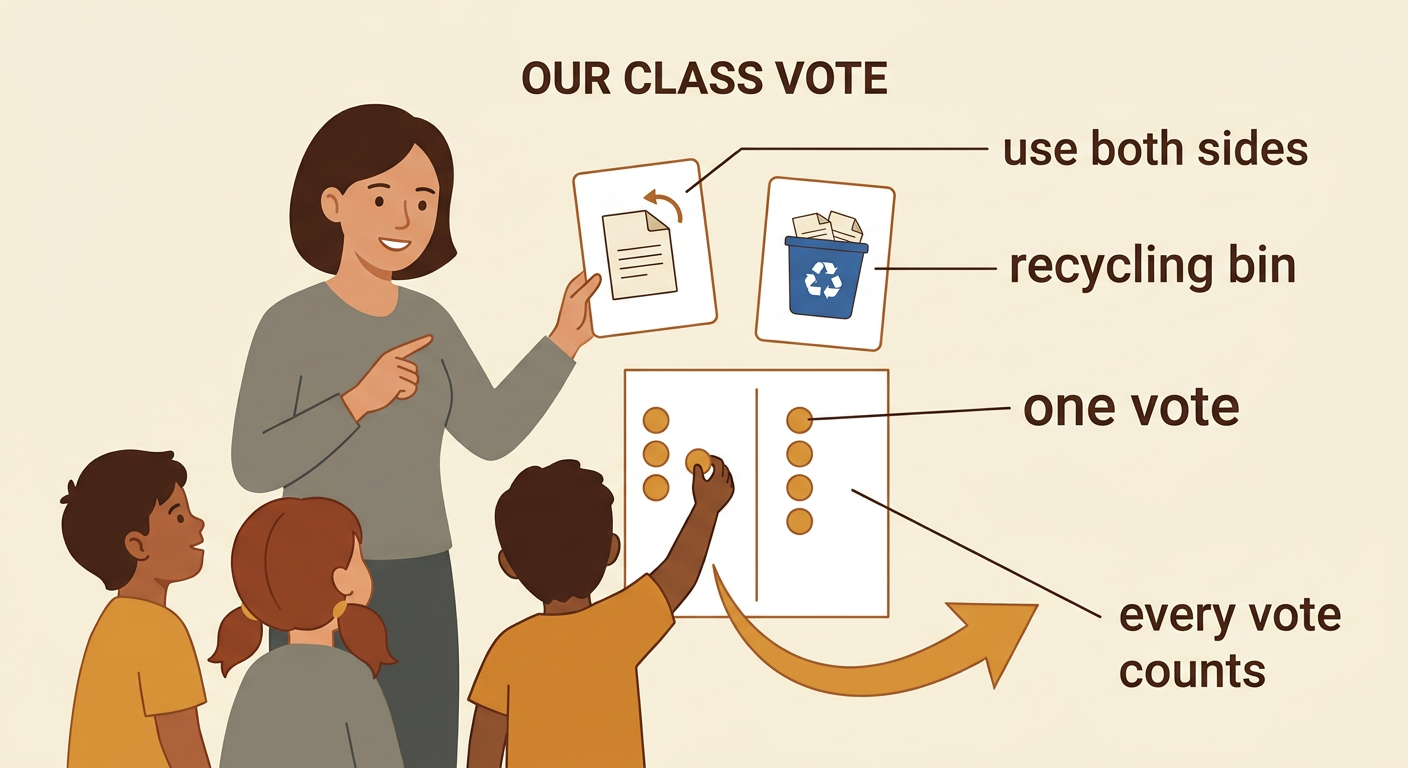
Voting is a way for a group to make a decision. First, the teacher shows the solutions the class can choose from. Listen as each choice is read. Think about which solution will best help the classroom make less waste. Each student gets one vote. You may place one sticker beside a picture, mark one box on a paper ballot, or raise your hand when your choice is named. Follow the same voting rule as everyone else. For example, the choices might be “use both sides of paper” and “add a paper recycling bin.” Choose only one. It is okay if a friend chooses something different. Every student’s vote is counted equally, and the class will follow the result.
Count the Votes
After everyone votes, count the votes for each solution. The teacher can point to each sticker or ballot while the class counts aloud: one, two, three, and so on. Write the total under each choice. Then compare the totals. The choice with more votes wins. For example, “use both sides of paper” may receive 12 votes, while “add a paper recycling bin” receives 8 votes. Since 12 is more than 8, using both sides wins. If the totals are equal, the vote is tied. The class can follow an agreed rule, such as discussing the choices again and holding another vote. Counting carefully makes the group decision clear and fair.

Make a Class Action Plan
Now make a plan to try the winning solution together. An action plan tells what the class will do, who will help, and when the class will check its progress. Suppose the winning choice is using both sides of paper. The class can place a tray labeled “Blank Side” near the drawing area. Students can put safe, clean one-sided paper in the tray with teacher permission. Before taking a new sheet, they can check the tray. The teacher can remind the class and help keep the tray neat. After one week, the class can look at the trash and talk about whether there is less paper waste. Celebrate the teamwork, and decide whether to keep the plan or improve it.
