
Water’s Journey Through Living Things and Ecosystems
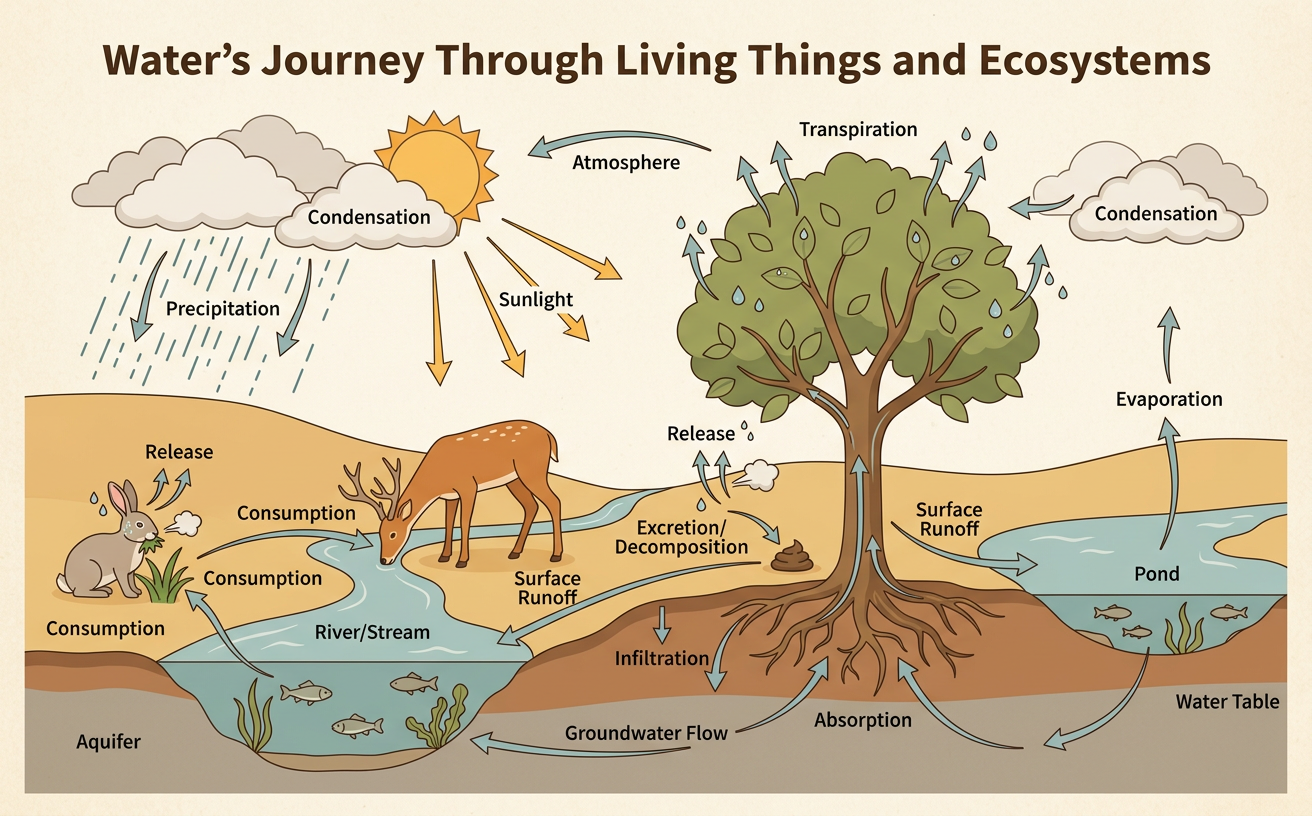
Students model how water moves among the environment, plants, animals, and the atmosphere through processes such as absorption, consumption, release, and transpiration.
Illustrations are auto-generated and may be placeholders. They can be refreshed to match the narration.
Where Ecosystems Store Water
Water is stored in many parts of an ecosystem. Lakes, rivers, wetlands, snow, and soil hold water at Earth’s surface. Some water seeps underground and collects as groundwater. Living things also store water in their cells and tissues. The atmosphere contains water vapor and tiny droplets in clouds. The amount of water stored in each place depends on environmental characteristics such as temperature, rainfall, land shape, soil type, and vegetation. For example, a shaded forest with deep soil may hold more water than a steep, rocky hillside because plants and soil slow runoff. On a map, rivers often connect higher land to lower lakes or oceans, showing how location and land shape affect water storage and movement.

How Plant Roots Absorb Water
Plants obtain most of their water from the soil. After rain or watering, liquid water fills spaces between soil particles. Tiny root hairs grow from a plant’s roots and touch this water. Water moves through the root hairs and into root cells, then enters tubes called xylem. Xylem carries water upward through the roots and stem toward the leaves. Minerals dissolved in soil water travel with it. For example, a bean plant in moist soil can absorb water through thousands of root hairs. If the soil becomes too dry, the plant cannot replace the water it loses, and its leaves may droop. Roots do not suck up chunks of soil; they absorb water and dissolved minerals from the spaces around soil particles.

Transpiration from Leaves
When water reaches a plant’s leaves, some is used by cells and some becomes part of the process plants use to make food. Much of the water eventually changes into water vapor and exits through tiny leaf openings called stomata. This release of water vapor is called transpiration. As water leaves, more water is pulled upward through the xylem from the roots. Sunlight, warm temperatures, wind, and dry air can increase transpiration. For example, a sunflower may release more water vapor on a warm, breezy afternoon than on a cool, humid morning. Transpiration moves water from plants into the atmosphere, connecting the biosphere and atmosphere. The vapor may later cool, condense into clouds, and return to Earth as rain or snow.

How Animals Obtain and Release Water
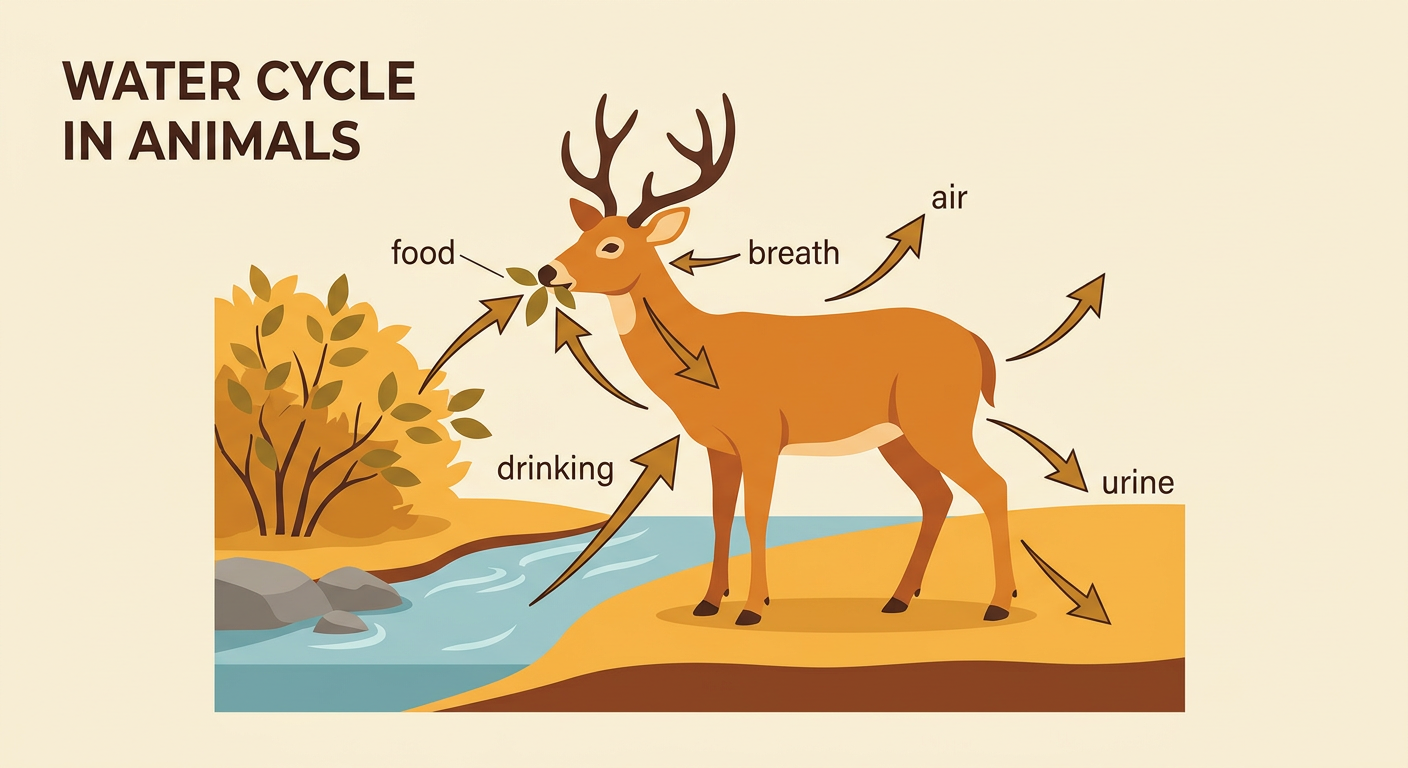
Animals obtain water by drinking and by eating foods that contain water. Their bodies also produce a small amount of water when cells break down food for energy. Water helps transport nutrients, remove wastes, control temperature, and support chemical reactions. Animals release water in urine, feces, sweat, and exhaled breath. For example, a deer may drink from a stream and eat water-rich leaves. Later, it returns water to the environment through urine, moist waste, and water vapor in its breath. On a hot day, some animals also lose water while sweating or panting. Released liquid water can enter soil or streams, while water vapor enters the atmosphere. In this way, animals are temporary water-storage places within an ecosystem.
Modeling Water’s Ecosystem Journey
A model can show how water moves among Earth’s systems. Begin with rain entering soil. Plant roots absorb some of it, and xylem carries it to leaves. A rabbit may eat the plant and take water into its body. The plant releases water vapor through transpiration, while the rabbit releases water through breath and waste. Other soil water may become groundwater or runoff that enters a stream. Evaporation from the stream and transpiration from plants add vapor to the atmosphere. That vapor can condense into clouds and fall again as precipitation. Use arrows to show movement and boxes to show storage locations. Remember that a model simplifies reality: one water molecule may follow many possible paths, and water does not always move through every part in the same order.
