What Animals Need to Survive
Students use observations, a short informational text, and a class picture graph to identify how animals depend on food, water, air, and shelter.
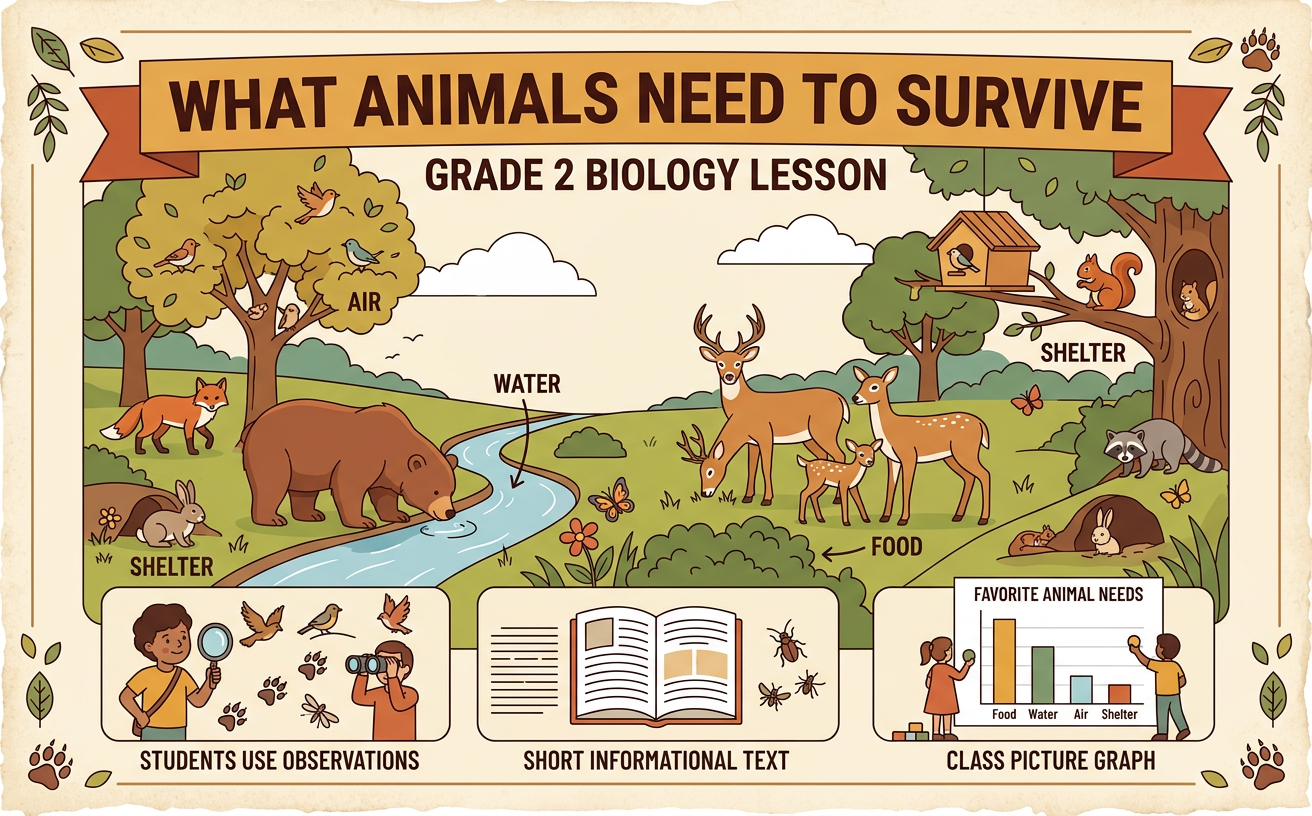
Illustrations are auto-generated and may be placeholders. They can be refreshed to match the narration.
Animal Needs Picture Sort
Look closely at pictures of animals and the things around them. Sort each picture into one of two groups: things animals need to survive and things animals do not need to survive. Animals need food, water, air, and shelter. For example, a rabbit eats grass, drinks water, breathes air, and hides in a burrow. A toy ball may be fun for a pet rabbit, but the rabbit does not need it to stay alive. Use what you can observe as evidence. A bird drinking from a puddle is evidence that it needs water. A squirrel carrying a nut is evidence that it needs food. Some pictures may show more than one need. Explain your choices by naming what the animal gets from each item or place.

Food, Water, Air, and Shelter
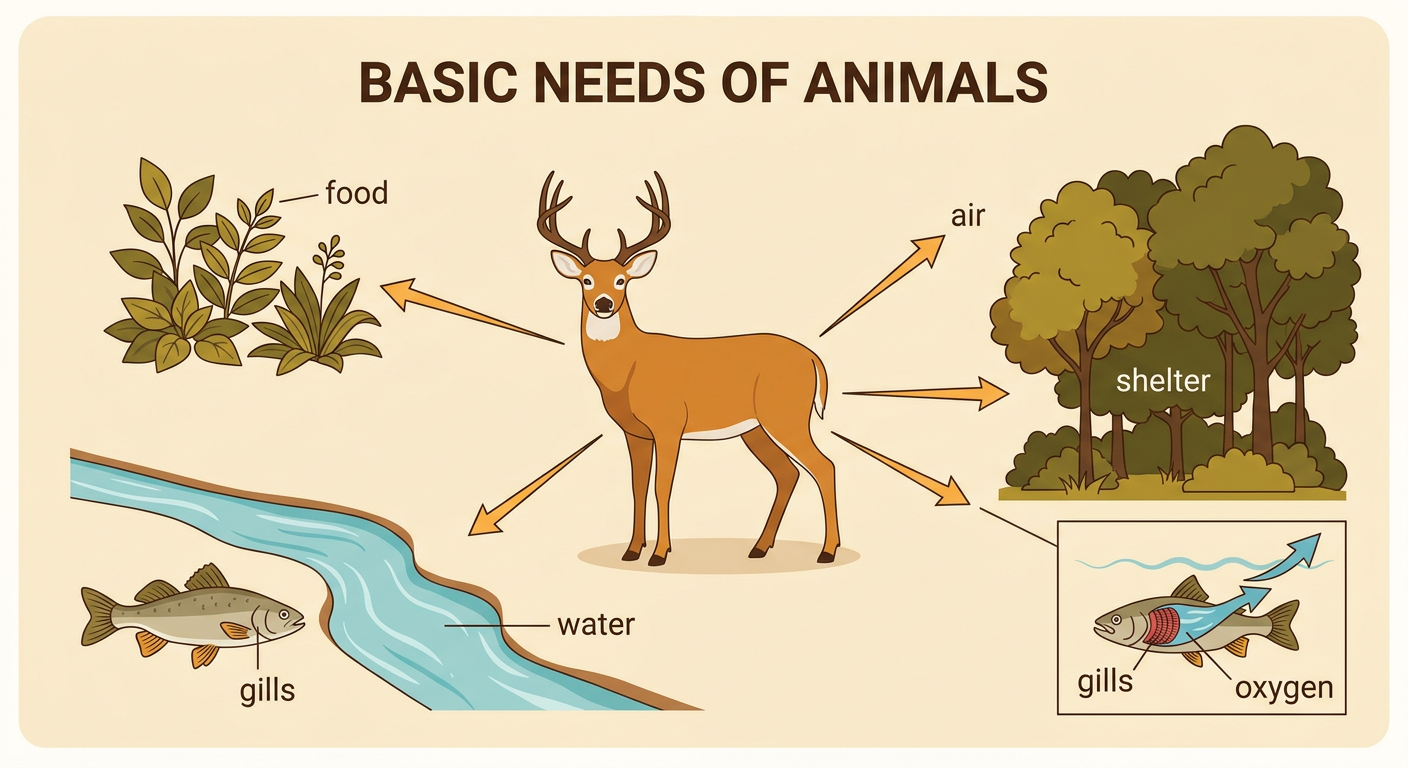
Every animal needs food, water, air, and some kind of shelter. Food gives an animal energy to move, grow, and stay healthy. Water helps its body work properly. Animals breathe oxygen from the air. Fish get oxygen that is mixed into water, so they still depend on oxygen. Shelter is a safe place that protects an animal from weather and danger. Different animals meet these needs in different ways. A deer eats plants, drinks from a stream, breathes air with lungs, and rests among trees. A fish may eat tiny water animals, take in oxygen through its gills, and hide among rocks or plants. The details differ, but the pattern is the same: animals must get their basic needs from their environment.
Read and Find Evidence
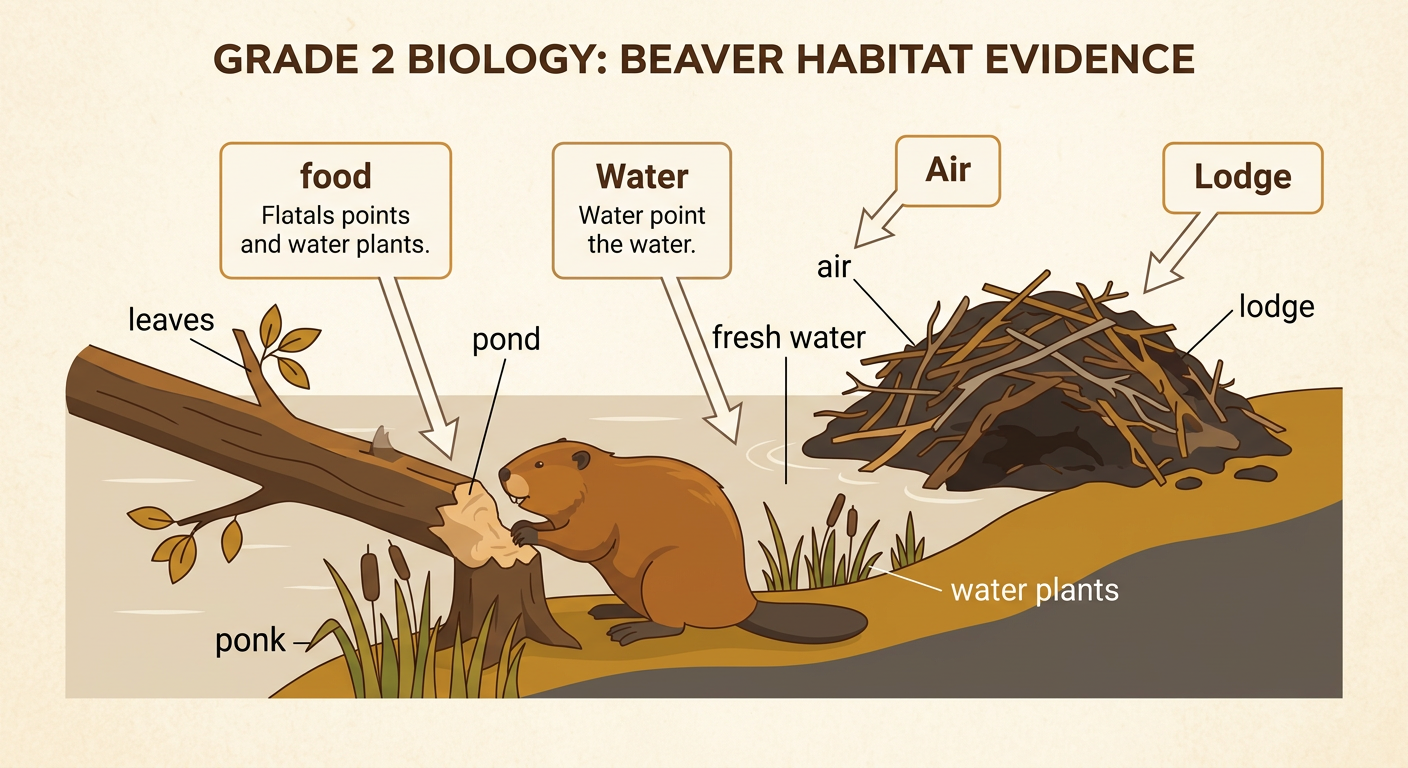
Read this short text: “A beaver lives near a pond. It eats bark, leaves, and water plants. It drinks fresh water and breathes air. Using branches and mud, it builds a lodge with an entrance under the water. The lodge gives the beaver a protected place to rest and raise its young.” Now find evidence about each need. The words “bark, leaves, and water plants” are evidence of food. “Drinks fresh water” names its water source. “Breathes air” tells how it gets oxygen. The lodge is evidence of shelter. Scientific ideas are connected: the pond area provides the water, plants, and building materials the beaver needs. When you answer a question about the text, point to or repeat the exact words that support your answer.
Graph the Animal Needs
A class picture graph can organize observations about animal needs. Watch four animal pictures or short clips and record the main need each animal is meeting at that moment. For example, you might see three animals eating, two drinking, one breathing at the surface, and four entering shelters. Make four categories: food, water, air, and shelter. Let each animal picture stand for one observation. Count the pictures in each row to read the graph. In this example, shelter has the most observations because it has four pictures. Air has the fewest because it has one. Shelter has two more observations than water because four minus two equals two. The graph shows what was observed in this class activity. It does not mean shelter is more important; animals need all four things to survive.

Choose a Suitable Home
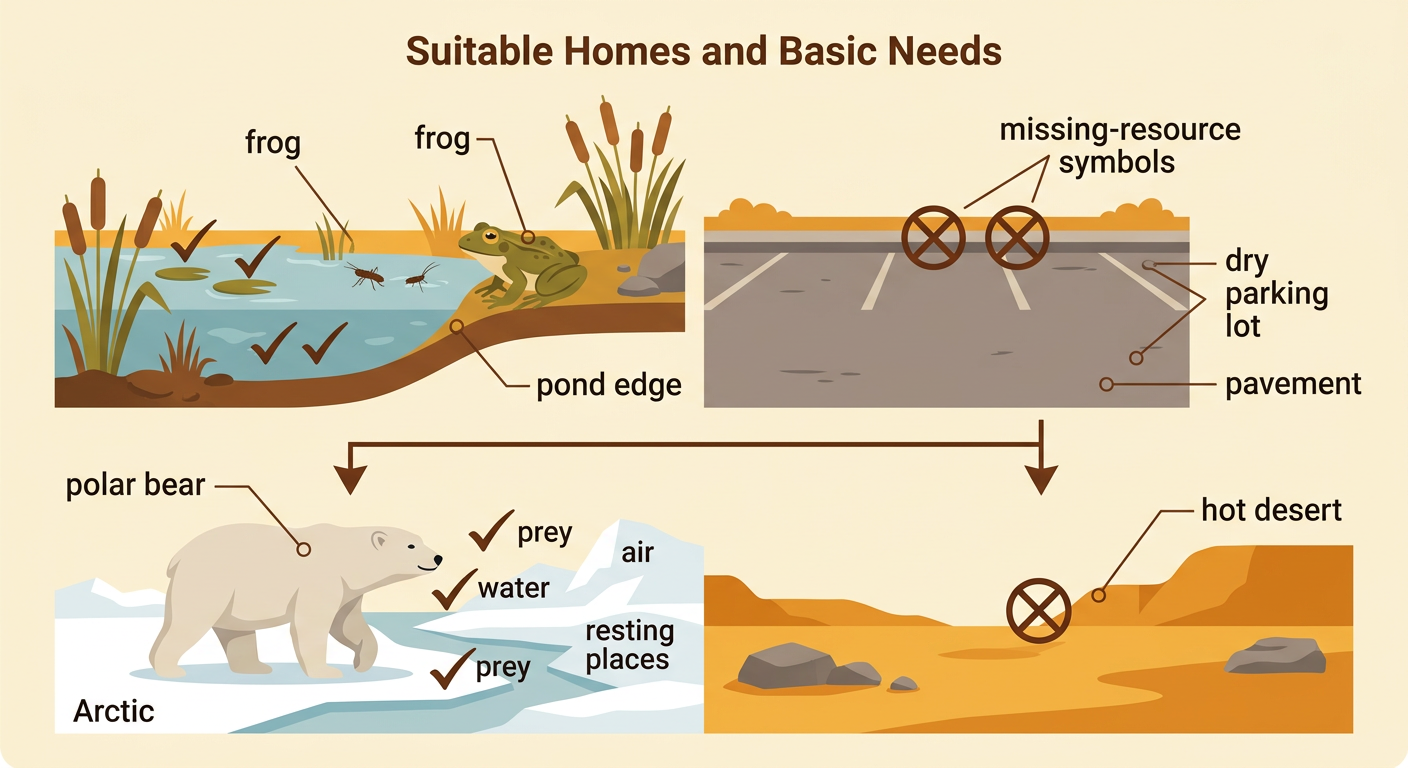
A suitable home is a place where an animal can meet its needs. Study the characteristics of each place, such as temperature, amount of water, plants, land, and available shelter. Then match an animal to a place that supports it. For example, a frog is well suited to a pond edge with fresh water, insects to eat, air to breathe, and plants or mud for cover. A dry parking lot would not be a suitable home because it has little water, food, or shelter. A polar bear needs a cold Arctic environment with access to prey, air, water, and places to rest. It would not belong in a hot desert. Use evidence from the picture when you choose. Name the animal, identify the place, and explain how that place provides its food, water, air, and shelter.
Quick Survival Check
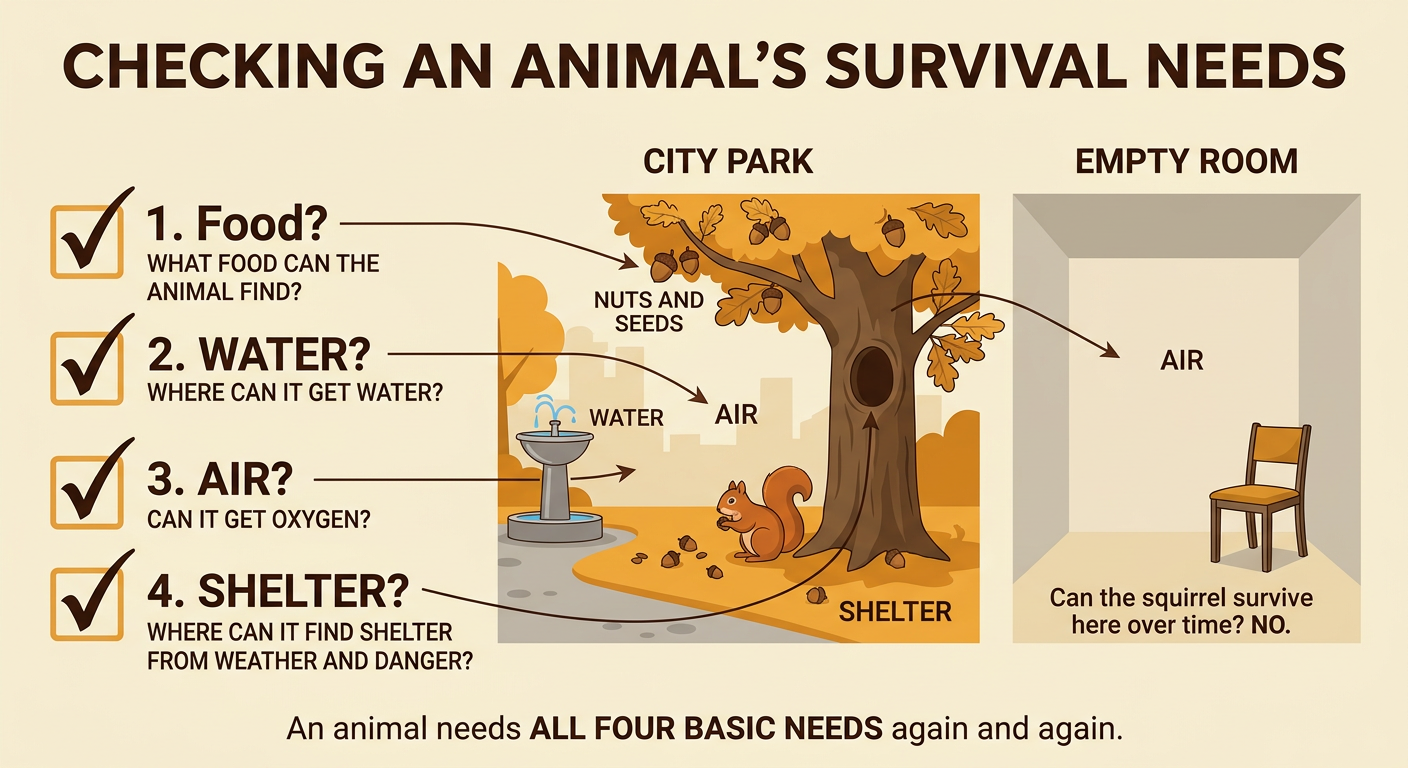
Use four questions to check whether an animal can survive in a place. First, what food can it find? Second, where can it get water? Third, can it get oxygen? Fourth, where can it find shelter from weather and danger? Consider a squirrel in a city park. The park may have nuts and seeds for food, a fountain or puddles for water, air to breathe, and trees with holes or leafy branches for shelter. The park can meet the squirrel’s needs if these resources are available and safe. Now imagine the same squirrel in an empty room with only a chair. It has air, but it lacks food, water, and suitable shelter. One resource is not enough. An animal’s survival depends on having all its basic needs met over time. Support your answer with an observation from the place.