
What Do Plants Need to Grow?
Students compare young plants grown with and without water or sunlight, record the results, and explain why plants need both resources to grow.

Illustrations are auto-generated and may be placeholders. They can be refreshed to match the narration.
Notice and Wonder About Plants
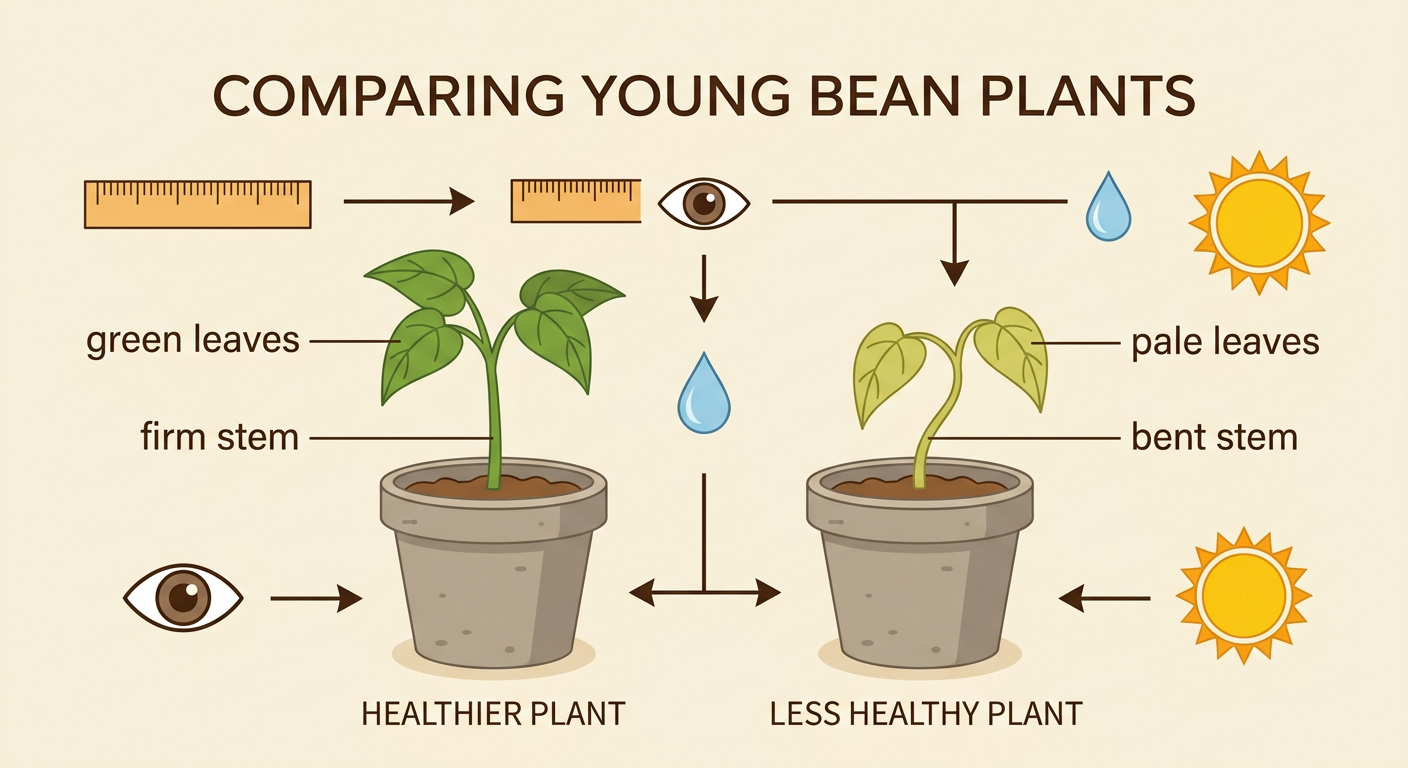
Look closely at two young bean plants. Notice each plant’s color, height, number of leaves, and the way its stem stands. One plant may have green leaves and a firm stem. Another may have pale leaves or a bent stem. Ask questions about what caused these differences. You might wonder, “Did both plants get water?” or “Did both plants get sunlight?” Scientists begin investigations by observing carefully and asking questions they can test. For example, a class might observe that a plant near a sunny window looks greener than a plant kept in a dark cabinet. This observation does not prove why they are different, but it gives the class a useful question to investigate: Do young plants need water and sunlight to grow well?
Predict What Plants Need
A prediction tells what you think will happen and why. Predict how plants will grow under four conditions: water and sunlight, water but no sunlight, sunlight but no water, and neither water nor sunlight. The plants should be the same kind and similar in size at the start. They should also have the same soil, pot size, and amount of time to grow. Only water and sunlight should change. For example, you might predict, “The plant with water and sunlight will grow best because plants need both resources.” You may predict that a plant without water will wilt. A plant without sunlight might grow for a short time using stored food, but it may become pale and weak. Record predictions before beginning so they can be compared with the results later.

Compare the Plant Groups
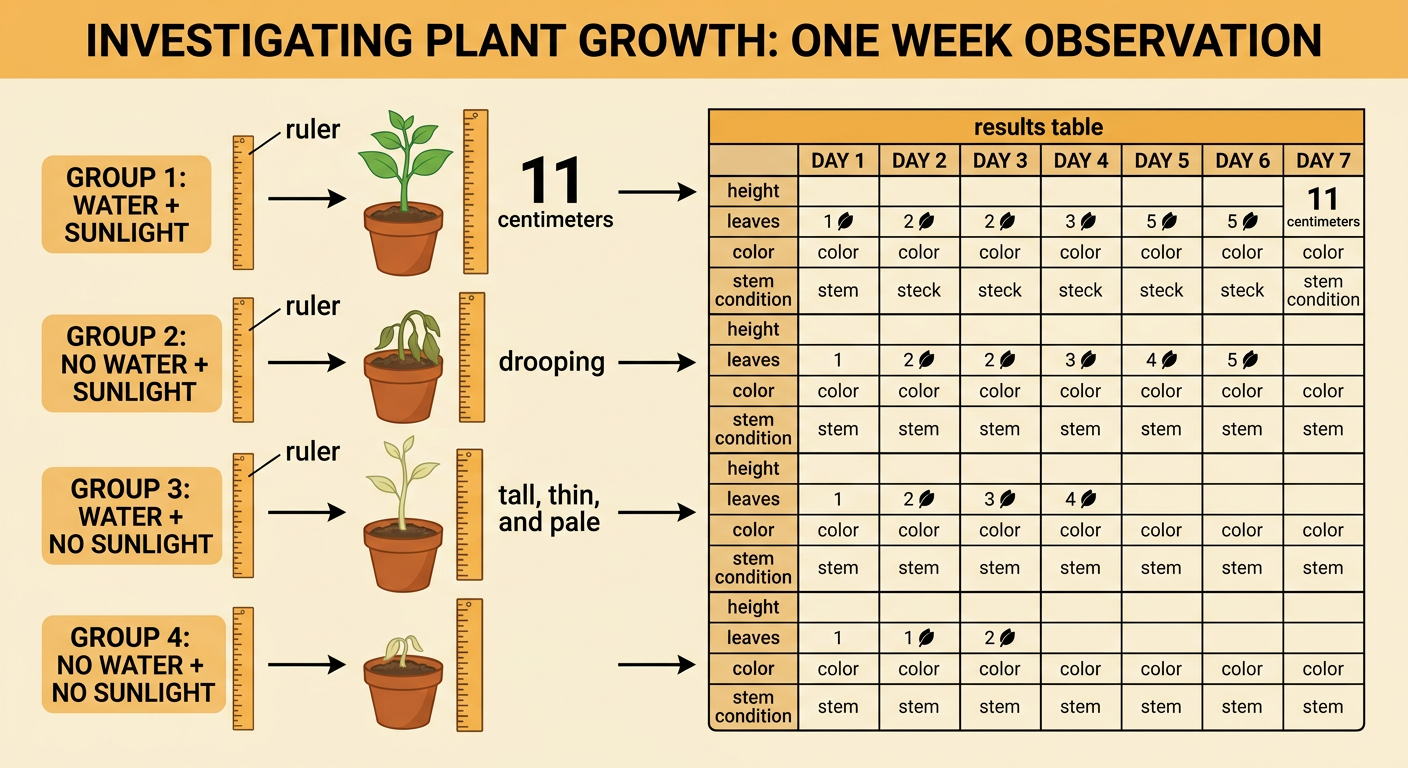
Observe each plant group at the same time every day for one week. Use a ruler to measure height from the top of the soil to the highest point of the plant. Count the leaves and record their color and firmness. Give the watered groups the same measured amount of water. Do not taste or touch any plant without teacher permission. A results table might show that the plant with water and sunlight grew from 5 centimeters to 11 centimeters and stayed green. The plant with sunlight but no water might droop and stop growing. The plant with water but no sunlight might become tall, thin, and pale. Compare the groups by asking which plant grew taller, which had more leaves, and which looked healthiest. Record what happened, even when it differs from your prediction.
Graph the Growth Results
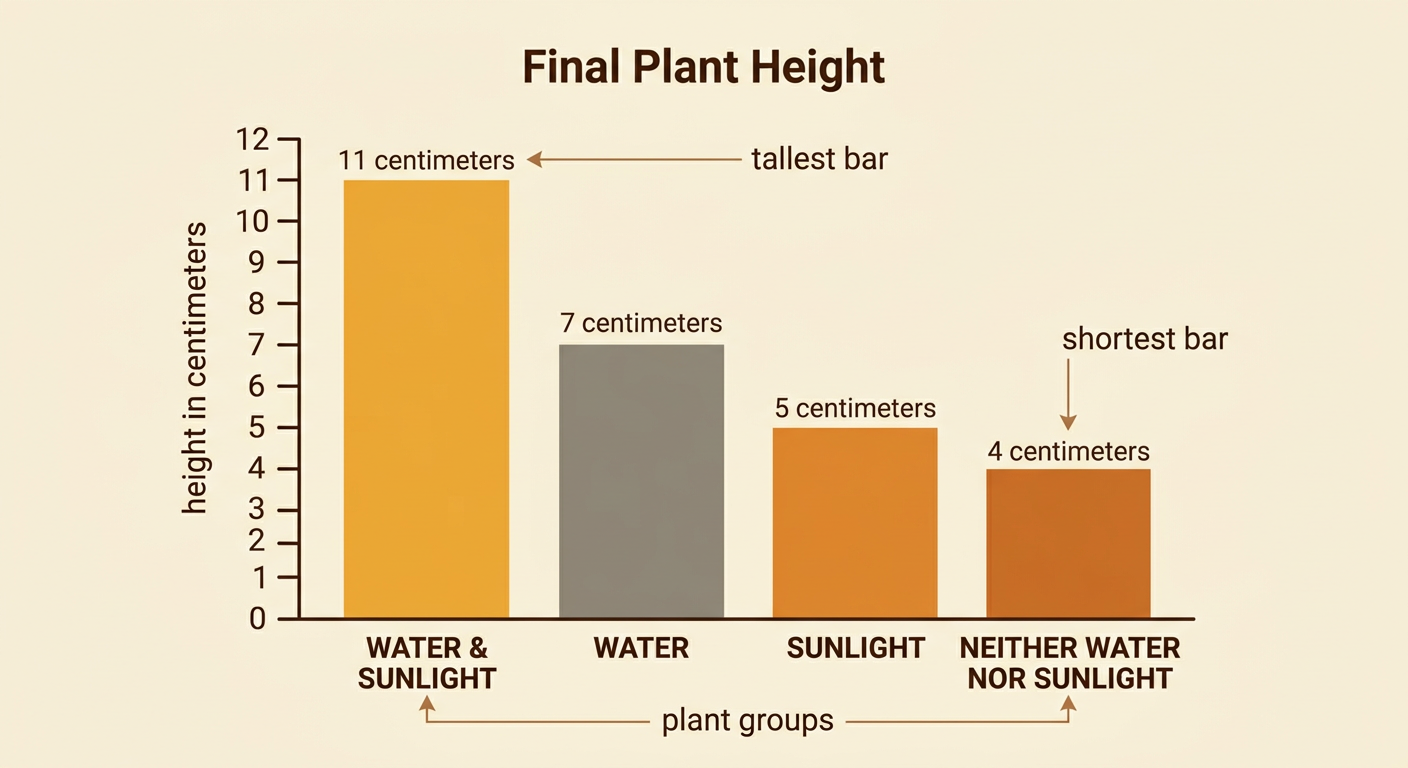
A bar graph can make the final plant heights easy to compare. Write the plant groups along the bottom of the graph. Mark height in centimeters up the side, using equal spaces for each number. Draw one bar for each group. The top of each bar should match that plant’s final height. For example, suppose the plants ended at 11, 7, 5, and 4 centimeters. The water-and-sunlight bar would reach 11 centimeters and would be the tallest bar. The no-water-or-sunlight bar would reach 4 centimeters and would be the shortest. Add a title and label both parts of the graph. Then use the graph to answer questions: Which group was tallest? How many centimeters taller was it than the shortest group? A picture graph could also show one plant symbol for each centimeter.
Explain the Evidence
Use the observations and graph to explain what the investigation showed. Begin with a claim, or an answer to the test question. Then give evidence from the results. You might write, “Plants need both water and sunlight to grow well. The plant with both resources grew to 11 centimeters and had green leaves. Plants missing water wilted, and the plant missing sunlight became pale and weak.” Finally, explain how the evidence supports the claim. Water helps plants stay firm and move materials through their parts. Sunlight provides energy that plants use to make sugars for growth. One short classroom investigation cannot test every kind of plant or every condition, but repeated results can support the conclusion. Work with classmates to create a shared report that includes the question, prediction, method, graph, observations, and conclusion.

Connect Plant Needs to Local Gardens
Local gardens are planned around environmental features such as sunlight, rain, soil, and temperature. Gardeners choose sunny places for vegetables that need many hours of light. They may carry water, use hoses, or collect rainwater when the weather is dry. For example, a community garden beside a tall building may be shady in the morning but sunny in the afternoon. Gardeners can place sun-loving tomato plants in the brightest beds and shade-tolerant plants in less sunny areas. These choices affect people’s lives because healthy gardens can provide food, beauty, and places to work together. Too little rain can make growing food harder and increase the need for watering. Observe your schoolyard or neighborhood. Identify a place with enough sunlight and a nearby water source, and explain why it would be a good location for a garden.
