What Do Plants Need to Live?
Students observe a plant, identify its basic needs, and sort pictures to show what helps plants survive.
Illustrations are auto-generated and may be placeholders. They can be refreshed to match the narration.
Observe a Living Plant
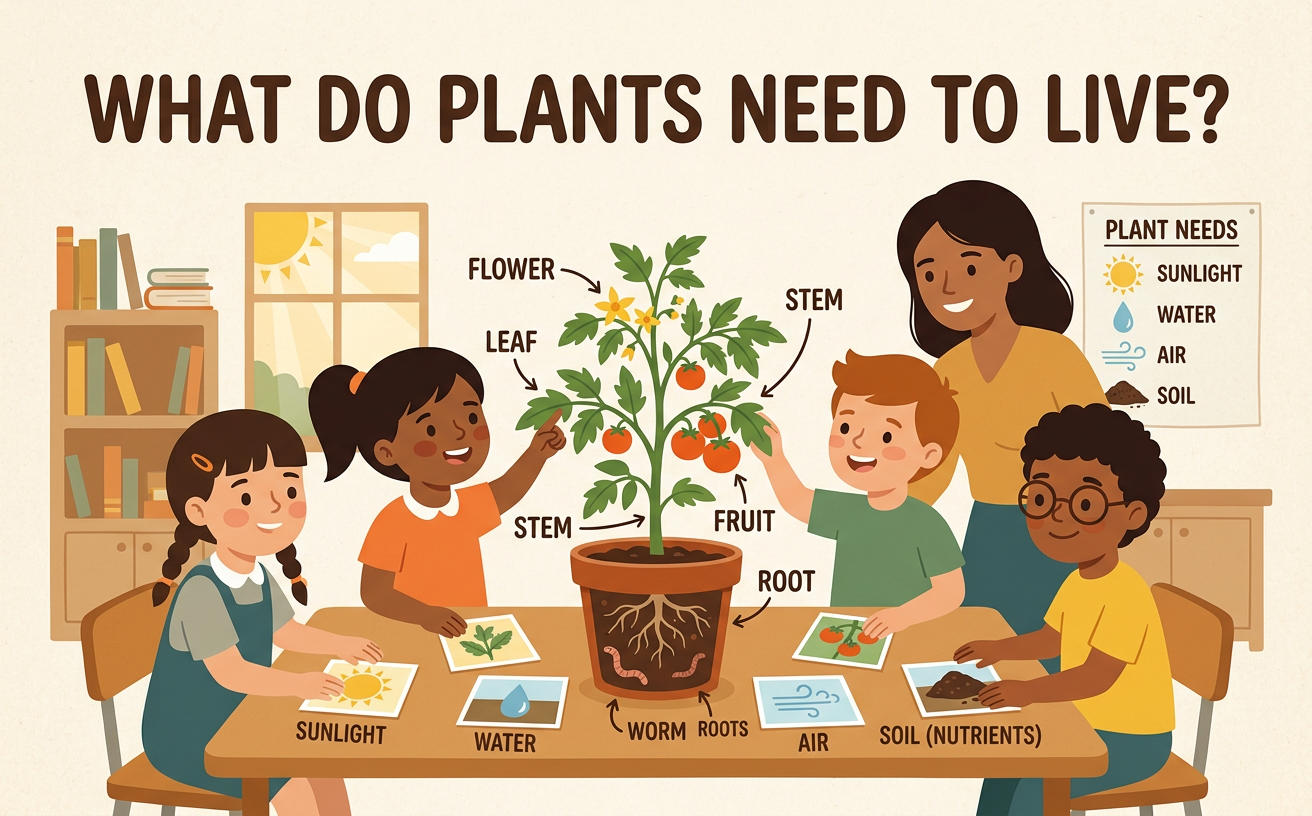
Look closely at a living plant. Use your eyes, but touch only if your teacher says it is okay. Notice the green leaves, the stem, and the soil around the plant. Roots usually grow under the soil, where they take in water and help hold the plant in place. Look for signs that the plant is alive. It may have new leaves, buds, or flowers. Its stem may bend toward light. Ask questions about what you notice: What color are the leaves? Is the soil wet or dry? For example, a bean plant may have a thin stem and two bright green leaves. Draw the plant, and tell one observation using the words “I notice.”

Read About Plant Needs
Listen to this information: A plant is a living thing. It needs water and air. Most plants also need light. Roots take in water from the soil. Leaves take in a gas from the air called carbon dioxide. Light helps the plant make the sugars it uses to live and grow. A plant also needs enough space and helpful nutrients. Think about the key details. What do roots take in? What helps the plant make sugars? What comes from the air? Answer by using information from the text. For example, if asked, “What do roots take in?” you can answer, “Roots take in water from the soil.” Then ask your own question about something a plant needs.

Name Sunlight, Water, and Air
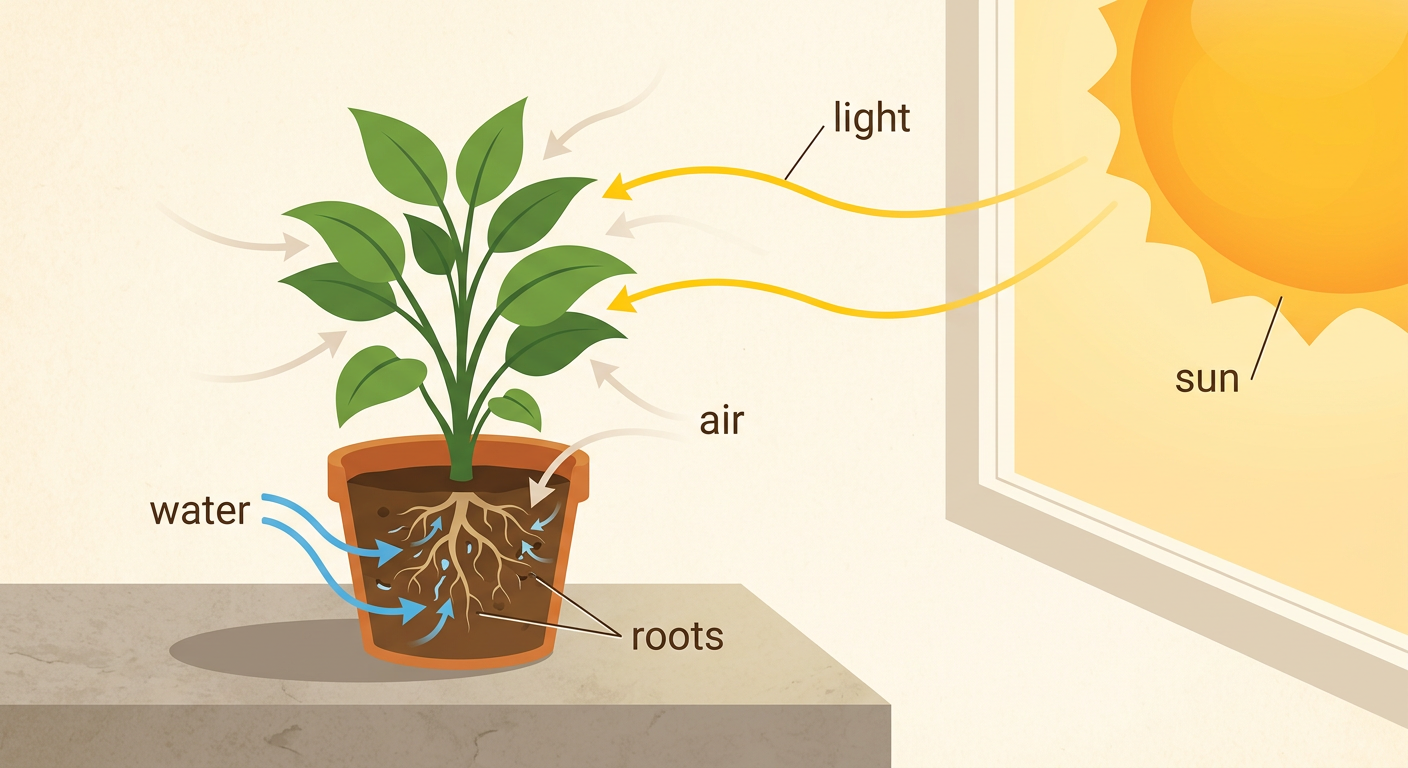
Three basic plant needs are light, water, and air. Most plants get light from the sun. Light gives a plant energy to make the sugars it needs. Water enters through the roots and moves through the plant. Air surrounds the leaves and roots. Plants use carbon dioxide from the air to make sugars, and roots also need oxygen from spaces in the soil. Each need has a job. Point to the sun and say “light.” Point to the wet soil and say “water.” Point to the space around the leaves and say “air.” For example, a classroom plant can sit near a bright window, receive the right amount of water, and have open space around its leaves for air.
Sort Needs and Non-Needs
Sort picture cards into two groups: “Plants Need” and “Plants Do Not Need.” Put sunlight, water, air, soil nutrients, and space in the needs group. Put a toy car, a television, candy, and shoes in the non-needs group. Explain each choice. You might say, “A plant needs water because its roots take in water,” or “A plant does not need shoes.” After sorting, count the cards in each group. For example, if there are five cards in “Plants Need” and four cards in “Plants Do Not Need,” say the number in each group. Then compare the groups: the needs group has one more card. Remember that a picture of soil can stand for the water, nutrients, root space, and air spaces that soil can provide.

Plan How to Care for a Plant
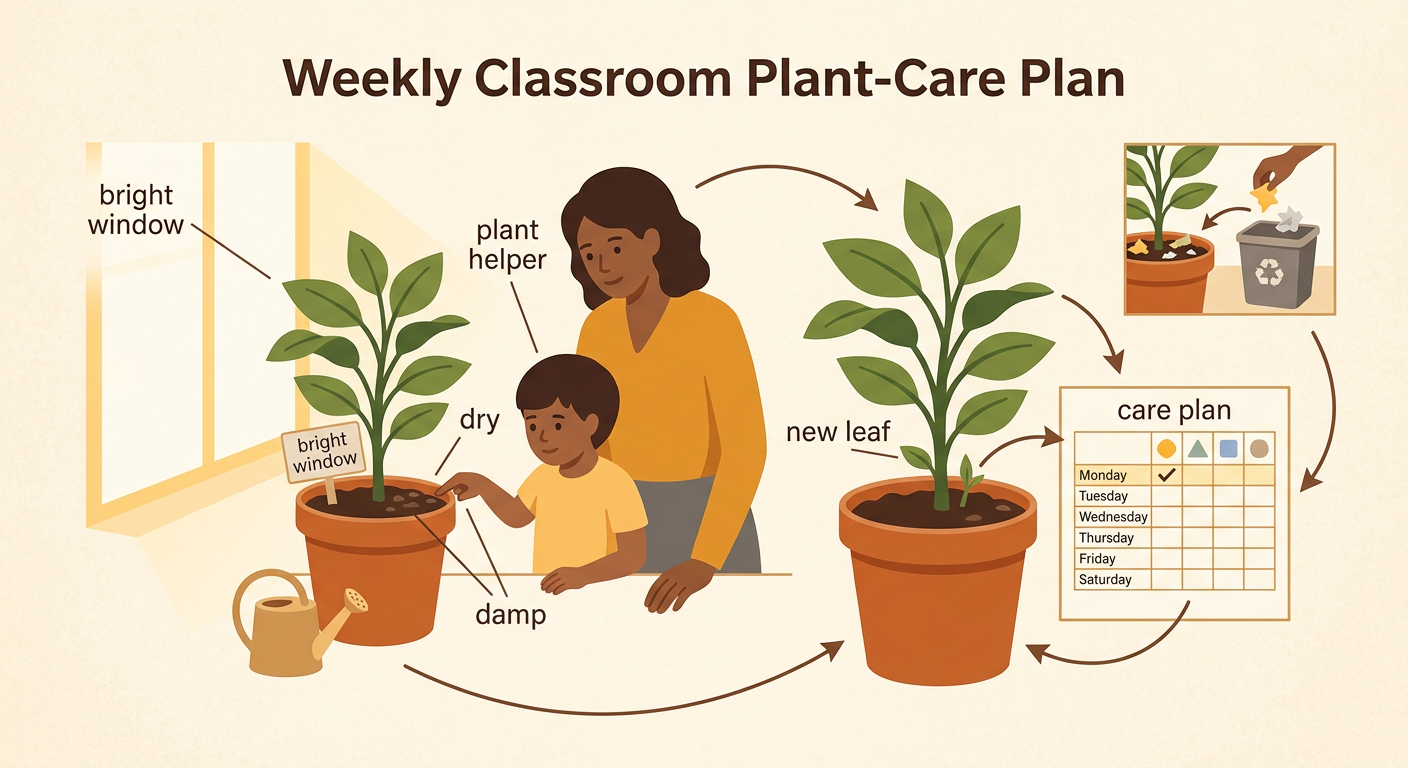
Make a simple care plan for a classroom plant. First, learn what kind of plant it is because different plants need different amounts of light and water. Choose a safe place with the right light and enough space. Check the soil before watering, and follow an adult’s directions so the plant does not get too much water. Keep the leaves uncovered so air and light can reach them. Take turns observing the plant and recording changes, such as a new leaf. People affect plant environments through their choices. Pouring trash or harmful liquids into soil can hurt plants, while protecting soil and using water carefully can help them. For example, the class can assign a plant helper to check the soil every Monday and report whether it feels dry or damp.