What Happens When Light Meets Materials?
Students shine a flashlight through different materials, classify how much light passes through, record results, and connect their findings to how people use light and materials in daily life.
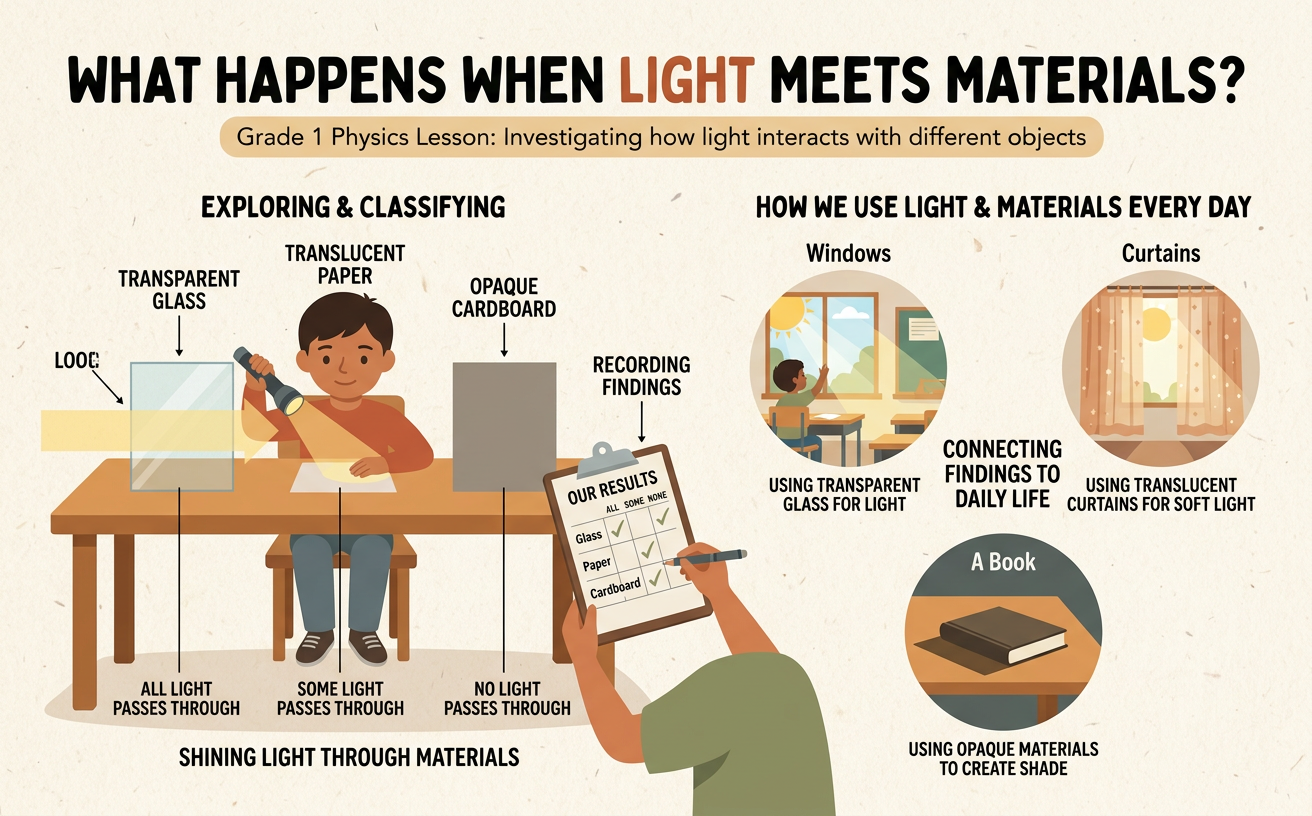
Illustrations are auto-generated and may be placeholders. They can be refreshed to match the narration.
Notice Light Around Us
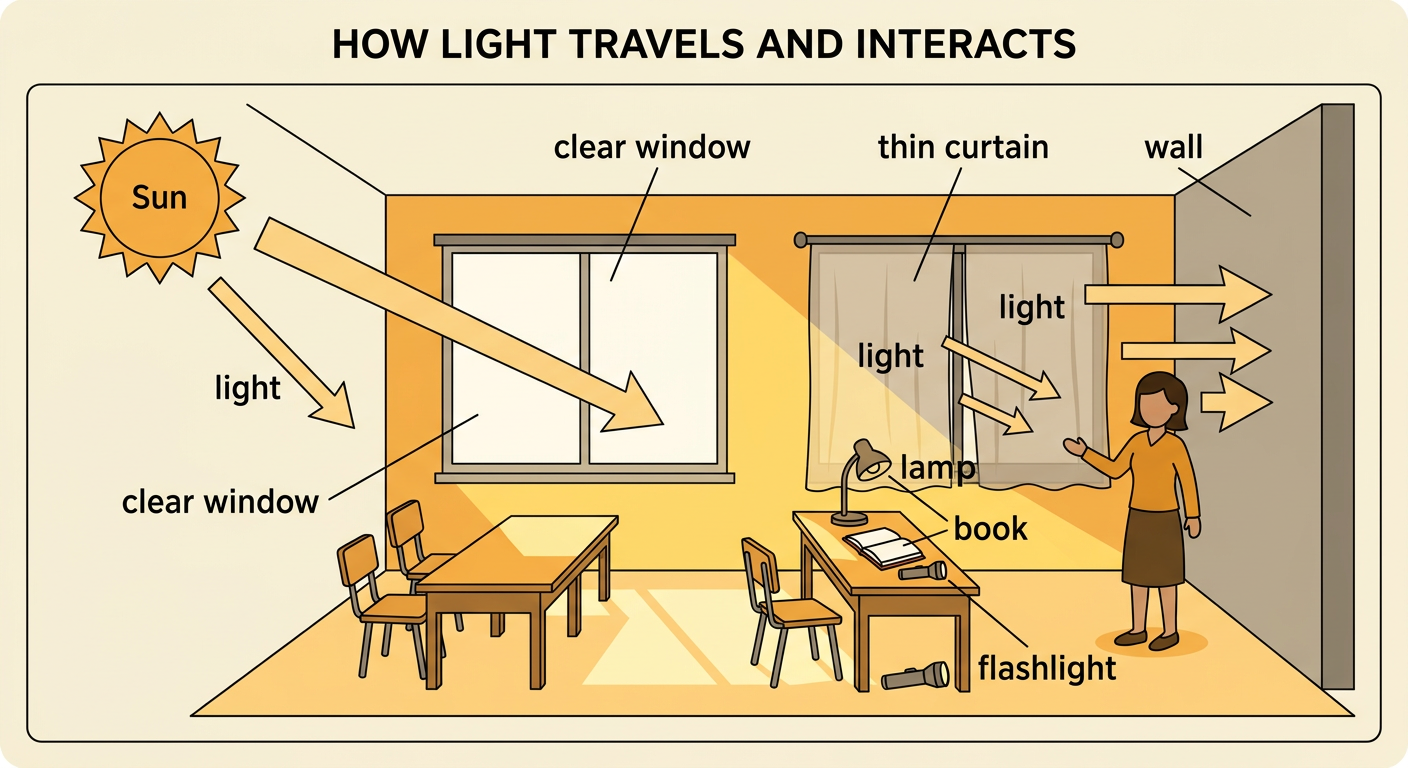
Light helps us see people, objects, colors, and shapes. Some light comes from sources such as the Sun, lamps, and flashlights. When light reaches a material, different things can happen. Light may pass through the material, bounce off it, or be blocked and absorbed. For example, sunlight passes through a clear window, but a wall blocks it. A thin curtain lets some light through, so the room is not completely dark. Look around the classroom and find places where light passes through or is blocked. Never look directly at the Sun or into a flashlight. During this lesson, you will investigate what happens when a flashlight beam meets different materials.
Make a Prediction
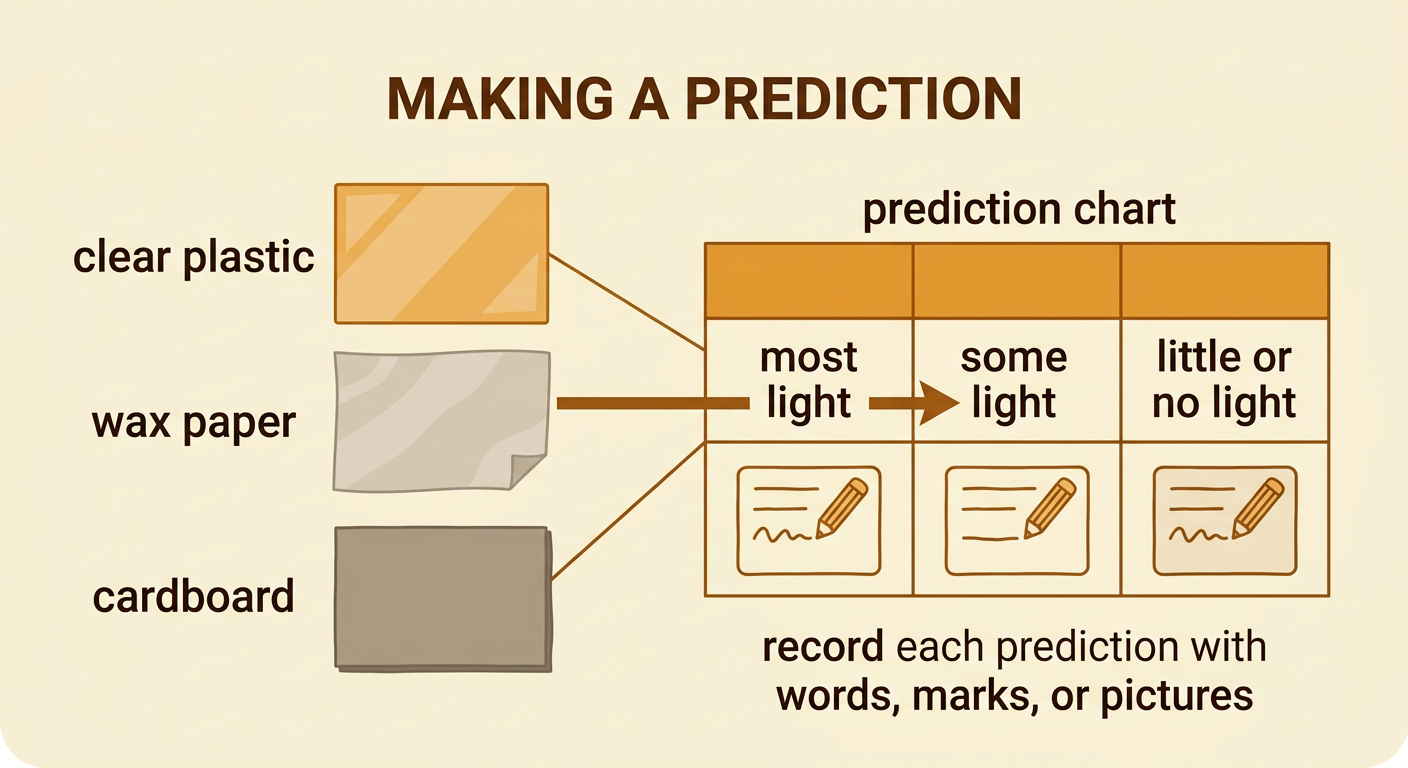
A prediction is what you think will happen before a test. You can use what you already know to make a careful prediction. Look at each material without shining the flashlight yet. Ask, “How much light do I think will pass through?” Use three categories: most light, some light, or little or no light. For example, you might predict that most light will pass through clear plastic, some light will pass through wax paper, and little or no light will pass through cardboard. Record each prediction. Predictions do not have to be correct. Scientists compare their predictions with what they actually observe. This helps them learn from evidence.
Test Different Materials
Work with a partner to test one material at a time. Place a flashlight on a table and aim it at a light-colored wall or screen. Keep the flashlight the same distance from the screen for every test. First, shine the light without a material and notice the bright spot. Then hold one sample between the flashlight and the screen. Observe whether the spot stays bright, becomes dim, or disappears. Clear plastic may let most light pass through. Wax paper may let some light through but scatter it, making a dim, blurry spot. Cardboard may block the beam. Repeat the test to check your observation. Do not shine the flashlight into anyone’s eyes.

Sort and Record Results
After each test, record what you observed. Sort every material into one of three result categories: most light, some light, or little or no light. You can make a picture graph by drawing or placing one symbol for each material. Then count how many materials are in each category. For example, your graph might show two materials under most light, three under some light, and two under little or no light. Compare the columns to find which category has the greatest number and which has the least. Check whether your results match your predictions. If they do not match, use the test result as your evidence. Scientists trust careful observations, even when the results surprise them.

Share Evidence and Daily-Life Connections
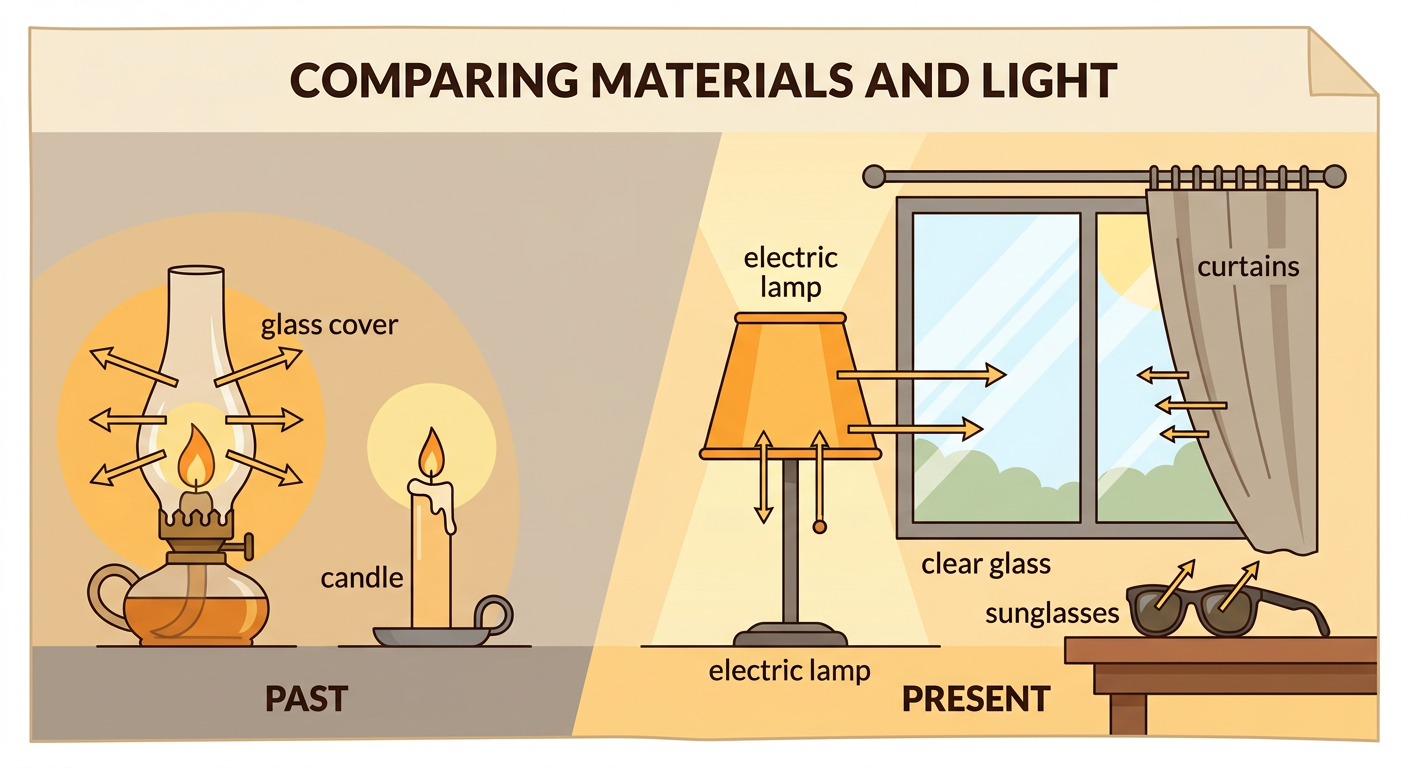
Share what you learned by naming a material, stating the result, and giving evidence from the test. You might say, “Cardboard blocked the light because no bright spot appeared on the screen.” People choose materials based on how much light they let through. Clear glass is used in windows so people can see and receive daylight. Curtains block some light for shade and privacy. Sunglasses reduce bright light before it reaches the eyes. Long ago, many families used candles or oil lamps, and glass covers helped shield the flame while letting light out. Today, many people use electric lamps and flashlights instead. Write or draw one way light and materials were used in the past and one way they are used today.