
What Is It Made Of?
Students observe everyday objects, identify the materials they are made from, and group them as wood, metal, plastic, glass, fabric, or paper.
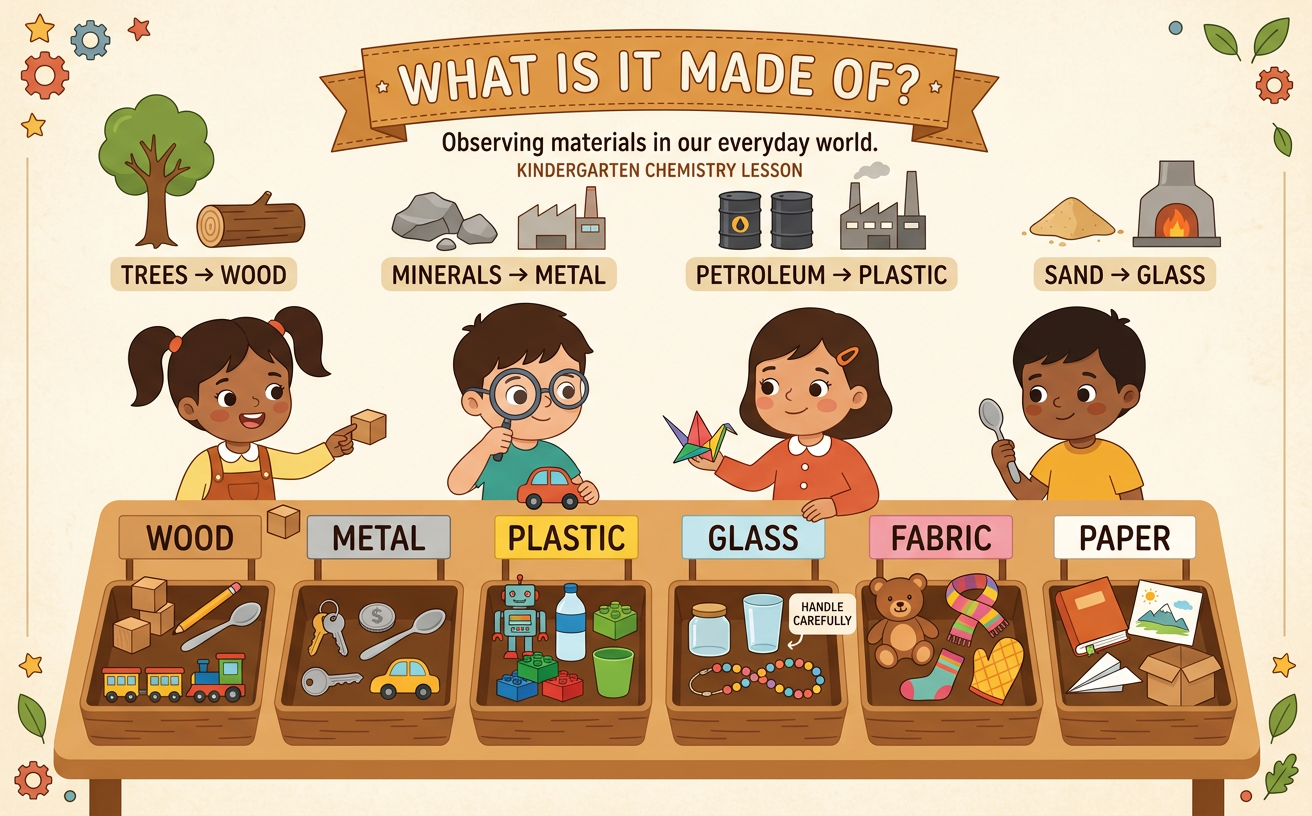
Illustrations are auto-generated and may be placeholders. They can be refreshed to match the narration.
Introduce Common Materials
Objects are made from materials. A material is what an object is made of. We can learn about a material by looking at it and gently touching it. Wood often has lines called grain. Metal may be shiny, hard, and cool. Plastic can be smooth and come in many colors. Glass is hard and lets light pass through, but it can break. Fabric is made of threads and can bend or fold. Paper is thin and can be folded or torn. For example, a wooden block is hard and may show brown grain. Today, we will use what we can observe to identify and group objects made from wood, metal, plastic, glass, fabric, or paper.

Observe Classroom Objects
Scientists observe carefully before they decide what something is made of. Look at each classroom object. Notice its color, shape, texture, shine, and whether it bends. You may gently touch safe objects when your teacher says it is okay. Do not taste materials, and do not handle broken or sharp objects. Ask questions such as, “Is it smooth?” “Is it shiny?” or “Can it bend?” For example, observe a metal paper clip. It is small, hard, smooth, and sometimes shiny. It can bend a little if an adult demonstrates safely. These clues help us describe the paper clip. Work with a partner, take turns speaking, and listen to what your partner notices.

Name What Each Object Is Made Of
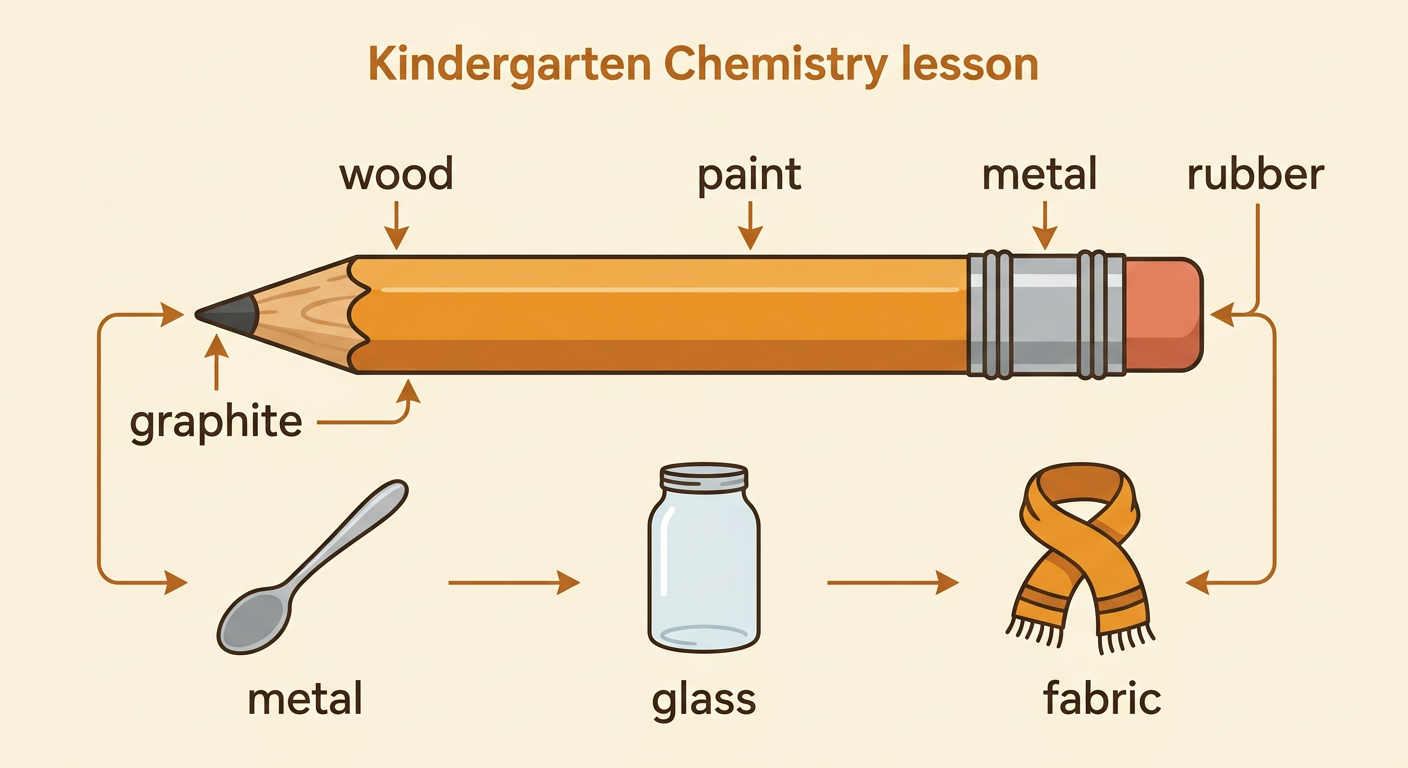
Use your observations to name the material in each object. Say a complete idea: “The spoon is made of metal.” Then give a clue: “I think so because it is hard, smooth, and shiny.” A craft stick is made of wood because it may have visible grain. A clear jar can be made of glass because it is hard and light passes through it. A scarf is made of fabric because it is soft, flexible, and made from threads. Some objects have more than one material. A pencil may have wood, graphite, metal, rubber, and paint. When this happens, point to each part and name its material, or identify the main material your class has agreed to use for sorting.
Sort Objects by Material
Sorting means putting objects into groups that follow a rule. Our rule is to group objects by material. Place a craft stick in the wood group, a spoon in the metal group, a plastic lid in the plastic group, a jar in the glass group, a cloth square in the fabric group, and a note card in the paper group. Talk with your group before placing an object. You might say, “I think the lid belongs with plastic because it is smooth, light, and does not show wood grain.” If an object has several materials, use the main material or place a picture of it in more than one group, following your teacher's rule. Check every group together and move any object when new evidence changes your thinking.

Count and Compare Groups
After sorting, count the objects in each material group. Touch or point to each object once as you say the number words. Write the total beside the group. For example, suppose there are 4 paper objects, 3 plastic objects, 2 metal objects, 2 fabric objects, 1 wood object, and 1 glass object. Paper has the most objects. Wood and glass are tied for the fewest. Metal and fabric have the same number. Put the groups in order from greatest count to least count. Check your work by counting again with a partner. The counts tell how many objects we sorted today. They do not tell which material is best, strongest, or most important.

Share Evidence and Review
Share one claim about an object and support it with evidence. A claim tells what you think. Evidence tells what you observed. You could say, “I claim the ruler is plastic because it is smooth, light, and slightly bendable.” Listen while classmates share, and ask a kind question if you need more information. People also use skills and knowledge to make goods. A carpenter knows how to shape wood to make a chair. A metalworker knows how to shape and join metal. A seamstress, tailor, or textile worker knows how to measure, cut, and join fabric. Review the big idea: objects are made from materials, materials have observable properties, and those properties help us describe, identify, sort, count, and compare objects.
