
What Living Things Need
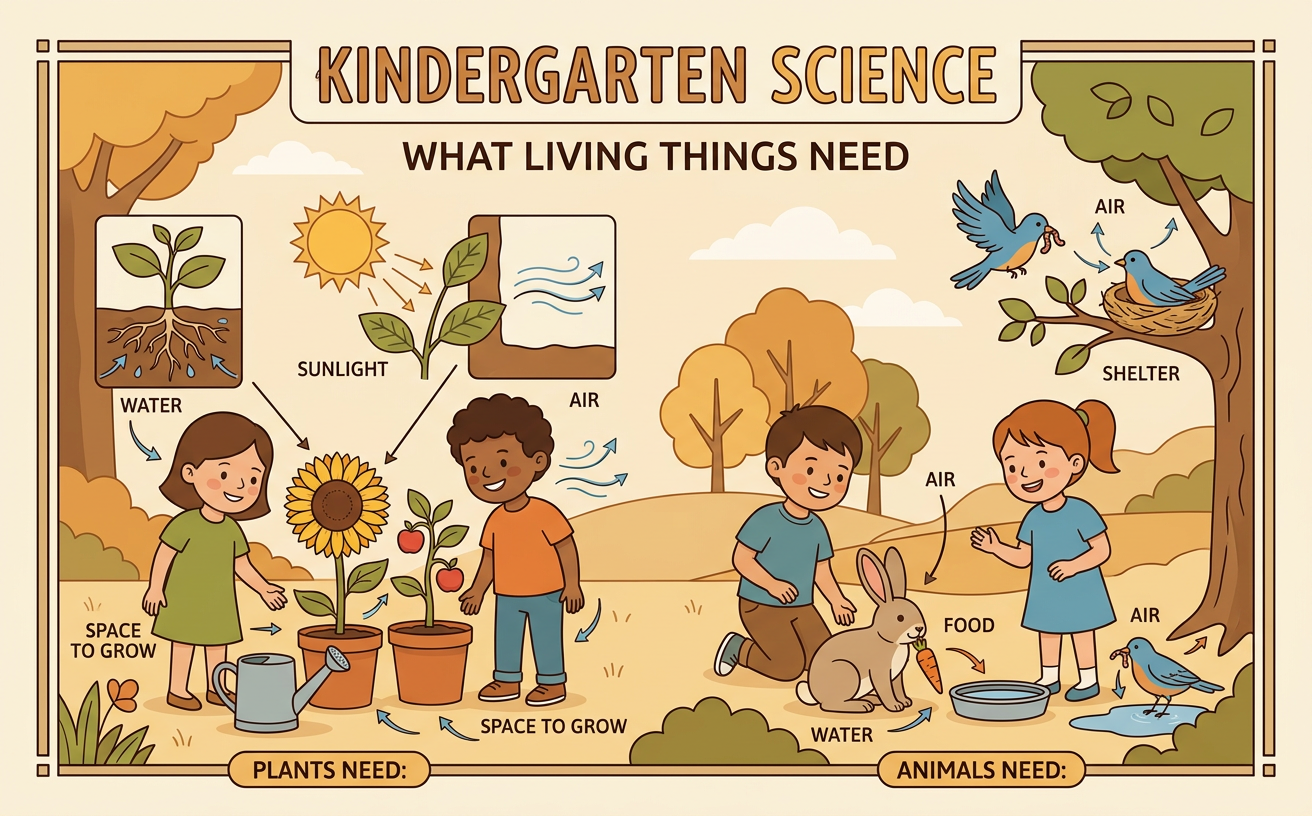
Students observe pictures of plants and animals to identify patterns in their basic needs for water, food, air, and a suitable place to live.
Illustrations are auto-generated and may be placeholders. They can be refreshed to match the narration.
Meet the Living Things
Living things include plants and animals. A tree, a sunflower, a bird, and a rabbit are living things. They grow and change over time. Living things need certain things to stay alive. Look closely at photographs of plants and animals. What do you notice around each one? A sunflower grows in soil where it can get water, air, and sunlight. A rabbit lives where it can breathe air, drink water, find food, and stay safe. The sunflower and rabbit look different, but both have needs. Tell a partner one thing you notice about a plant or animal. Listen while your partner shares an observation too.

Notice Their Needs
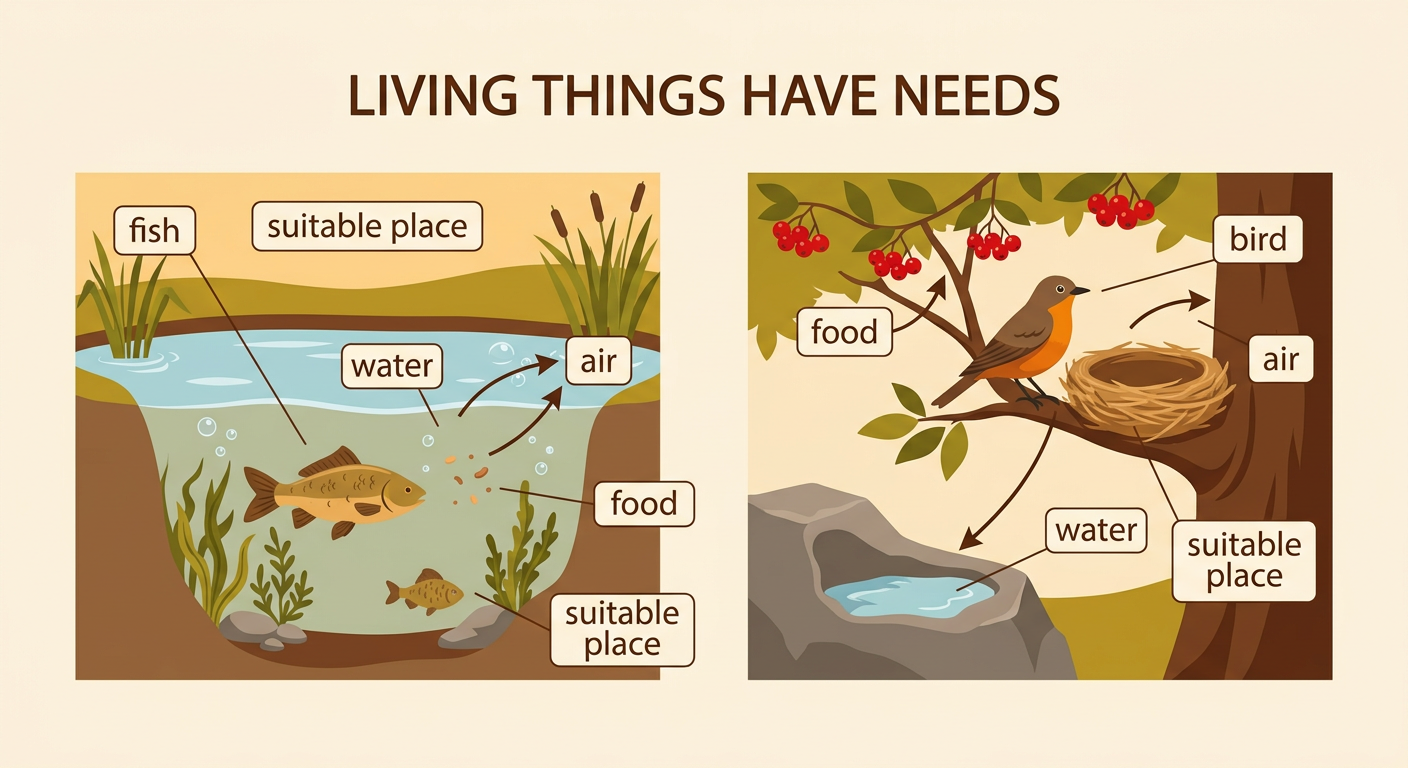
Living things need water and air. Animals also need food, and plants need light to make their own food. Every living thing needs a suitable place to live. A suitable place has the right resources and conditions for that living thing. For example, a fish lives in water. It gets oxygen from the water through its gills and finds food there. A fish cannot live for long on a dry sidewalk. A bird needs air, water, food, and a place where it can rest or build a nest. Study each picture and point to evidence of a need being met. Say, “I notice the bird has water to drink.”
Sort Plants and Animals
We can sort living things into groups by looking at their features. Plants usually grow in one place and make their own food using light, water, and air. Animals eat plants or other animals for food and move in different ways. Place picture cards of an oak tree, grass, a butterfly, and a deer into two groups: plants and animals. The oak tree and grass belong in the plant group. The butterfly and deer belong in the animal group. Then look at what each one needs. Both groups need water and air. Plants need light, while animals need food they can eat. Explain your sorting choice to a partner using what you observed.

Discuss Survival Patterns
A pattern is something that happens again and again. When we compare many living things, we see a survival pattern: they all need resources from the places where they live. A simple picture graph can show these needs. Water and air appear for every plant and animal. Light appears for plants because they use it to make food. Food appears for animals because they must eat. Suitable places are different. A cactus can live in a dry desert because it stores water, while a frog needs a wet place near fresh water. Look at a map or photograph of each place. Talk with your group about why each living thing fits its home. Take turns speaking, listening, and asking questions.

Draw a Living Thing and Its Needs
Choose one plant or animal to draw in a suitable place. Include the things it needs to survive. For example, draw a squirrel in a woodland. Add a stream for water, nuts for food, air around it, and a tree with a hollow for shelter. You may draw arrows from the squirrel to each need. Add clear labels so another person can understand your picture. Then share your drawing with a partner. Name the living thing, describe its place, and explain how the place meets its needs. Ask your partner, “What does your living thing need?” Listen carefully to the answer. Check that your drawing shows water, air, food or light, and a suitable place to live.
