What Living Things Need to Survive
Students observe, sort, and discuss pictures to identify how plants, animals, and people depend on food, water, air, light, and suitable places to live.

Illustrations are auto-generated and may be placeholders. They can be refreshed to match the narration.
Notice Living Things
Look closely at pictures of plants, animals, and people. These are living things. Living things need resources from their surroundings to stay alive. They may grow, change, or move in some way. A tree grows taller and turns its leaves toward light. A bird flies to find food and water. A person drinks water and eats food. Use what you can see as evidence. You might notice roots reaching into soil, a bird drinking from a puddle, or a child wearing a coat in a cold place. Ask yourself, “What is this living thing using?” Share one observation with a partner. Listen while your partner speaks, and then compare your ideas.

Name Basic Survival Needs
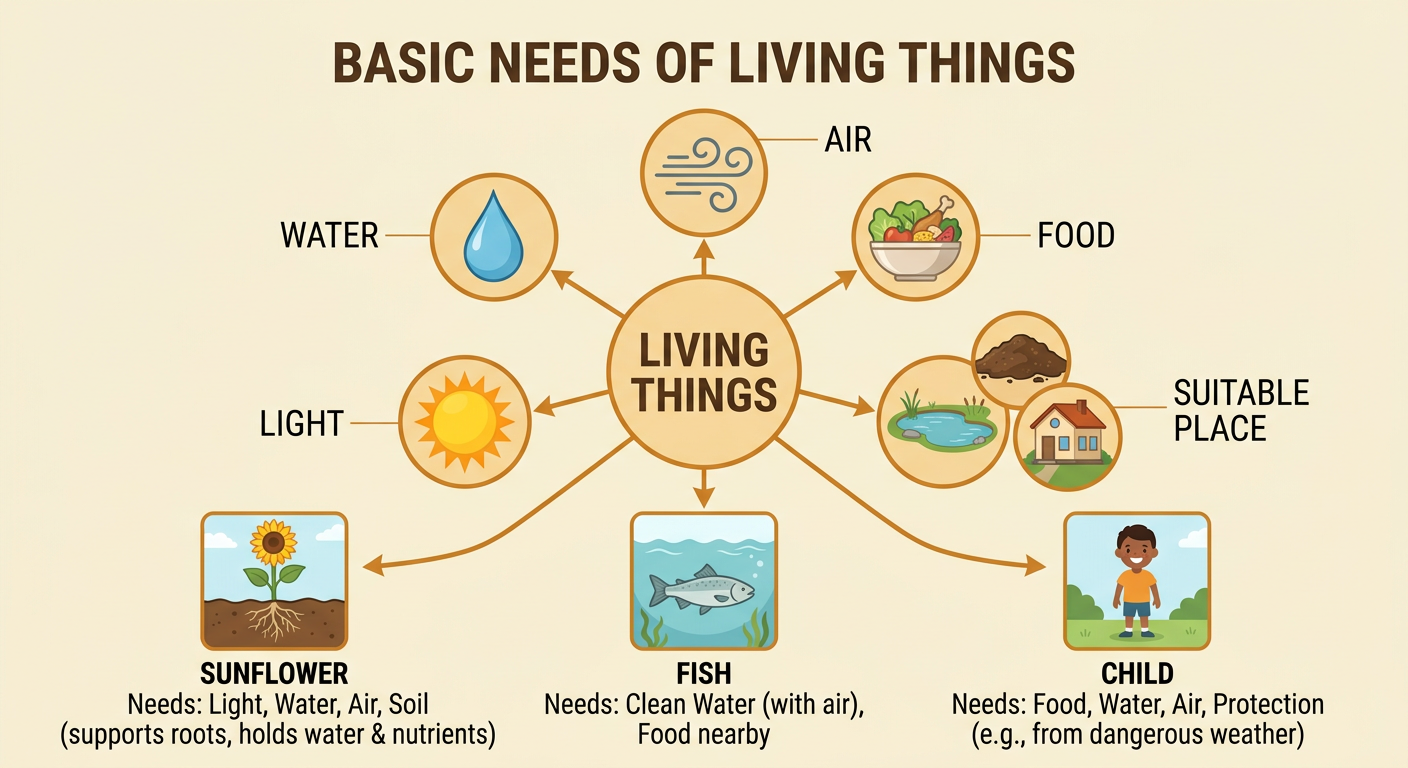
Living things need air and water. Animals, including people, also need food. Plants use light, water, and air to make the food they need. Plants do not eat soil, but soil can provide water, nutrients, and support for their roots. Every living thing also needs a suitable place to live. A suitable place has the right conditions and resources. For example, a fish needs clean water with enough oxygen and food. A sunflower needs light, water, air, and room for its roots. A person needs food, water, air, and a place that offers safety from dangerous weather. Point to each need in the picture and name the living thing that uses it.
Sort Plants, Animals, and People
Sort picture cards into three groups: plants, animals, and people. For this activity, place humans in the people group and all other animals in the animal group. A maple tree, grass, and a flower belong with plants. A rabbit, fish, and butterfly belong with animals. A baby, child, and adult belong with people. After sorting, count the cards in each group. Say a comparison such as, “There are four plant cards and three animal cards.” Check each picture by asking what features you notice. Leaves, stems, or roots can be clues for plants. Wings, fur, fins, or legs can be clues for animals. People may be shown doing things such as eating, drinking, working, or finding shelter.

Match Needs to Living Things
Match each living thing to the resources and place it needs. One living thing may match more than one need. Connect a sunflower to water, air, light, and soil with room for roots. Connect a rabbit to food, water, air, and a grassy place with cover. Connect a person to food, water, air, and a safe place to live. Think about the environment, too. People in a cold region may need warm clothing and heated shelters. People in a hot, dry region must make sure they can get enough clean water and shade. A place can help living things survive when it provides the right resources. If an important resource is missing, the living thing may need to move or may not survive.

Share an Evidence-Based Idea
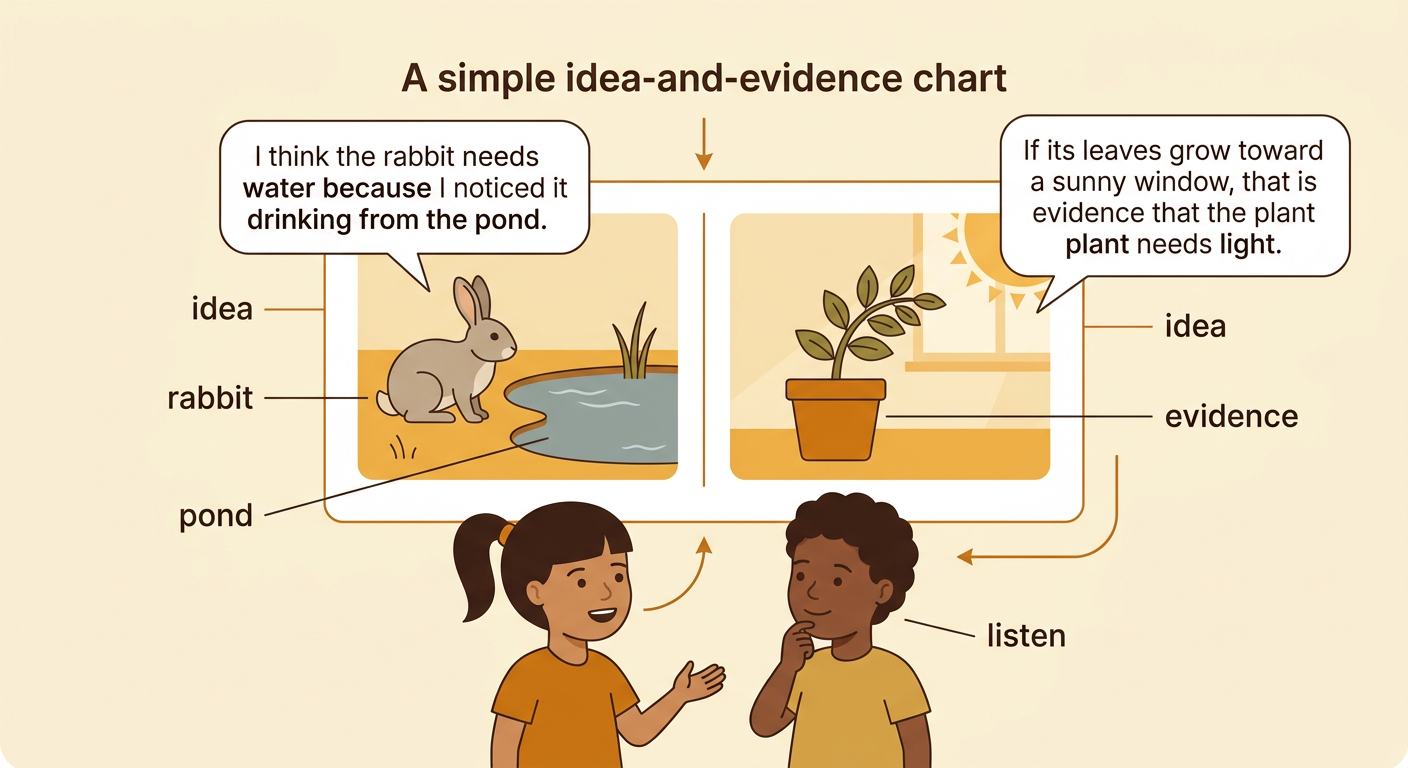
Use an observation to explain one idea about survival needs. First, state your idea. Then tell what you saw that supports it. You might say, “I think the rabbit needs water because I observed it drinking from the pond.” You could also say, “The plant needs light because its leaves are growing toward the sunny window.” Speak clearly so the group can hear you. Take turns, listen to others, and ask a question such as, “What did you notice?” Different pictures may show the same pattern: living things depend on resources in their environment. End by completing this sentence: “The living thing needs _____ because I noticed _____.” Your evidence should come from the picture, classroom observation, or sorting activity.