
What Makes Sugar Dissolve Faster?
Students conduct a fair test to determine how stirring affects the speed at which sugar dissolves in water and explain how efficient mixing is useful when producing foods and drinks.

Illustrations are auto-generated and may be placeholders. They can be refreshed to match the narration.
Why Efficient Mixing Matters
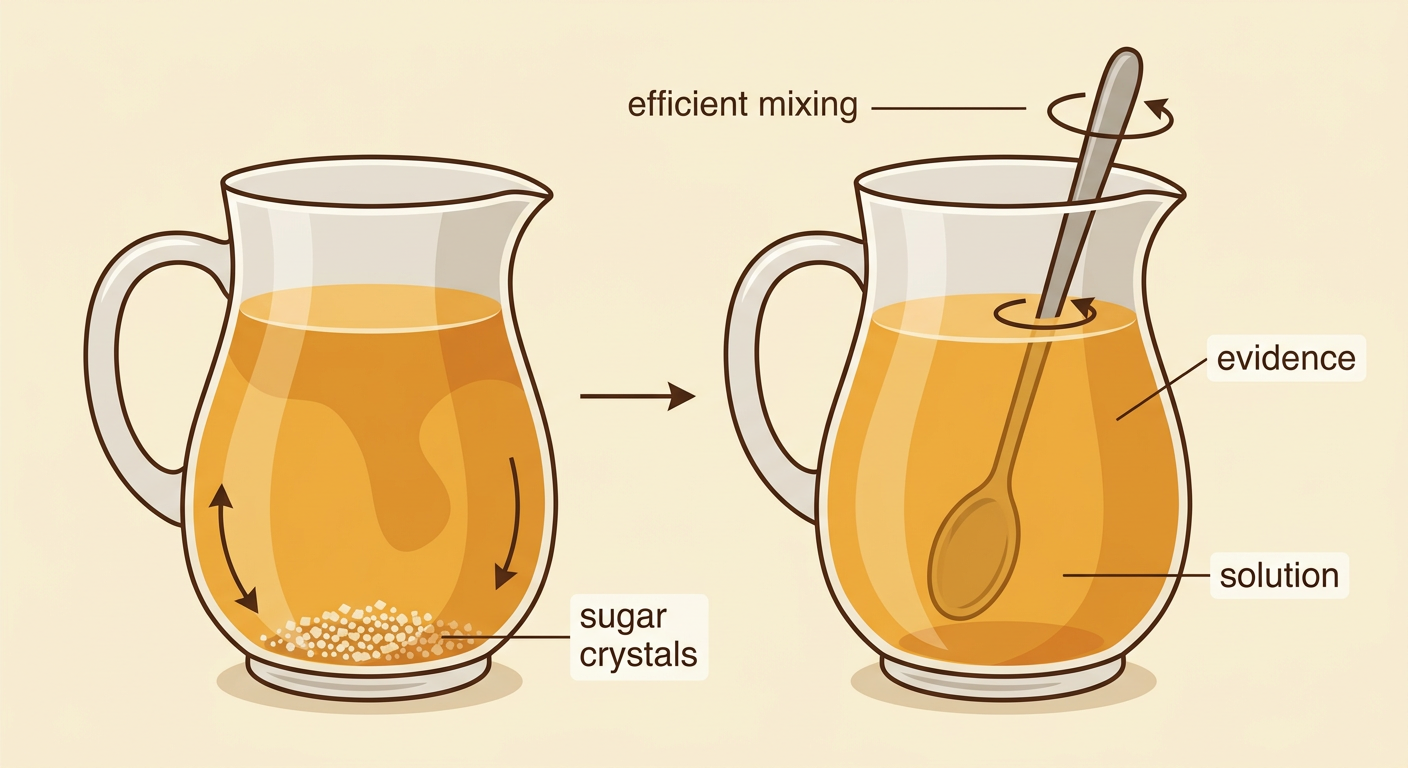
Efficient mixing means combining materials well without wasting time, effort, or supplies. Sugar dissolves when it spreads through water and forms a solution. The sugar has not vanished, even though we cannot see its crystals. Stirring can help sugar dissolve faster because moving water continually flows past the crystals. This matters when people prepare foods and drinks. For example, a worker making lemonade needs the sugar to spread evenly so one cup is not too sweet while another is sour. Fast, careful mixing helps workers make many batches that taste the same. During this lesson, your group will test stirring as a mixing method. Listen to each partner, share ideas, and use observations as evidence when discussing which method works best.
Observe Sugar and Water
Before testing, observe dry sugar and plain water separately. Sugar is a solid made of small crystals. Water is a clear liquid that takes the shape of its container. Place one measured spoonful of sugar into a clear cup of water without stirring. At first, many crystals sink and collect at the bottom. Some sugar slowly dissolves where it touches the water. Dissolving is different from melting. The sugar does not become liquid sugar; instead, its tiny particles spread throughout the water. The water may still look clear after the sugar dissolves. For example, if you taste a safe solution prepared by your teacher, it tastes sweet even though you cannot see the sugar. Record only what you notice, such as visible crystals, cloudiness, or changes over time.
Plan a Fair Stirring Test
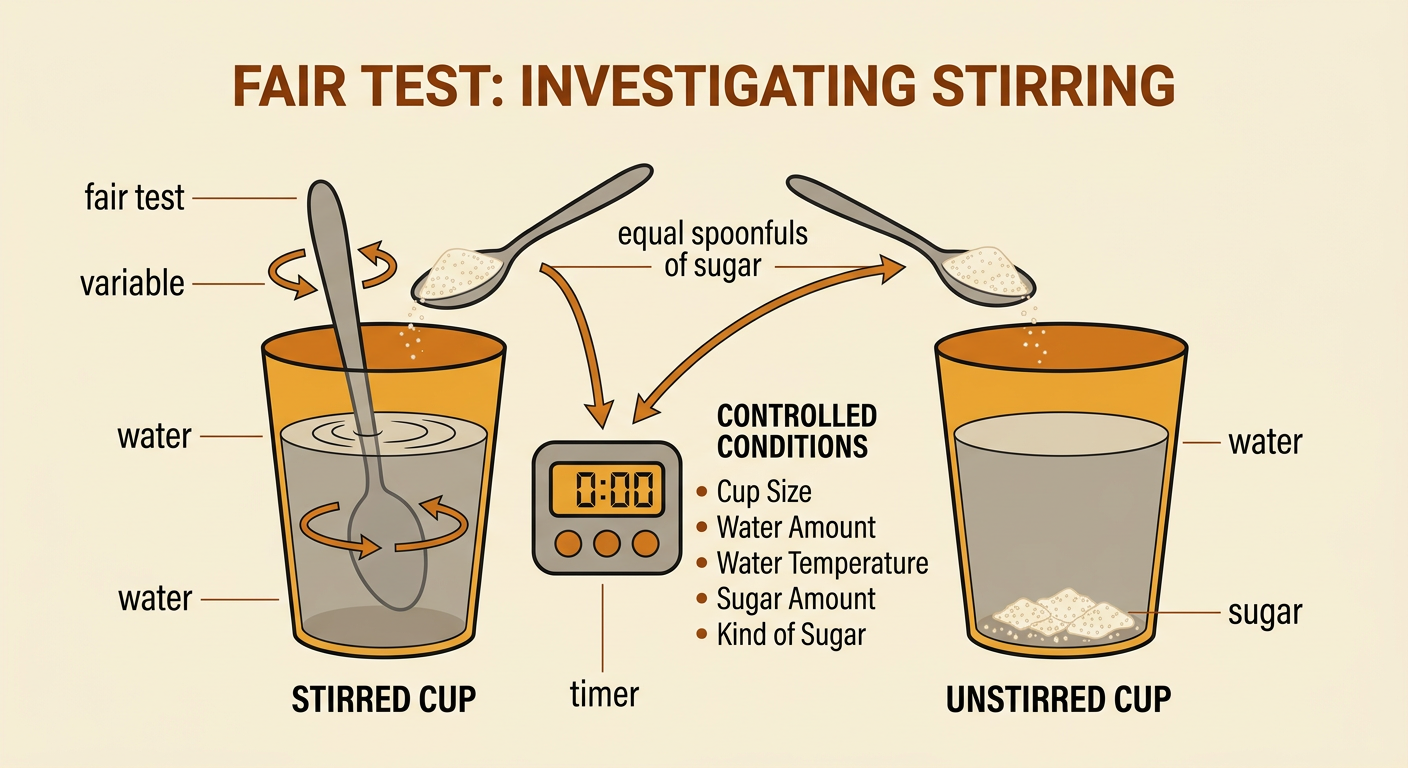
A fair test changes only one variable at a time. Your test will change whether the water is stirred. Prepare two identical clear cups. Add the same amount of water at the same temperature to each cup. Add the same amount and type of sugar at the same time. Stir one cup at a steady speed, but do not stir the other cup. Keep the cup size, water amount, water temperature, sugar amount, and kind of sugar the same. Start a timer when the sugar enters the water. Stop timing each cup when no crystals are visible. Assign group jobs, such as timer, stirrer, observer, and recorder. Before beginning, let every partner explain a step or ask a question. Agree on the plan so the comparison will provide useful evidence.
Compare the Results
Use your observations and recorded times to compare the cups. Make a table with one row for the stirred cup and one row for the cup that was not stirred. Write the time when the visible sugar crystals were gone. You can also record what you saw every 30 seconds. For example, the stirred cup may have no visible crystals before the unstirred cup does. That result would show that stirring increased the speed of dissolving under the tested conditions. Do not change a result just because it is surprising. Check whether both cups received equal amounts of sugar and water. If sugar was spilled or the stirring stopped, note that problem and repeat the test. Each group member should describe one observation and listen while classmates compare evidence.

Explain the Best Mixing Method
The best method in this test is the one that dissolves the sugar in less time while using the same materials. Stirring usually works faster than leaving the water still. A moving spoon pushes water around the cup. This movement brings fresh water into contact with the sugar crystals and carries dissolved sugar away from them. As a result, more of each crystal can contact water. Stirring does not destroy the sugar or change it into a new substance. It also does not necessarily allow an unlimited amount of sugar to dissolve; it mainly changes how quickly dissolving happens. For example, steady circular stirring may work better than stirring once and stopping. Use your group’s actual results to support your explanation: name the method, state the evidence, and explain why the evidence supports your choice.

Connect Mixing to Food Production
Food and drink producers use efficient mixing to make large amounts of products such as lemonade, flavored milk, sauces, and fruit drinks. Production requires different kinds of resources. Human resources are the workers who measure ingredients, run machines, test flavors, and clean equipment. Physical resources include mixing tanks, spoons, pumps, timers, and bottles. Natural resources include water and ingredients that come from plants, such as sugar from sugarcane or sugar beets. For example, a lemonade company combines water, sugar, and lemon juice in a large mixing tank. A powered mixer stirs the ingredients evenly and quickly. Efficient mixing can save worker time and help each bottle have the same taste. Producers must also avoid waste by measuring carefully, maintaining equipment, and making only the amount needed.
