When Nutrients Become Pollution: Investigating Algal Blooms
Students analyze water-quality data to explain how fertilizer runoff causes eutrophication and evaluate strategies for protecting aquatic ecosystems and nearby communities.

Illustrations are auto-generated and may be placeholders. They can be refreshed to match the narration.
Observe an Algal Bloom
An algal bloom is a rapid increase of algae or photosynthetic bacteria in water. A bloom may make water look green, form surface scum, reduce clarity, or produce an unpleasant odor. In western Lake Erie, warm, calm summer water and nutrient-rich runoff can support large blooms of cyanobacteria. Some cyanobacteria release toxins that can make drinking water unsafe and harm people, pets, fish, and wildlife. Begin an investigation by separating observations from explanations. Green surface water and dead fish are observations; fertilizer runoff causing the bloom is a possible explanation that requires evidence. Useful evidence includes nutrient concentrations, rainfall records, water temperature, dissolved oxygen, land use, and bloom size. A single photograph can reveal bloom location and extent, but water-quality measurements are needed to identify likely causes and effects.

Trace Nutrients Through the Ecosystem
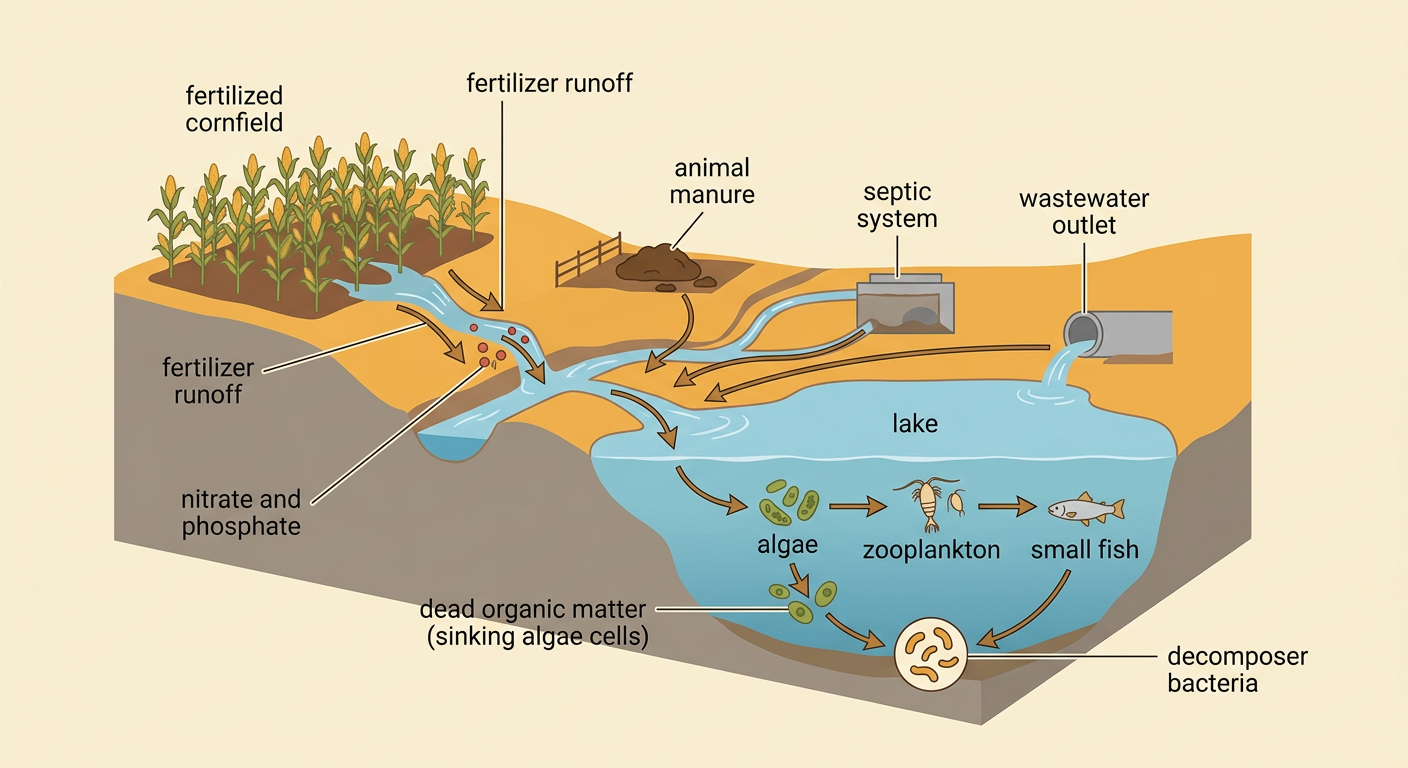
Nitrogen and phosphorus are essential nutrients, but an excessive supply can disrupt an aquatic ecosystem. Farmers add fertilizer to help crops grow. After heavy rain, water moving across bare or saturated soil can carry nitrate and phosphate into ditches, streams, and lakes. Leaking septic systems, wastewater, and animal manure can add more nutrients. In the lake, algae and cyanobacteria absorb the nutrients and reproduce rapidly. Zooplankton may eat some algae, and small fish may eat the zooplankton, so matter moves through the food web. When algae die, decomposer bacteria break down their cells. This process uses dissolved oxygen from the water. For example, fertilizer applied shortly before a thunderstorm may wash from a cornfield into a nearby stream, increasing nutrient inputs downstream. Nutrients are not inherently pollutants; they become pollution when their amount and location cause ecological harm.
Analyze Oxygen and Nutrient Data
Paired data can reveal relationships among nutrient levels, bloom growth, and dissolved oxygen. Suppose weekly lake samples show nitrate concentrations of 0.5, 1.0, 1.5, 2.0, and 2.5 milligrams per liter, paired with late-night dissolved oxygen levels of 8.6, 7.5, 6.3, 4.8, and 3.2 milligrams per liter. A scatter plot with nitrate on the horizontal axis and dissolved oxygen on the vertical axis shows a negative association: higher nitrate values occur with lower oxygen values. A fitted line can summarize the trend, while unusual points should be investigated rather than ignored. Students should also compare dates, rainfall, temperature, and algae measurements because association alone does not prove causation. For example, warm water naturally holds less oxygen and may strengthen the observed decline. Repeated samples and evidence from several variables support a more reliable explanation than one measurement.

Explain Eutrophication
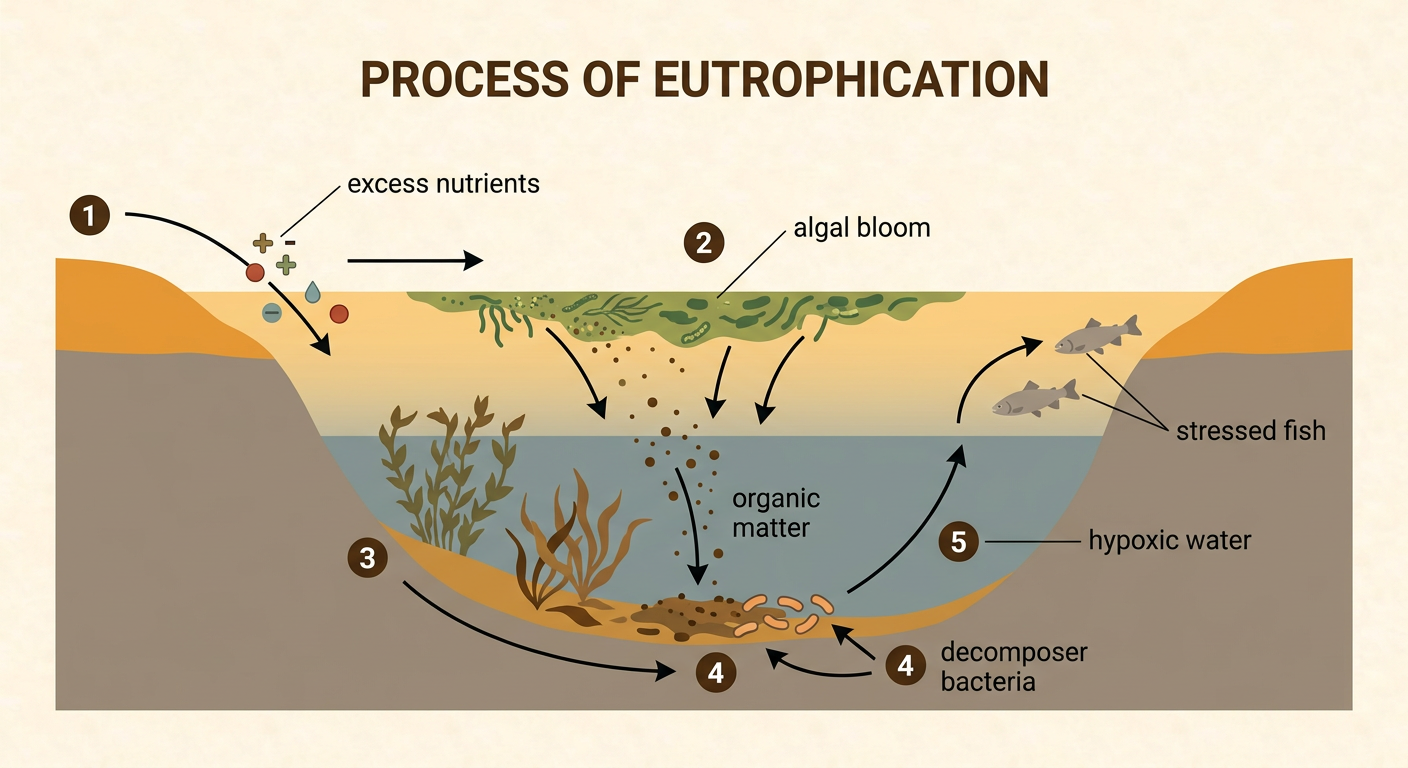
Eutrophication is the enrichment of water with nutrients, especially nitrogen and phosphorus. Human activities can accelerate a process that may also occur naturally over long periods. First, runoff delivers excess nutrients to a lake or estuary. Algae and cyanobacteria then grow rapidly, sometimes blocking sunlight needed by submerged plants. As algae and plants die, their organic matter sinks. Decomposer bacteria use cellular respiration to break down this material, consuming dissolved oxygen. If oxygen falls below levels needed by aquatic animals, the water becomes hypoxic; if oxygen is nearly absent, it becomes anoxic. Fish may leave, become stressed, or die, while bottom-dwelling organisms may be unable to escape. In the Gulf of Mexico, nutrients carried by the Mississippi River contribute to a seasonal low-oxygen zone. The bloom does not simply “use up” all oxygen while growing; nighttime respiration and decomposition are major causes of oxygen loss.
Evaluate Runoff Solutions
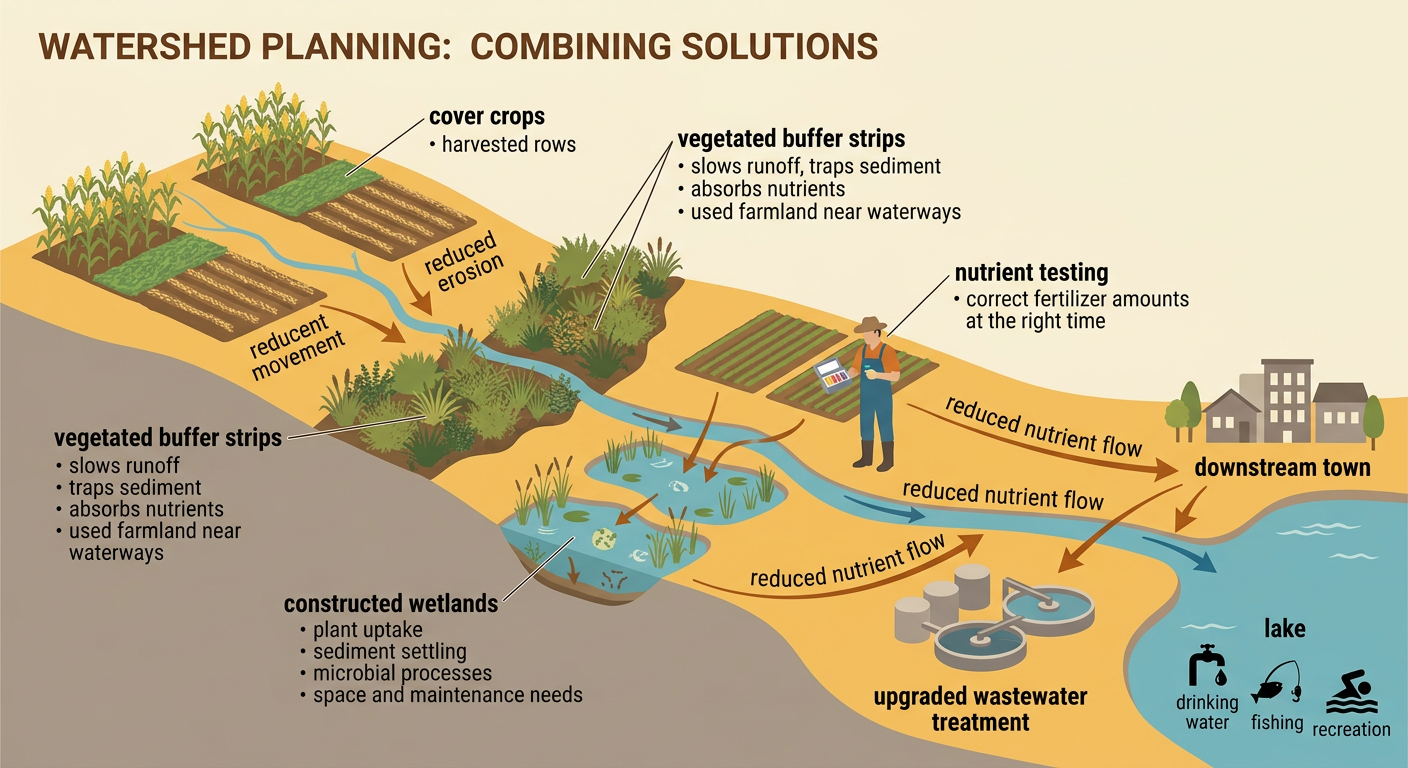
Effective solutions reduce nutrient inputs while considering cost, land use, community needs, and local geography. Vegetated buffer strips beside streams slow runoff, trap sediment, and absorb nutrients, but they require farmland near waterways. Cover crops keep soil covered between harvests and reduce erosion, although seed and labor add costs. Constructed wetlands retain water and remove some nutrients through plant uptake, sediment settling, and microbial processes, but they need space and maintenance. Farmers can also apply the correct fertilizer amount at the right time and avoid application before heavy rain. Upgraded wastewater treatment and repaired septic systems address nonfarm sources. For a town downstream from cornfields, a strong plan might combine fertilizer testing, stream buffers, and wetland restoration. Students can evaluate the plan by comparing nutrient reduction, cost, feasibility, biodiversity benefits, and effects on drinking water, fishing, recreation, and local jobs, then refine it using monitoring data.