Which Animals Thrive Here?
Students analyze habitat information and simple survival data to explain why certain animals thrive, struggle, or cannot survive in a habitat and how human activities can change that habitat.

Illustrations are auto-generated and may be placeholders. They can be refreshed to match the narration.
What Does a Habitat Provide?
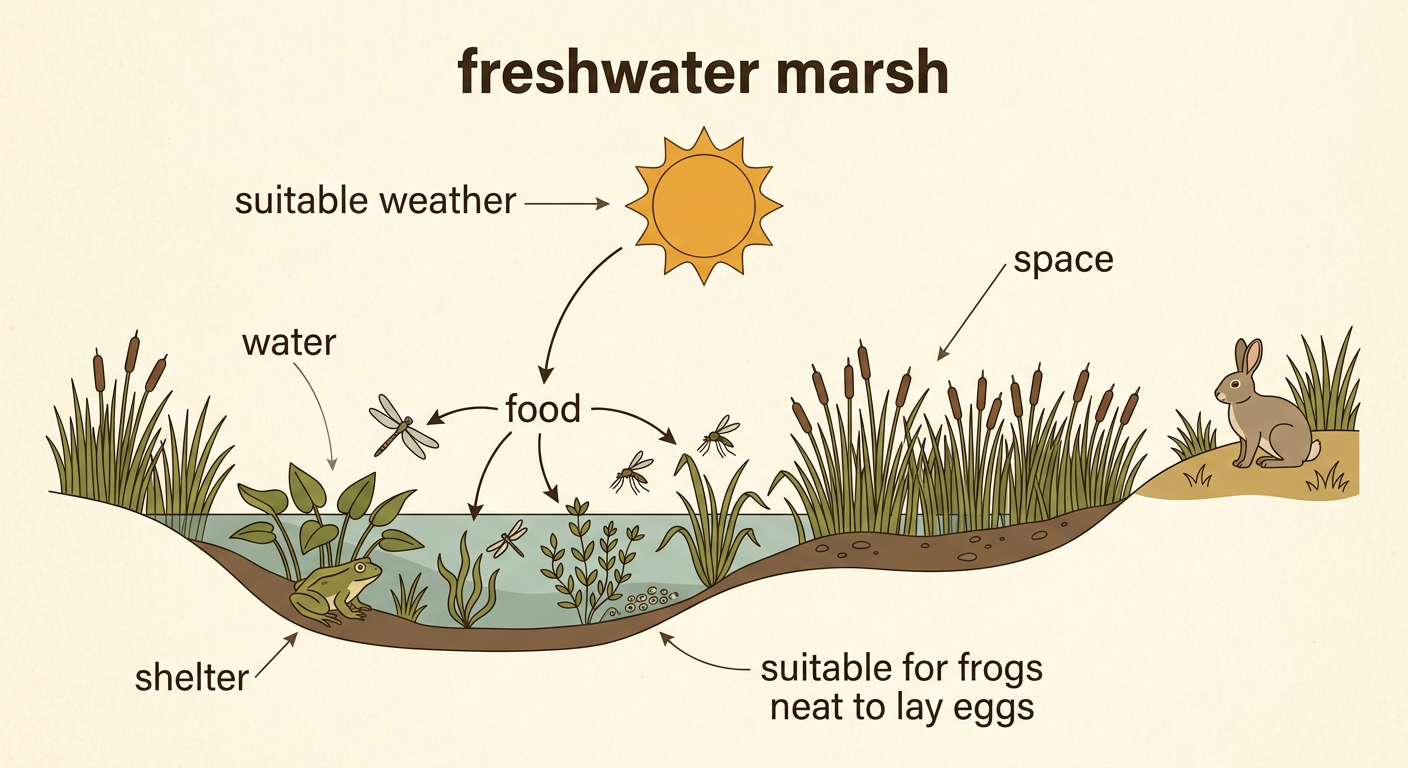
A habitat is the place where an organism lives. A useful habitat provides food, water, shelter, space, and suitable weather conditions. Different animals need different combinations of these resources. For example, a freshwater marsh has shallow water, wet soil, insects, water plants, and patches of dry land. A frog can eat insects, hide among plants, and lay eggs in the water. A rabbit may find grass near the marsh, but very wet ground provides less safe shelter for its burrow. When a habitat meets most of an animal’s needs, the animal is more likely to survive and reproduce. When an important resource is missing, the animal may struggle or be unable to survive there.
Meet the Animals
Consider four animals in a freshwater marsh model: leopard frogs, mallard ducks, eastern cottontail rabbits, and camels. Leopard frogs need freshwater for their eggs and moist places where they can find insects. Mallards eat water plants, seeds, and small water animals, and they rest near ponds. Cottontail rabbits eat grasses and other plants, but they need mostly dry ground and covered places for hiding. Camels are adapted to dry habitats, where their bodies help them go for long periods with little water. A wet marsh does not provide the dry conditions and desert foods that camels need. By comparing each animal’s needs with the marsh’s features, we can predict which animals are likely to thrive, struggle, or fail to survive.

Read the Survival Data
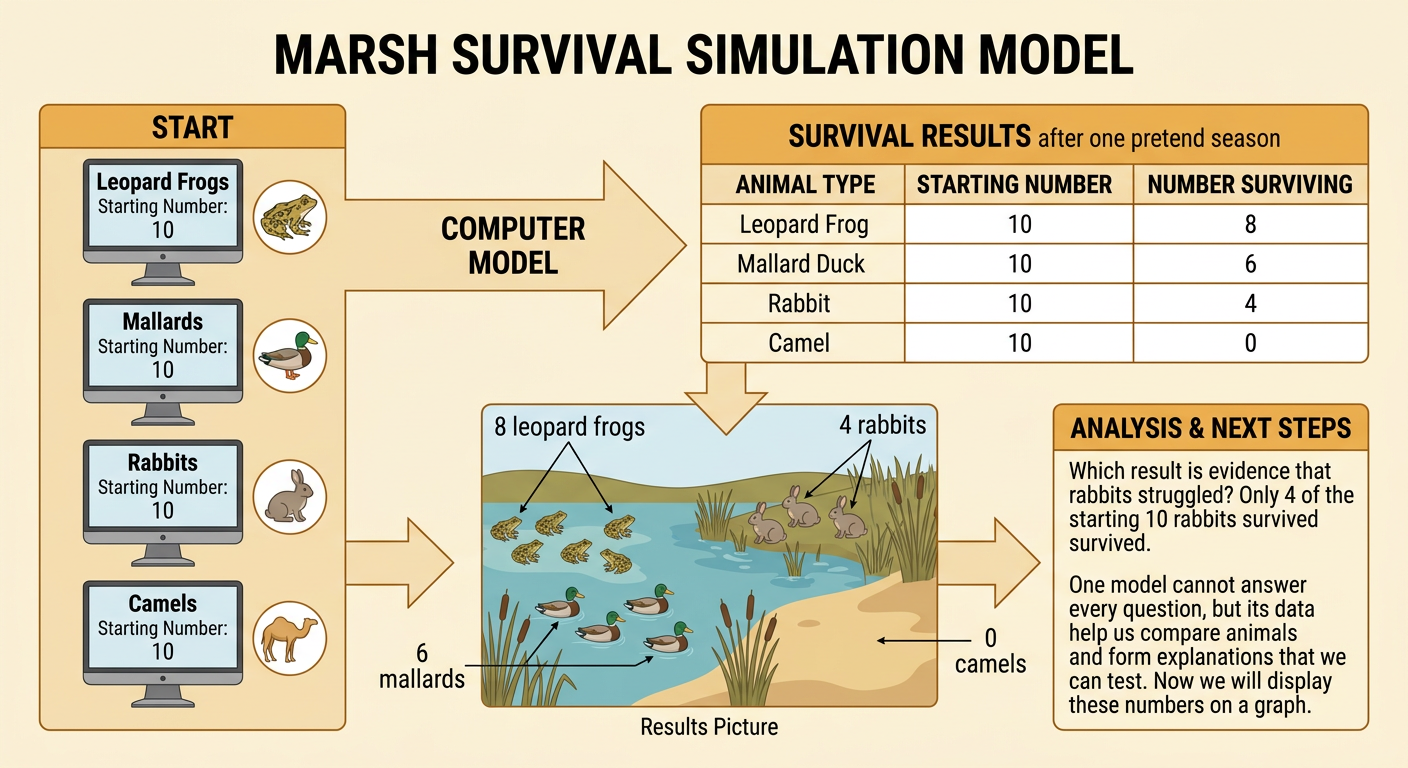
A computer model begins with 10 animals of each kind in a freshwater marsh. After one simulated season, 8 leopard frogs, 6 mallards, 4 cottontail rabbits, and 0 camels survive. These numbers are evidence about how well the habitat meets each animal’s needs. The frogs have the highest survival because the marsh provides water, insects, and hiding places. Mallards also survive fairly well, although food or nesting space may be limited. Rabbits have lower survival because much of the ground is too wet for safe shelter. Camels have no survivors because the marsh is very different from their dry habitat. Data from one model do not answer every question, but they support comparisons and help us form testable explanations.
Build a Habitat Bar Graph
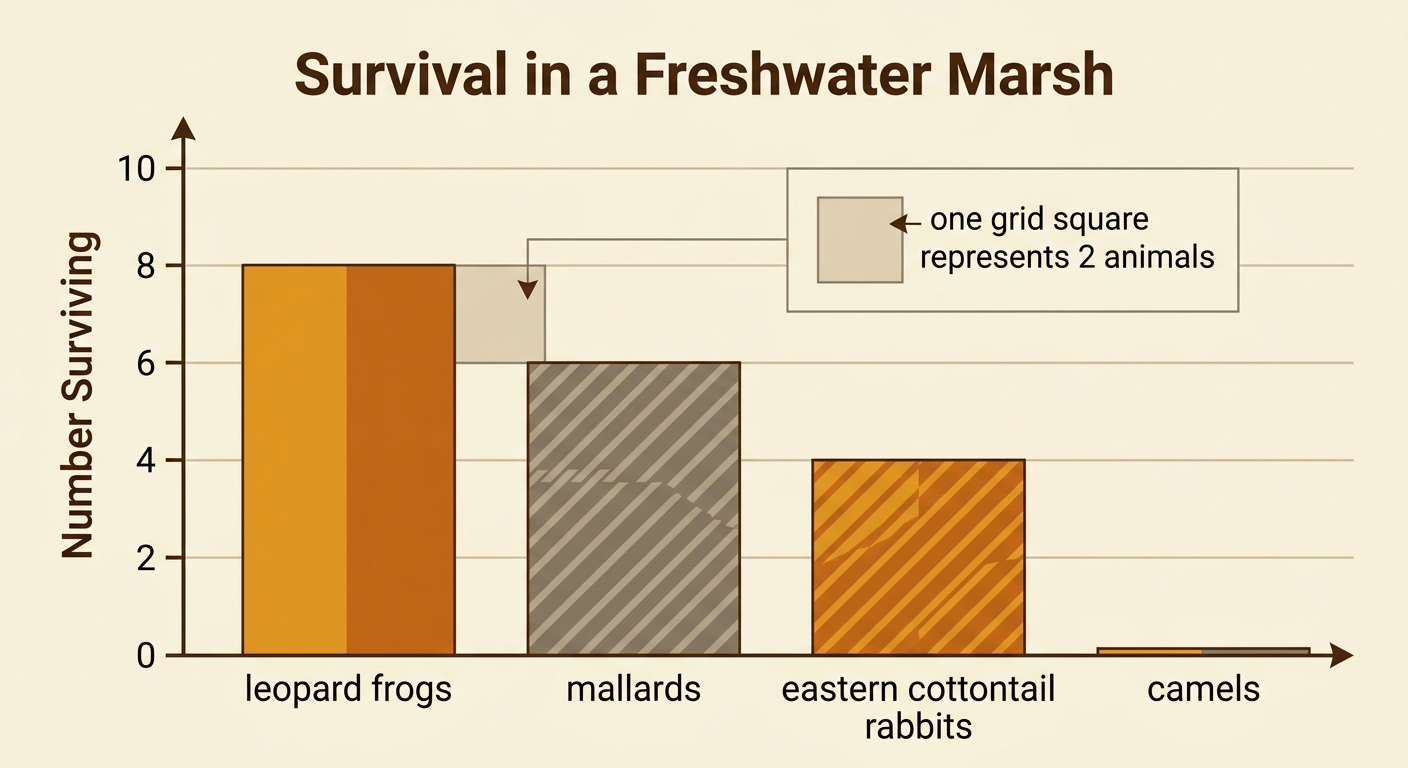
A scaled bar graph makes the survival data easy to compare. Write the animal names along the horizontal axis and “Number Surviving” on the vertical axis. Use a scale in which each grid square represents 2 animals. Mark the vertical axis 0, 2, 4, 6, 8, and 10. Draw the frog bar to 8, the mallard bar to 6, the rabbit bar to 4, and the camel bar to 0. Keep every bar the same width and begin each bar at zero. Add the title “Survival in a Freshwater Marsh.” The frog bar is two grid squares taller than the mallard bar, which means 2 more frogs survived. A correct scale allows readers to compare the quantities without counting individual pictures.
Make an Evidence-Based Claim
An evidence-based argument includes a claim, evidence, and reasoning. A claim answers the question. Evidence gives relevant facts or data. Reasoning explains how the evidence supports the claim. For example, a student might claim, “Leopard frogs thrive best in the freshwater marsh.” The evidence is that 8 of 10 frogs survived, more than any other animal in the model. The habitat illustration also shows shallow water, insects, and thick plants. The reasoning connects these facts: frogs need freshwater for reproduction, insects for food, and plants for shelter, so the marsh meets several important needs. Avoid unsupported statements such as “Frogs are the best” or “Frogs like water.” Strong arguments use exact data and specific habitat information. New evidence may cause a scientist to revise a claim.

Consider Human Impacts
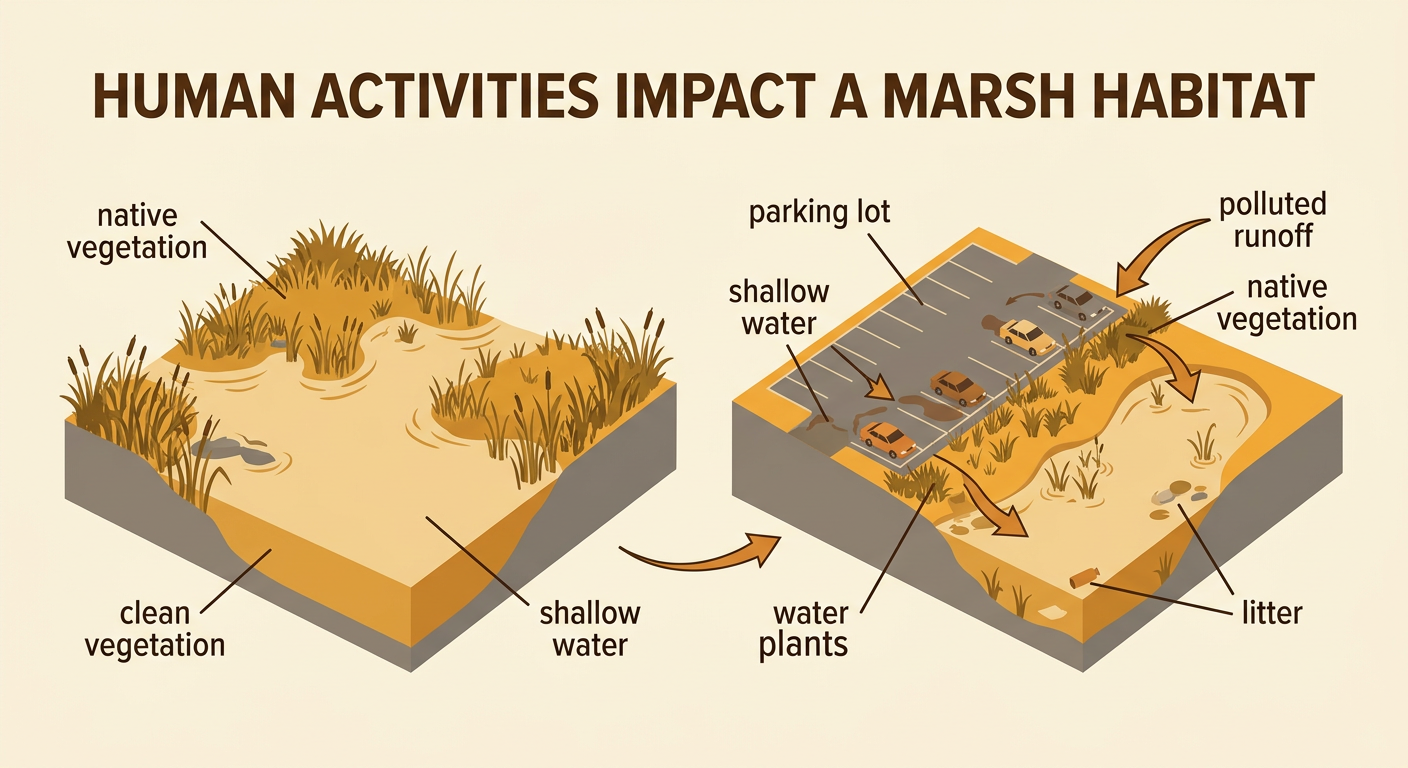
Human activities can change a habitat’s water, soil, plants, food, and shelter. Suppose people drain part of the marsh to build a parking lot. The marsh becomes smaller, and there is less shallow water for frog eggs and fewer water plants for mallards. Frogs and mallards may then have lower survival. Some rabbits might gain dry ground, but they could still lose food and hiding places if grasses are removed. Pollution from oil, trash, or lawn chemicals can also harm water quality and the organisms living there. People can reduce damage by protecting wetland areas, planting native vegetation, limiting polluted runoff, and cleaning up litter. To predict an impact, identify the habitat feature that changes, determine which animal needs it, and use that connection as evidence.