
Which Material Keeps Water Out?
Students test paper, cloth, and plastic with equal drops of water, record the results, and use evidence to choose the best material for a waterproof cover.

Illustrations are auto-generated and may be placeholders. They can be refreshed to match the narration.
What Does Waterproof Mean?
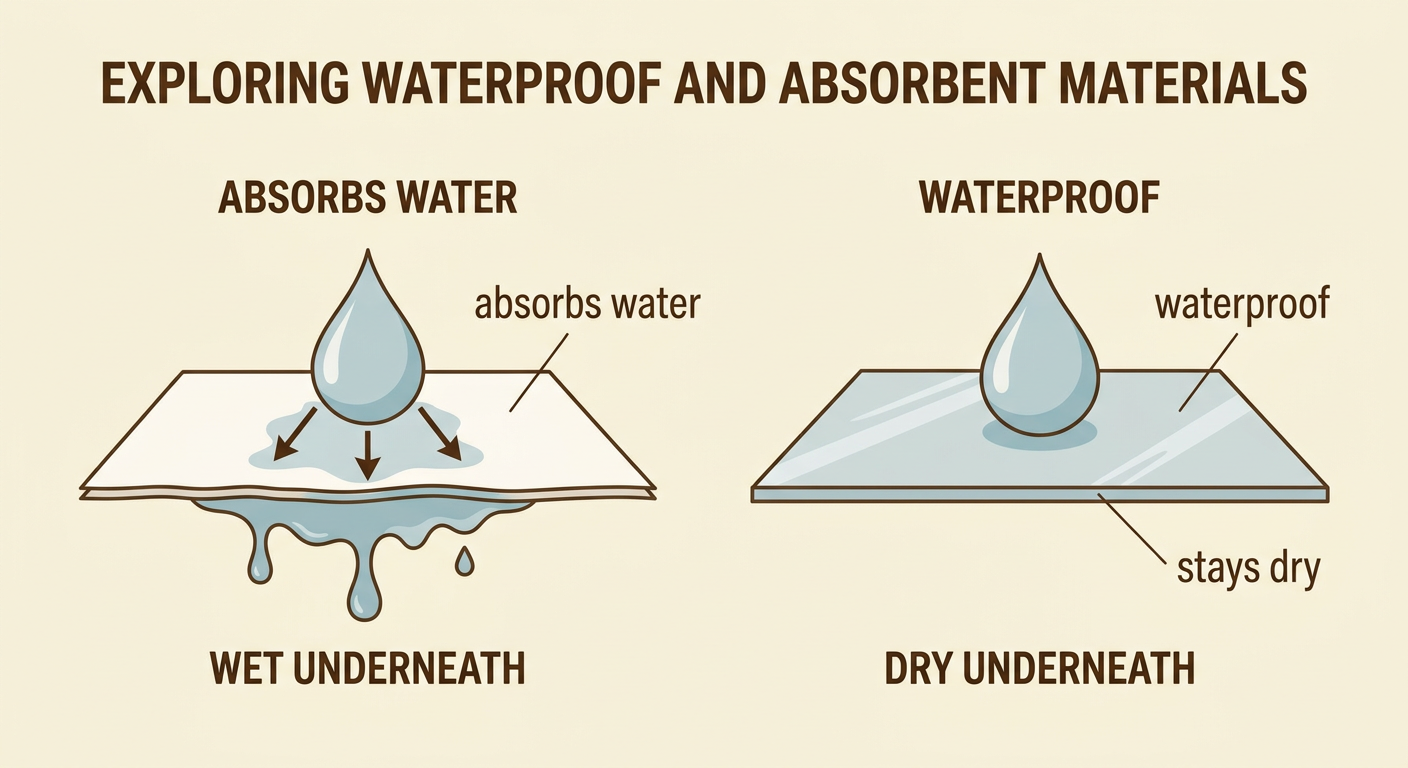
Waterproof means that water does not pass through a material. A waterproof material helps keep what is underneath it dry. Some materials absorb water. Water soaks into them and may pass through. Other materials make water form drops on the surface. For example, a plastic raincoat keeps water away from a person’s clothes. A paper towel is not waterproof because it absorbs water and becomes wet. A material can feel wet on top but still keep water from passing through it. In this lesson, you will test paper, cloth, and plastic. You will look for water under each material. Your observations will help you decide which material would make the best cover for keeping an object dry.
Predict the Best Material
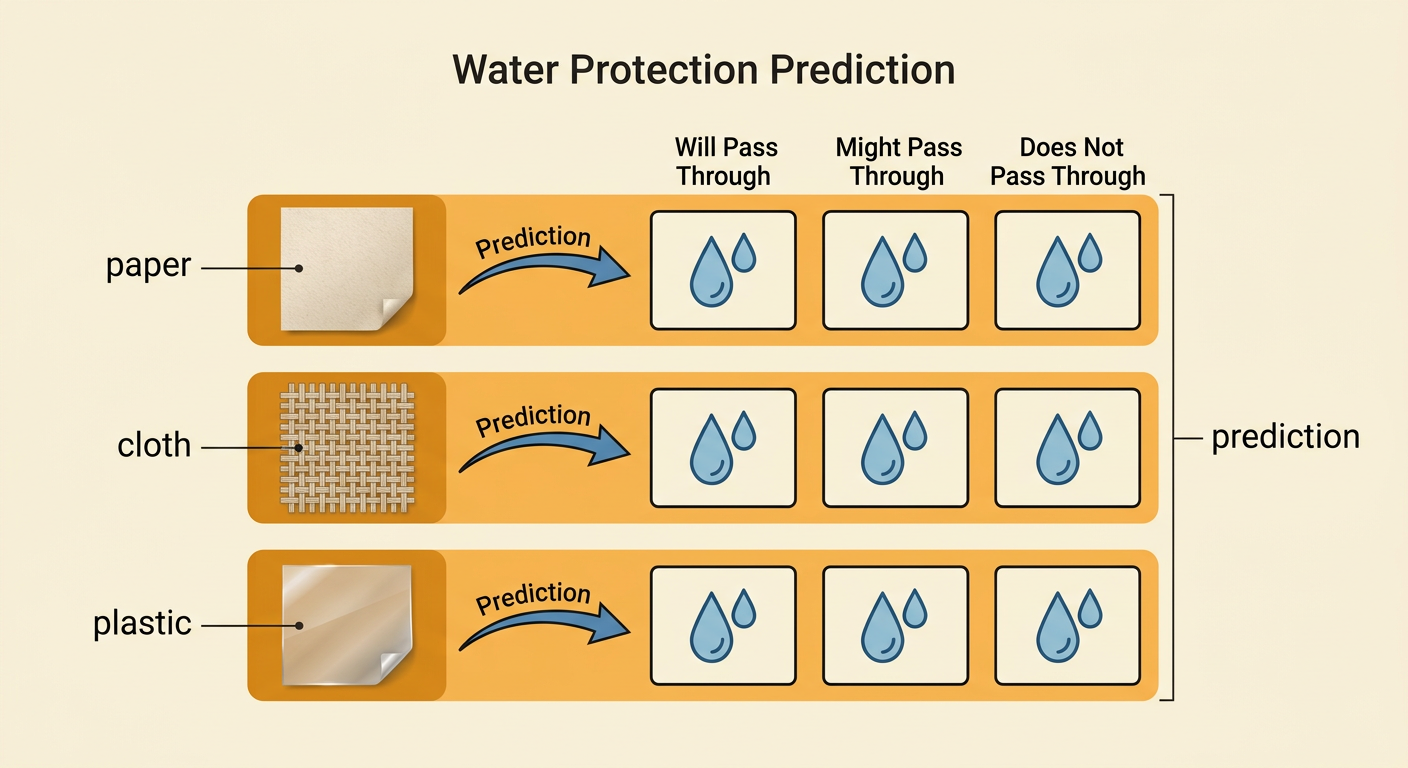
A prediction is what you think will happen before a test. Look closely at paper, cloth, and plastic. Think about how each material feels and what you already know about it. Paper may feel thin and smooth. Cloth may feel soft and have tiny spaces between its threads. Plastic may feel smooth and have no visible holes. Predict which material will keep the most water out. For example, you might say, “I predict plastic will work best because I have seen plastic umbrellas in the rain.” Record one prediction for each material: water will pass through, water might pass through, or water will not pass through. Share your ideas with a partner. Listen carefully, take turns speaking, and remember that a prediction can change after you collect evidence.
Conduct a Fair Water-Drop Test
A fair test changes only one thing: the material. Cut paper, cloth, and plastic into equal-size squares. Stretch one square over the top of a clear cup and hold it in place with a rubber band. Use a dropper to place five equal drops of water in the center. Wait 30 seconds. Look for water inside the cup and notice whether the material absorbed water. Dry the cup, then repeat the steps with the next material. Use the same cup size, material size, number of drops, drop location, and waiting time for every test. For example, do not give paper five drops and plastic only two drops. That would not be fair. Work with a partner: one person can add drops while the other counts and observes. Wipe up spills so the work area stays safe.

Record and Compare Results
Record what you observe instead of relying on memory. Make a chart with three categories: paper, cloth, and plastic. For each material, note whether water went through and whether the material became wet. You can also count how many of the five drops stayed above the cup. Suppose one test showed that paper kept out one drop, cloth kept out two drops, and plastic kept out all five drops. Draw that result on a picture graph, using one water-drop symbol for each drop kept out. Then compare the categories. Plastic has more symbols than cloth, and cloth has more than paper. This means plastic kept out the most water in that example. Your class results might be different, so use the numbers and observations from your own fair test.

Choose a Material Using Evidence
Evidence is information collected during a test. Use your chart and observations to choose the best material for a waterproof cover. State your choice, give the evidence, and explain why it matters. For example, you might say, “I choose plastic because all five drops stayed above the cup, no water went through, and the space below stayed dry.” Do not choose only because you like a color or texture. The best material is the one whose tested properties fit the job. Paper or cloth might be useful for another job, even if it is not best for keeping water out. People who make waterproof covers need skills and knowledge. They must test materials, read data, measure, cut, join pieces, and check their work. These skills help them produce useful goods, such as rain covers and umbrellas.
