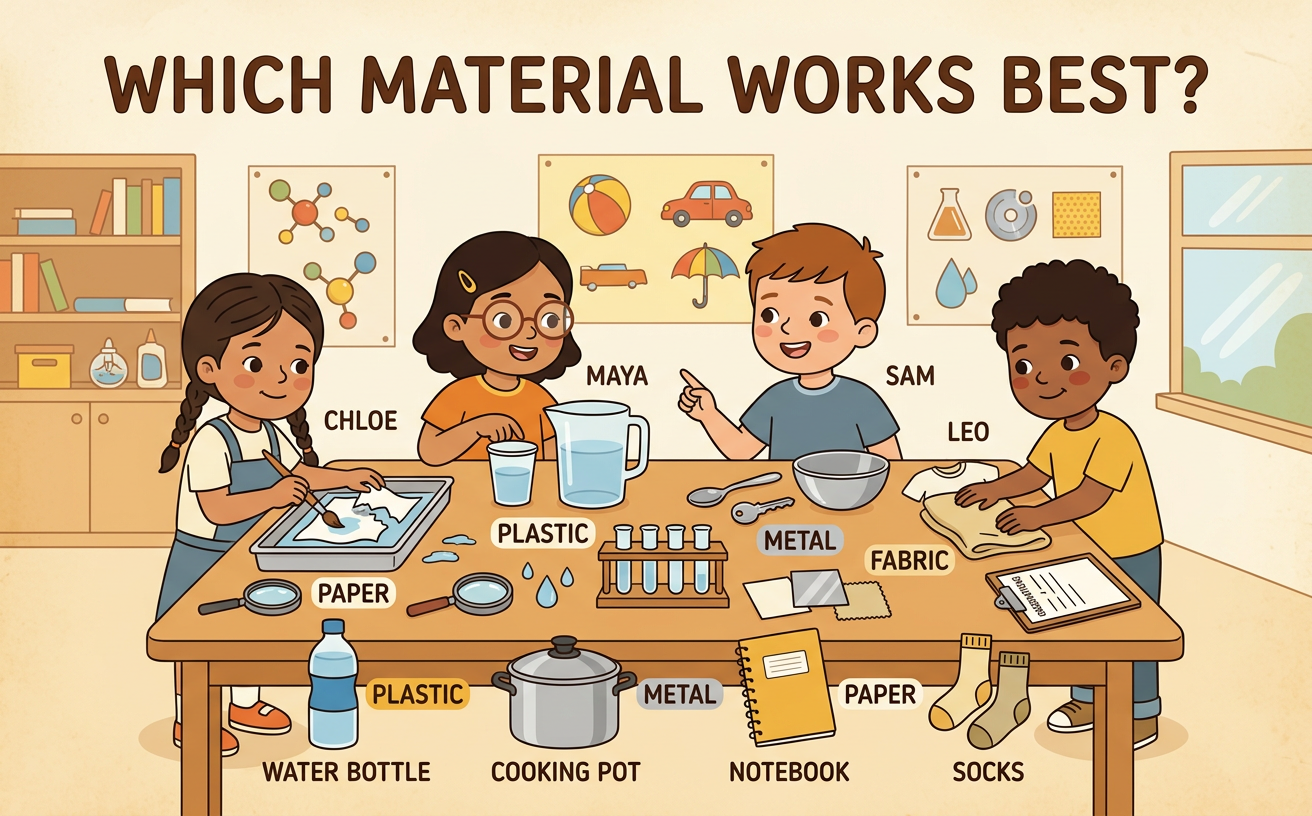
Which Material Works Best?
Students observe and compare paper, plastic, metal, and fabric by their properties and discuss why different materials are used to make everyday objects.
Illustrations are auto-generated and may be placeholders. They can be refreshed to match the narration.
Meet the Materials
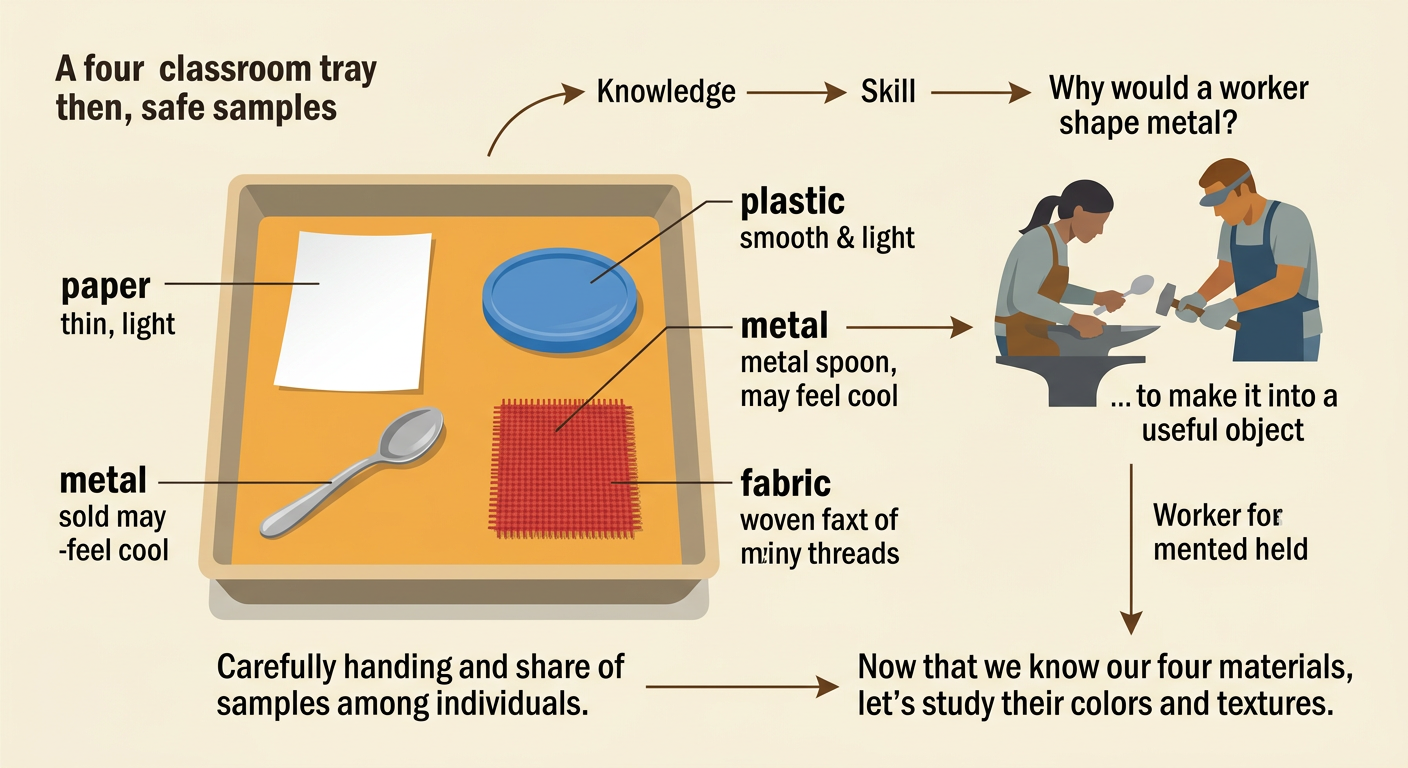
Materials are what objects are made from. Today we will explore four materials: paper, plastic, metal, and fabric. Look closely at one safe sample of each material. A sheet of paper is thin and light. A plastic lid may be smooth and light. A metal spoon feels solid and may feel cool. A piece of fabric is made of many tiny threads. Ask questions as you look. What does each material feel like? Can you bend it? Where have you seen it before? People need knowledge and skills to turn materials into useful goods. For example, a worker can shape metal to make a spoon. Handle every sample carefully, and share the materials with your classmates.
Observe Color and Texture
Color tells how something looks, such as red, blue, silver, or white. Texture tells how a surface feels. A surface can feel smooth, rough, soft, or bumpy. Use your eyes first, and then gently touch each sample. You might observe that white paper feels mostly smooth, while woven fabric feels soft and slightly bumpy. A plastic lid may be blue and smooth. A metal spoon may be silver, shiny, and smooth. Not every piece of one material looks or feels exactly the same, so describe the sample in front of you. Compare two samples using a full sentence. You might say, “The fabric is softer than the metal spoon.” Listen as classmates share observations, because they may notice details you missed.

Compare Hardness and Flexibility
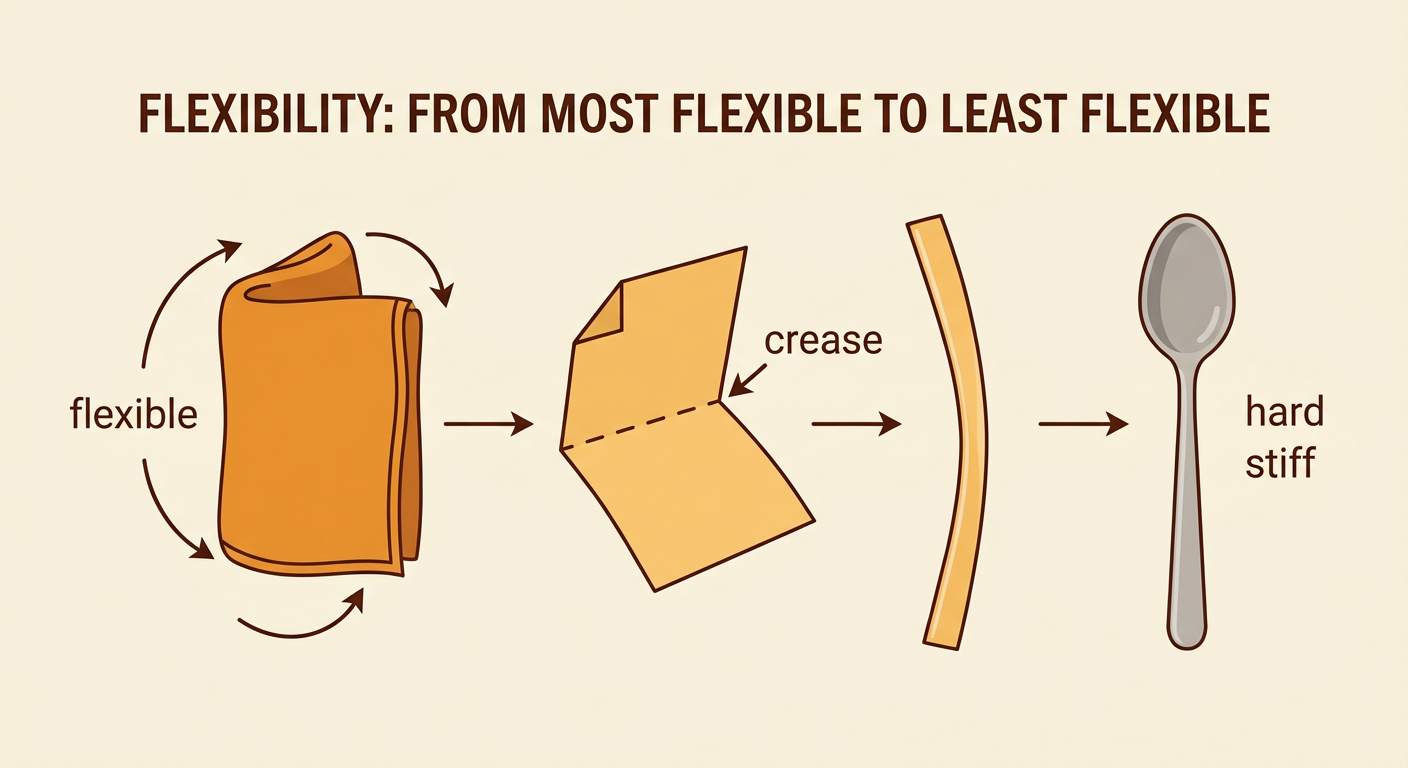
Hardness describes how well a material keeps its shape when you gently press it. Flexibility describes how easily a material bends. Test only the safe samples your teacher gives you. Gently press each one, and then try to bend it without breaking it. A metal spoon is hard and does not bend easily during a gentle test. A piece of fabric bends and folds very easily. A sheet of paper also bends, but it can crease or tear. Some thin plastic bends, while thick plastic may stay stiff. Place the samples in order from most flexible to least flexible based on what you observe. You might put fabric before paper and the metal spoon last. Explain your order, and remember that different plastic or metal objects may behave differently.
Match Materials to Objects
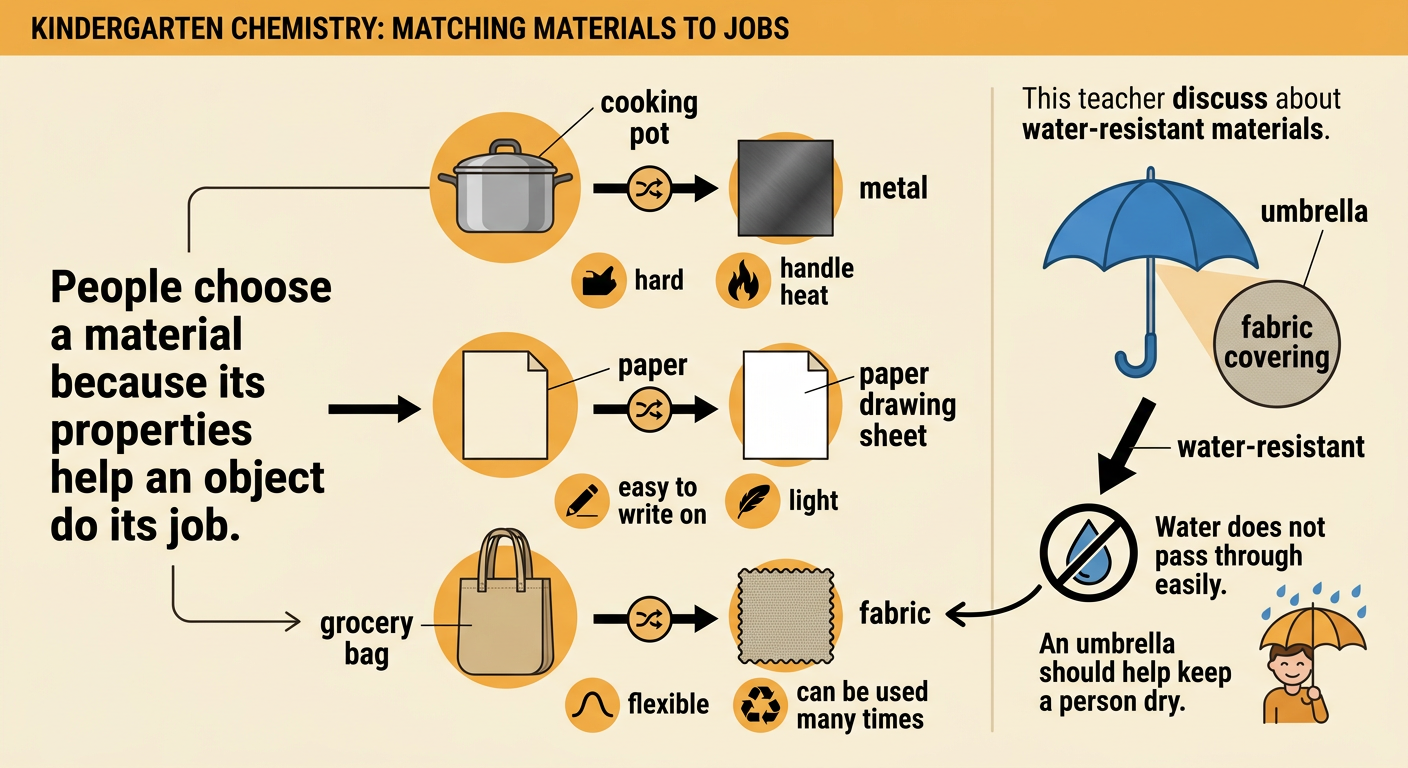
People choose materials because their properties help an object do its job. Think about what someone wants to make or change. An umbrella should help keep a person dry, so its covering is often made from flexible, water-resistant fabric. A cooking pot needs to hold food and handle heat, so it is often made from hard metal. A grocery bag may be made from paper, plastic, or fabric. Each choice has benefits. Paper is light, some plastic resists water, and fabric can be used many times. Making each object also requires skills and knowledge. A designer chooses a suitable material, and a worker cuts, shapes, or joins it. Match each object to a useful material, then ask, “What property makes this material a good choice?”
Share Our Material Choices
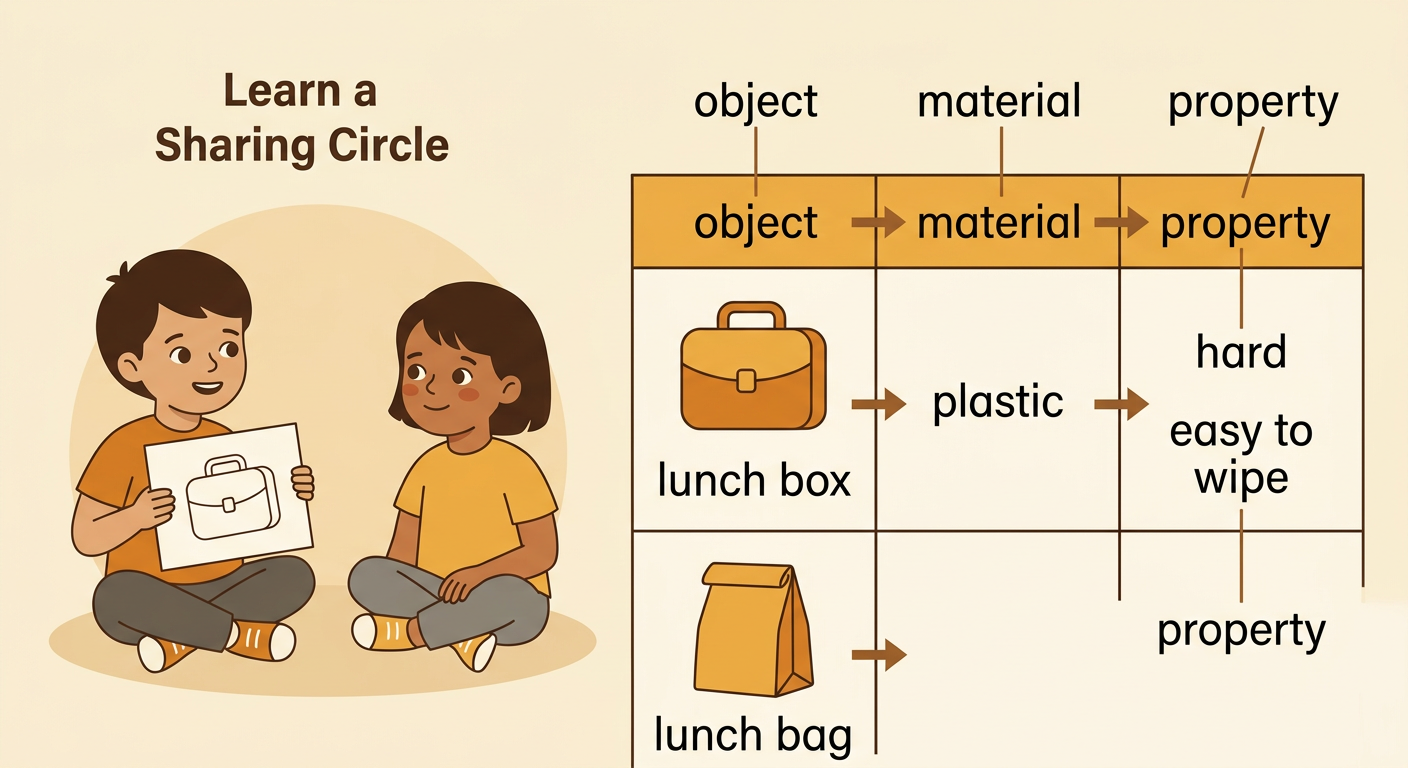
Now choose one everyday object and decide which material would work well for it. Tell the group the object, the material, and one helpful property. For example, you might say, “I would make a lunch box from hard plastic because it keeps its shape and is easy to wipe.” Another student may choose fabric for a lunch bag because fabric is flexible and can be reused. Take turns speaking and listening. Ask a question such as, “Why did you choose that material?” Record your ideas with a drawing or a simple class chart. The chart can list the object, material, and property. Count or compare the words and pictures in each row to describe their size or length. Different choices can work when students support them with careful observations.