Which Material Works Best?
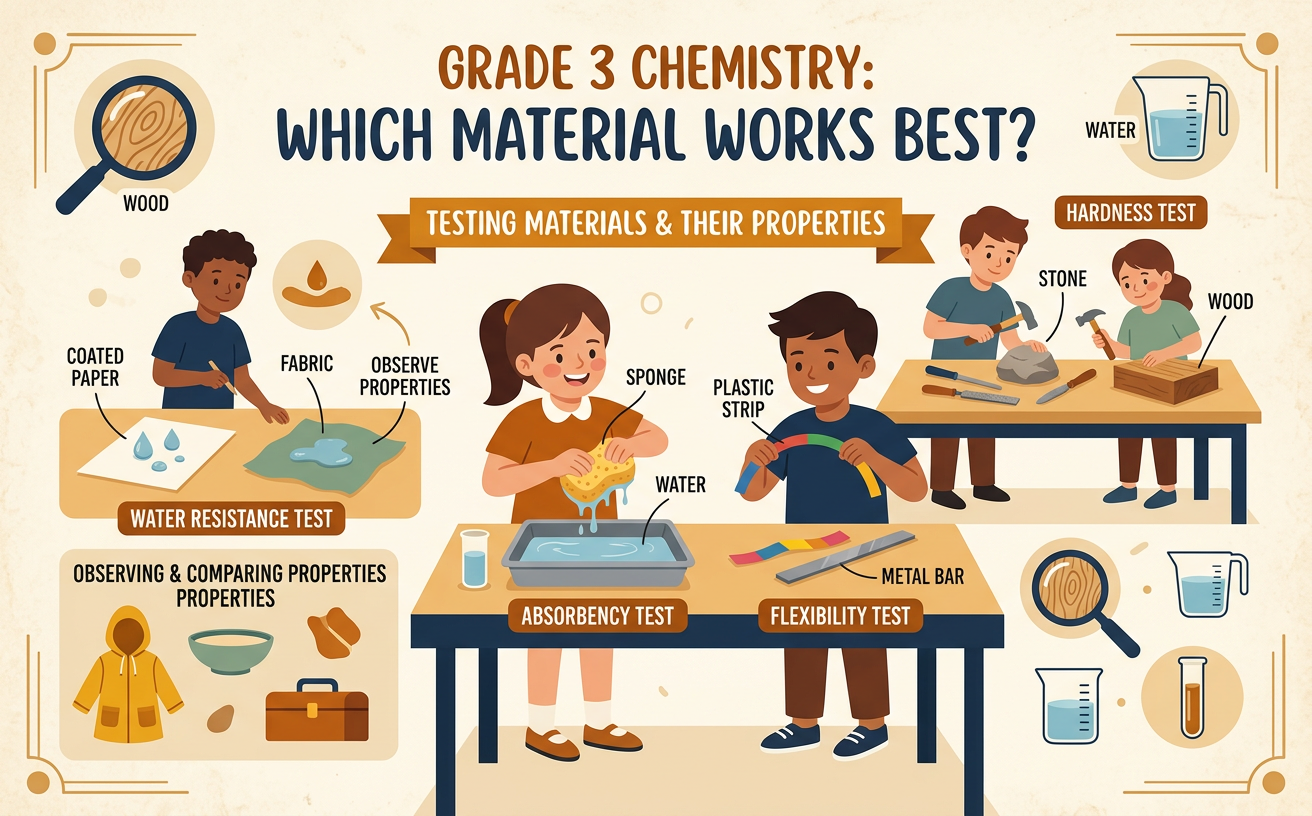
Students observe and test properties such as hardness, flexibility, absorbency, and water resistance to decide which material is best for a specific purpose.
Illustrations are auto-generated and may be placeholders. They can be refreshed to match the narration.
Introduce Observable Properties
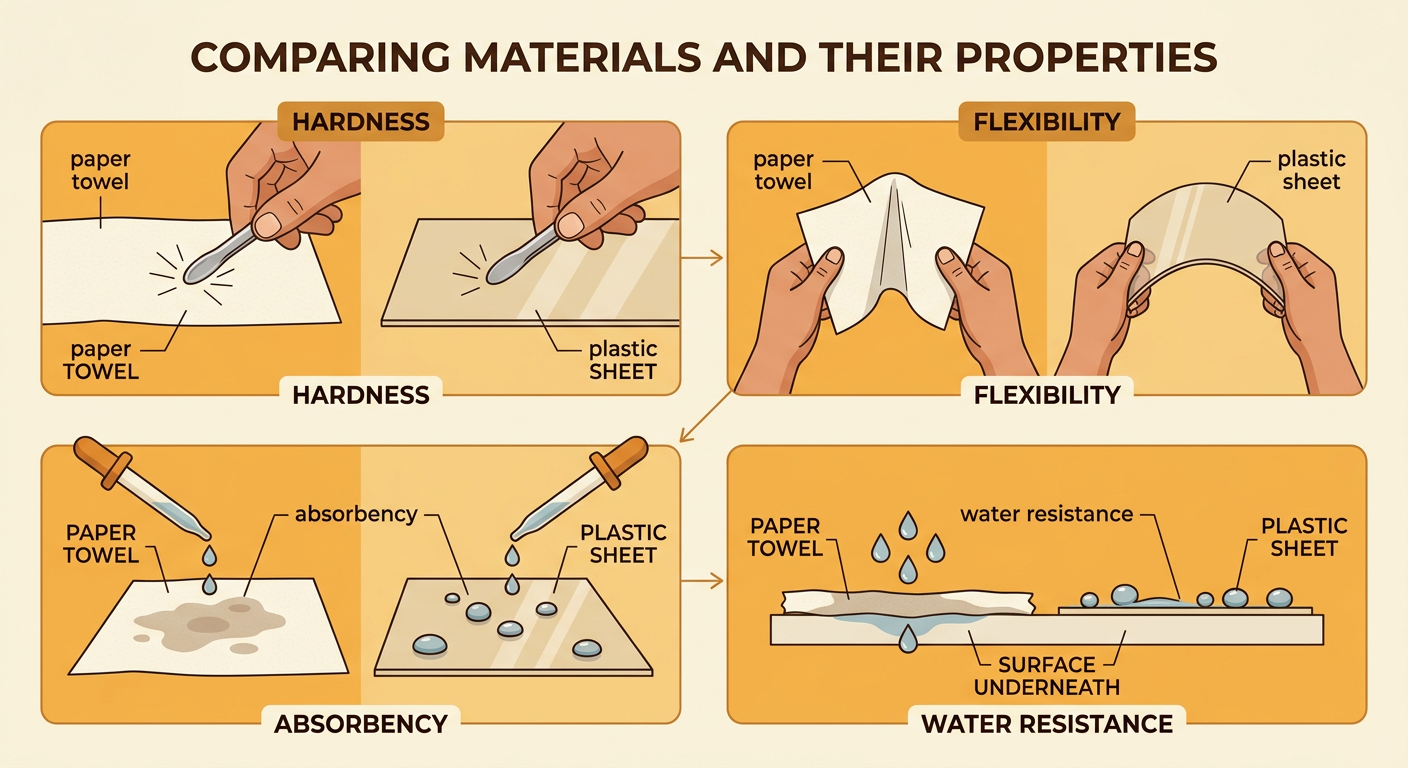
Materials are kinds of matter used to make objects. We can describe a material by observing its properties. Hardness tells how well it resists scratches or dents. Flexibility tells how easily it bends without breaking. Absorbency is the ability to soak up liquid. Water resistance is the ability to keep water from passing through. Scientists use their senses and simple tools to observe these properties, but they never taste test materials. For example, compare a paper towel and a plastic sheet. The paper towel bends easily and absorbs water. The plastic sheet also bends, but it does not absorb much water. These observable differences help us decide which material could work best for a particular purpose, such as making a rain cover.
Predict the Best Material
Before testing, decide what the material needs to do. Imagine that your class needs a cover to keep a small notebook dry in light rain. The cover should resist water, bend around the notebook, and be strong enough for careful use. Possible materials include cotton cloth, wax paper, aluminum foil, and a plastic sheet. Examine each material without testing it yet. Then make a prediction, or a statement about what you think will happen. You might predict that the plastic sheet will work best because it feels flexible and does not seem likely to absorb water. Record your prediction and reason. A prediction does not have to be correct. It gives you an idea to investigate, and evidence from the tests will show whether your idea is supported.

Conduct Fair Material Tests
A fair test changes only the material while keeping other conditions the same. Cut every sample to the same size and place each one over an identical cup. For the water test, use a dropper to add ten drops of water to each sample. Wait one minute, then check whether water passed into the cup. Repeat the test three times for every material. To test flexibility, wrap each new sample around the same marker and observe whether it bends, cracks, or tears. Use the same steps and tools every time. Do not pull or scratch materials with sharp objects. Repeated trials make results more dependable because one unusual result will have less effect. Work with a partner: one student performs the test, while the other checks the steps and records observations.

Record and Compare Data
Data are measurements and observations collected during a test. Create a table with one row for each material. Record the number of drops that passed through, whether the sample bent without damage, and the size of any wet spot on paper placed below it. Measure the wet spot across its widest part to the nearest quarter inch. After three trials, compare the results. You can display the wet-spot measurements on a line plot marked in quarter-inch units. Suppose cotton made spots measuring 2, 2¼, and 2½ inches, while plastic made three 0-inch spots. The plastic blocked water better in this test. Also look for patterns across all properties. A material with no wet spot might still tear when bent, so one measurement may not tell the whole story.

Choose and Explain the Best Material
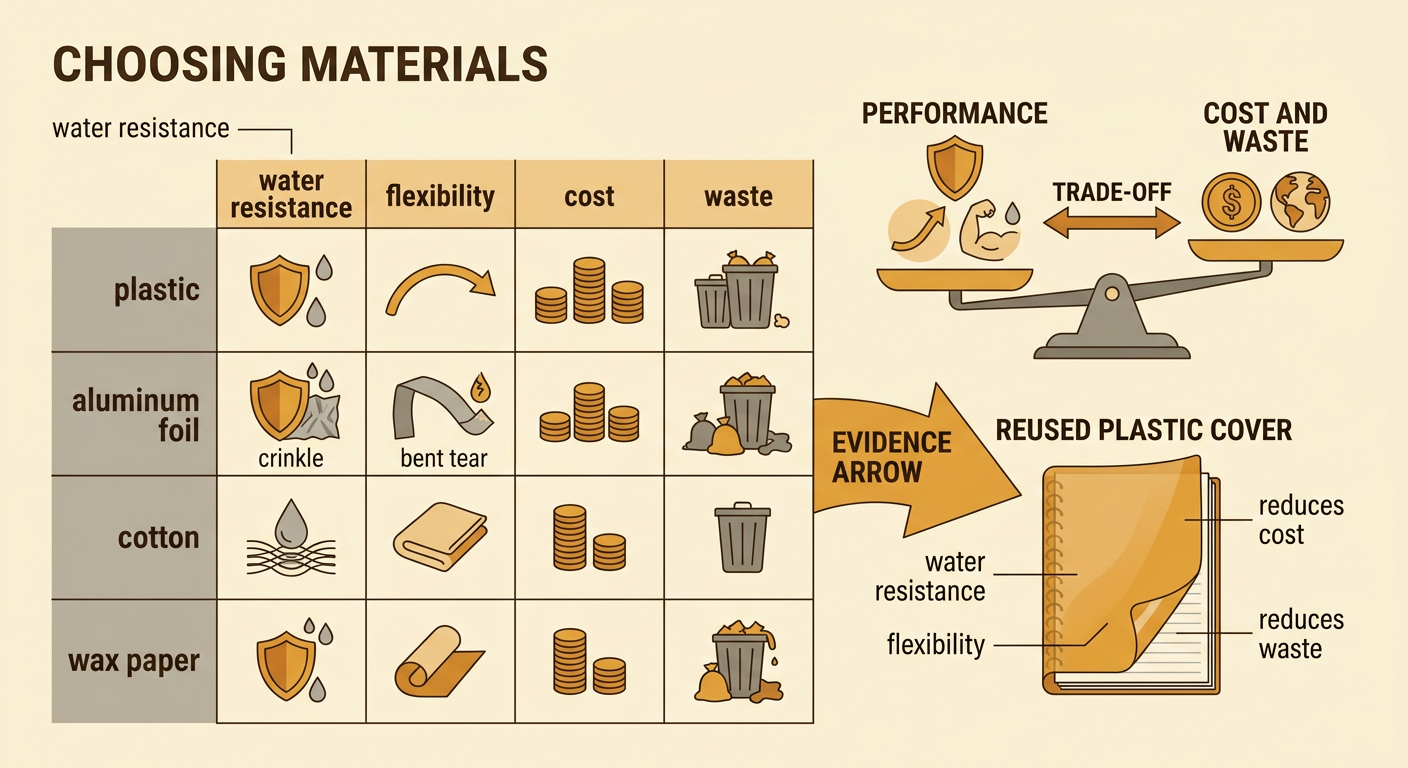
Use your evidence to choose the material that best meets the need. First, identify the most important properties for the notebook cover. Water resistance may be most important, but flexibility, strength, cost, and waste also matter. For example, plastic may block all water and bend easily, while aluminum foil may block water but tear after repeated bending. Cotton may be reusable, but it may absorb too much water. A choice has benefits and costs: plastic can work well, but using new plastic can create waste. A clean, reused plastic bag might provide the needed performance while reducing cost and waste. Write an informative paragraph that names your choice, gives measurement facts, compares it with another material, and explains a trade-off. End with a conclusion showing why your evidence supports the choice.