
Which Paper Absorbs the Most Water?
Students test equal-sized paper samples, record how much water each absorbs, and use evidence to choose the best paper for cleaning a spill.

Illustrations are auto-generated and may be placeholders. They can be refreshed to match the narration.
Observe Different Papers
Look closely at three kinds of paper: a paper towel, a paper napkin, and wax paper. Use your eyes and fingers to notice their properties while they are dry. A paper towel may feel thick, soft, and bumpy. A napkin may feel thin and smooth. Wax paper may feel slippery because it has a wax coating. Hold each sample up to the light and look for tiny spaces or layers. Do not add water yet. These observations give clues, but they do not prove which paper absorbs the most water. For example, you might notice that the paper towel has many small pockets. Record one observation about each paper. Handle every sample gently so it does not tear before the test begins.
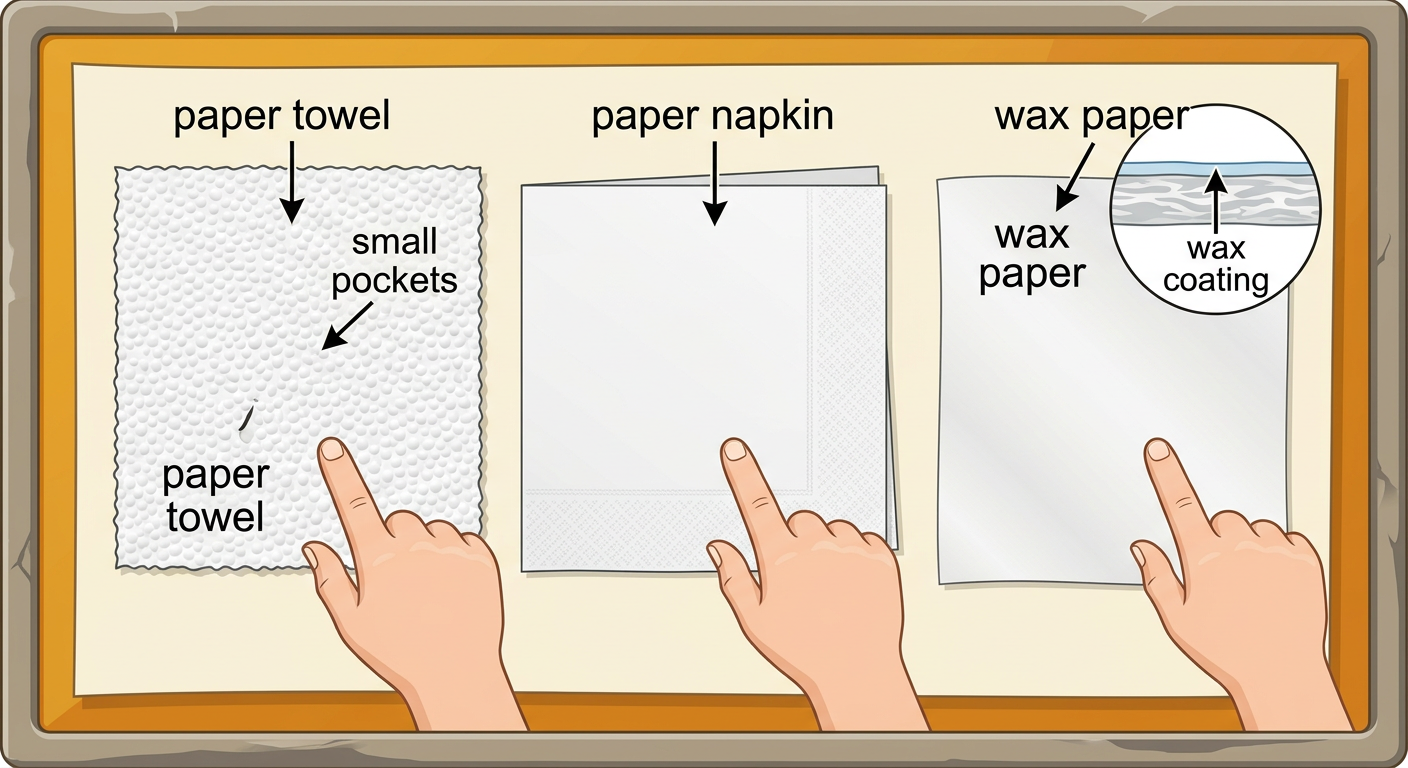
Predict the Most Absorbent Paper
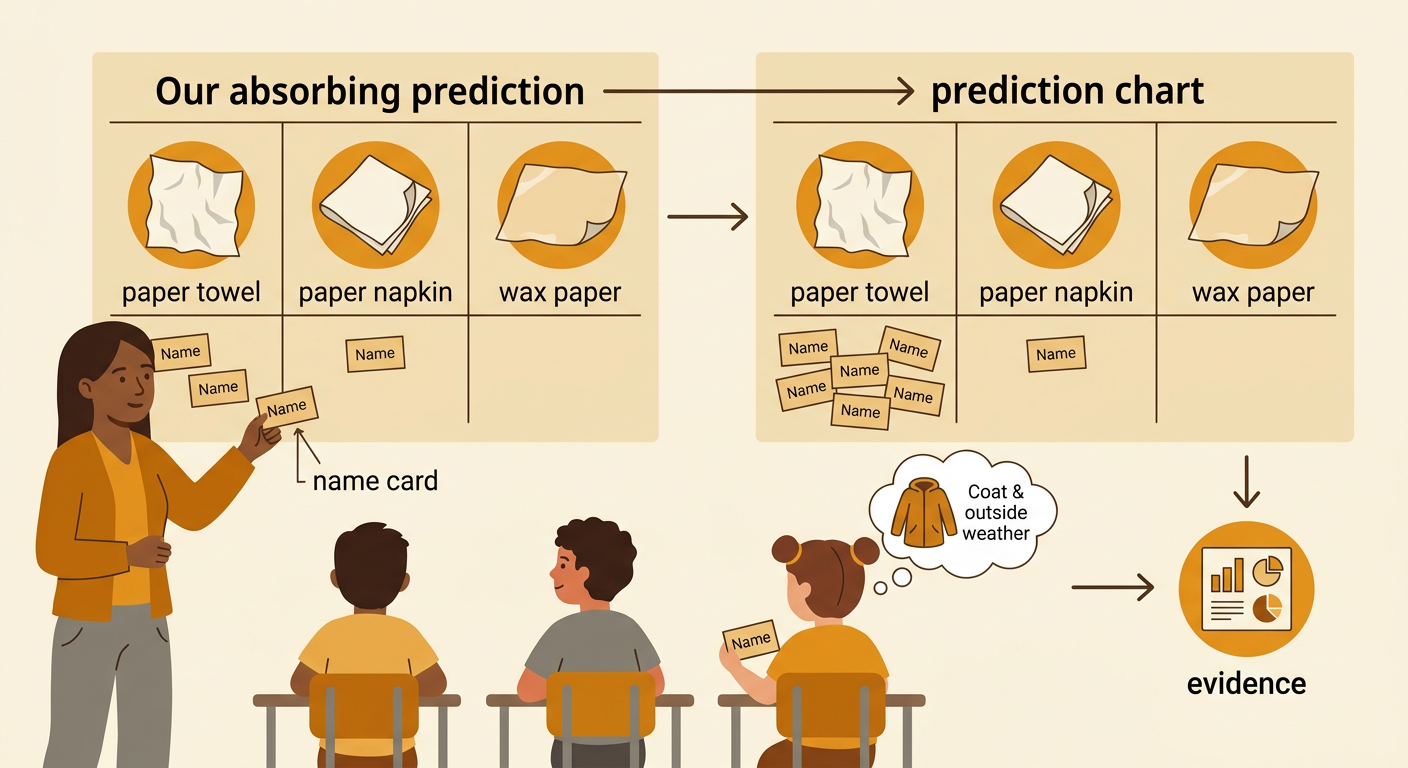
A prediction is what you think will happen before a test. Choose the paper that you think will absorb, or take in, the most water. Then explain your reason using an observation. You might say, “I predict the paper towel will absorb the most water because it is thick and has many small pockets.” Another student might choose the napkin because it has several layers. Different predictions are welcome because the class has not tested the papers yet. Listen while classmates share their ideas, and take turns speaking. Record each prediction by placing a name card or sticky note under one paper picture. The prediction chart will show how many students chose each of the three papers. After the test, you can compare the predictions with the evidence.
Test Equal-Sized Samples
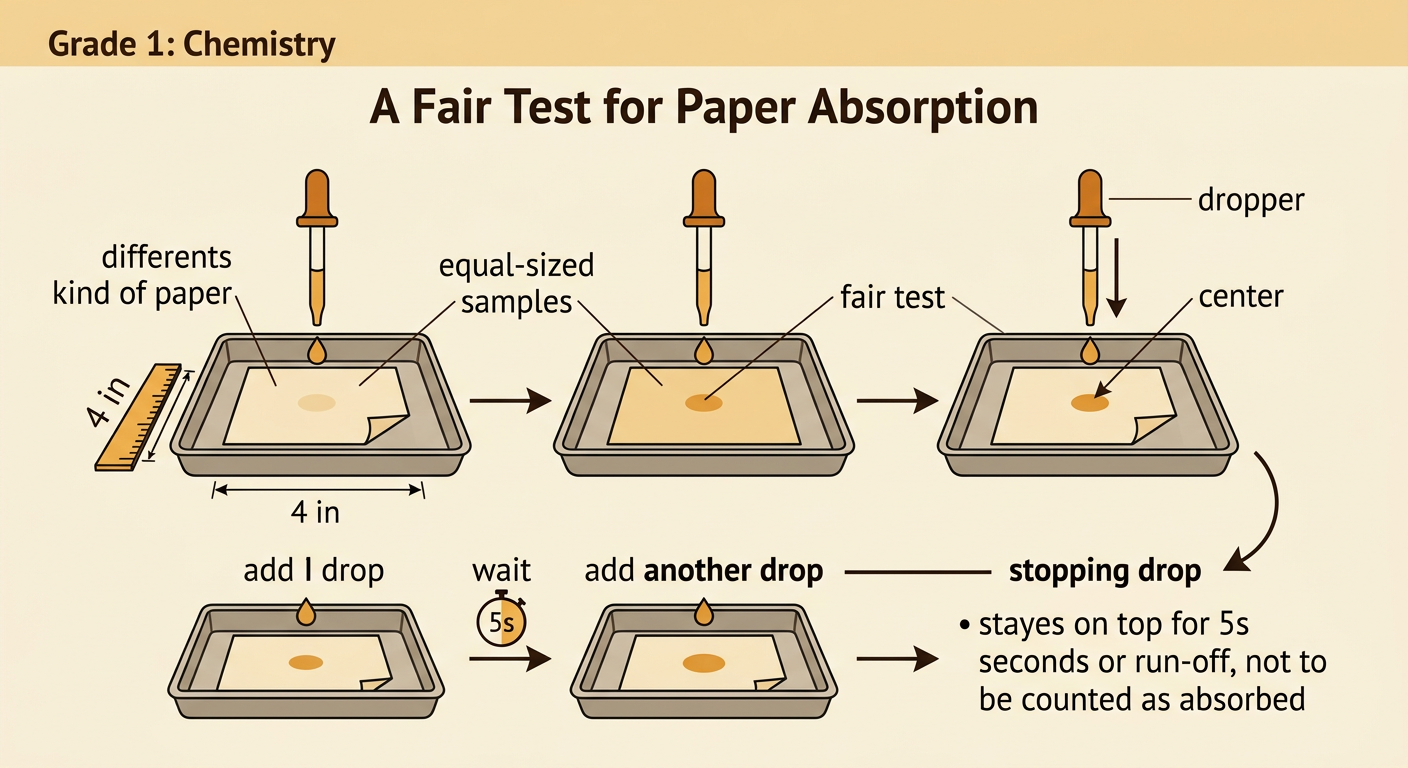
A fair test changes only the kind of paper. Cut or prepare one square of each paper in exactly the same size, such as four inches by four inches. Place each square flat in its own shallow tray. Use the same dropper, the same water, and drops of the same size. Add one drop at a time to the center of a sample. Wait five seconds after each drop. Stop when a new drop stays on top for five seconds or water runs off the paper. Count only the drops absorbed before that stopping drop. Test the other samples in the same way. For example, do not fold the napkin or press down on the paper towel because that would make the test unfair. Wipe and dry the trays before another test.
Count and Record Water Drops
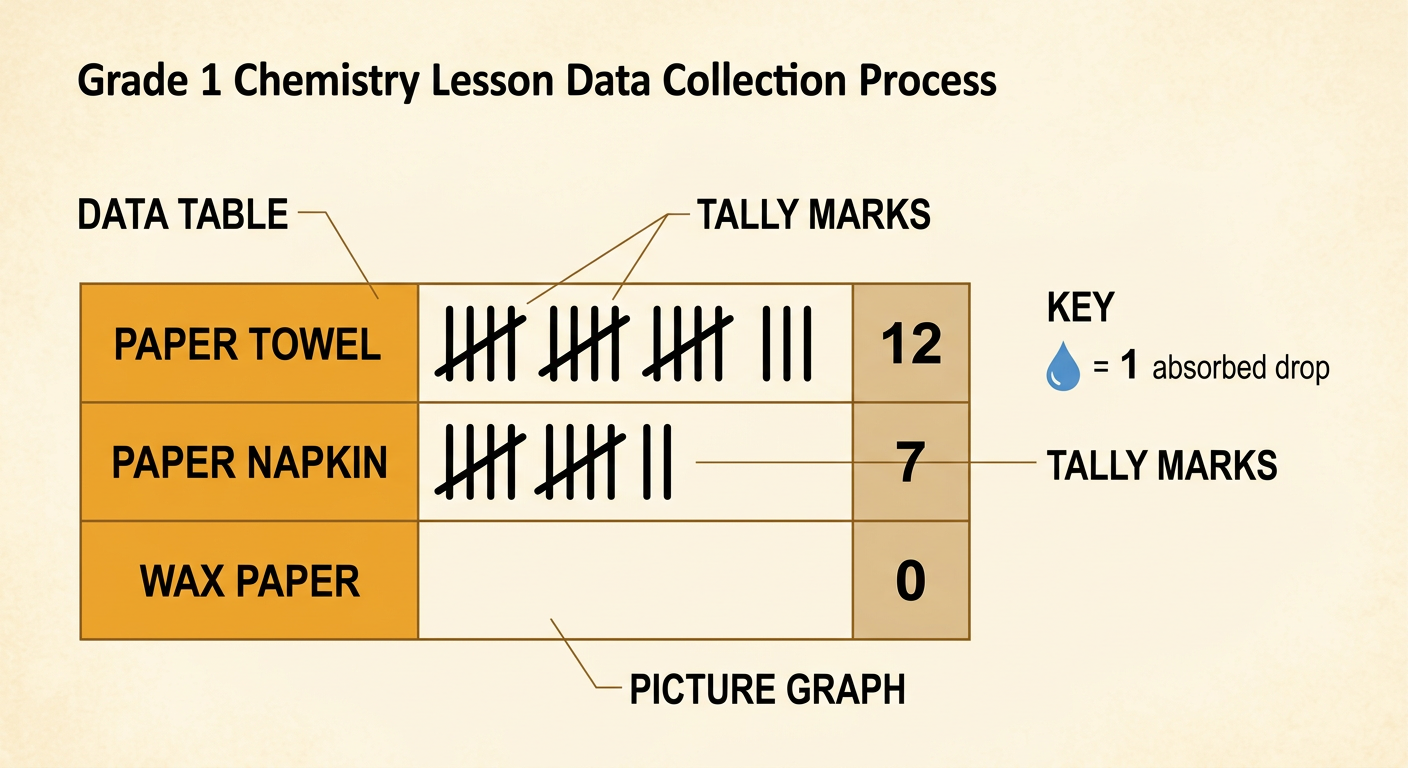
Count aloud each time a drop is absorbed. One student can add drops, one can count, and one can record tally marks. Stop counting when a drop remains on top or runs into the tray. Write the total for each paper in a three-category data table. You can also make a picture graph in which one water-drop picture stands for one absorbed drop. For example, a class might record 12 drops for the paper towel, 7 drops for the napkin, and 0 drops for wax paper. Zero means the first drop was not absorbed during the test. Your class results may be different. Check that each tally mark matches one counted drop. Taking turns and checking one another’s work helps the group create an accurate record.
Compare the Results
Use the table or graph to compare all three results. Find the greatest number first. That paper absorbed the most water in this test. Then find the smallest number and describe which result is in between. Use words such as more, fewer, most, and least. If the paper towel absorbed 12 drops and the napkin absorbed 7 drops, the paper towel absorbed 5 more drops because 12 minus 7 equals 5. If wax paper absorbed 0 drops, it absorbed the least. Point to the numbers when you explain your thinking to a partner. The numbers are evidence from the test. If a result seems surprising, check whether the samples were equal and the same steps were followed. The class can repeat the fair test to see whether it gets similar results.

Choose the Best Paper for a Spill
Use the test evidence to choose a paper for cleaning a small water spill. The best choice should absorb a large amount of water instead of letting it run across the table. For example, if the paper towel absorbed 12 drops, the napkin absorbed 7, and wax paper absorbed 0, the paper towel is the best of these three choices for soaking up the spill. State your claim and evidence: “I choose the paper towel because it absorbed the most drops.” Also think about costs and benefits. A thick paper towel may clean the spill with one sheet, but it may cost more. A less expensive napkin may absorb less, so several napkins might be needed and create more trash. Choose based on what matters for the situation, then listen respectfully to other choices.
