
Who Is Telling the Story?
Students identify the narrator of a story by noticing who uses words such as “I” and who describes the events.

Illustrations are auto-generated and may be placeholders. They can be refreshed to match the narration.
Meet the Storyteller
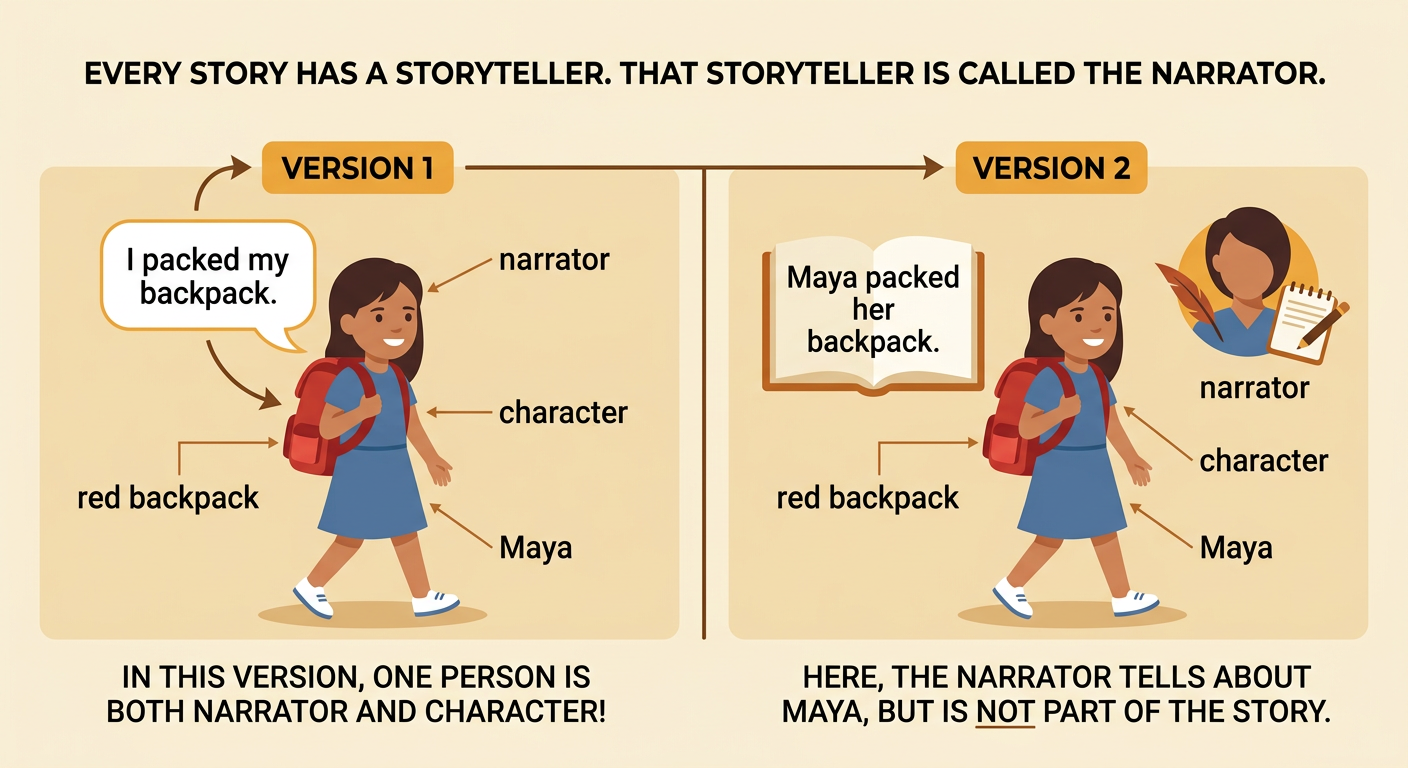
Every story has a storyteller called the narrator. The narrator tells us what happens. The narrator may be a character inside the story, or the narrator may be outside the story. Imagine a story that begins, “I packed my red backpack and walked to school.” The word “I” tells us that the person with the backpack is telling the story. That character is the narrator. Now imagine a story that says, “Maya packed her red backpack and walked to school.” Someone outside the story is telling about Maya. Maya is a character, but she may not be the narrator. As you read, ask, “Who is telling me what happens?” The answer helps you identify the narrator.
Listen for Narrator Clues
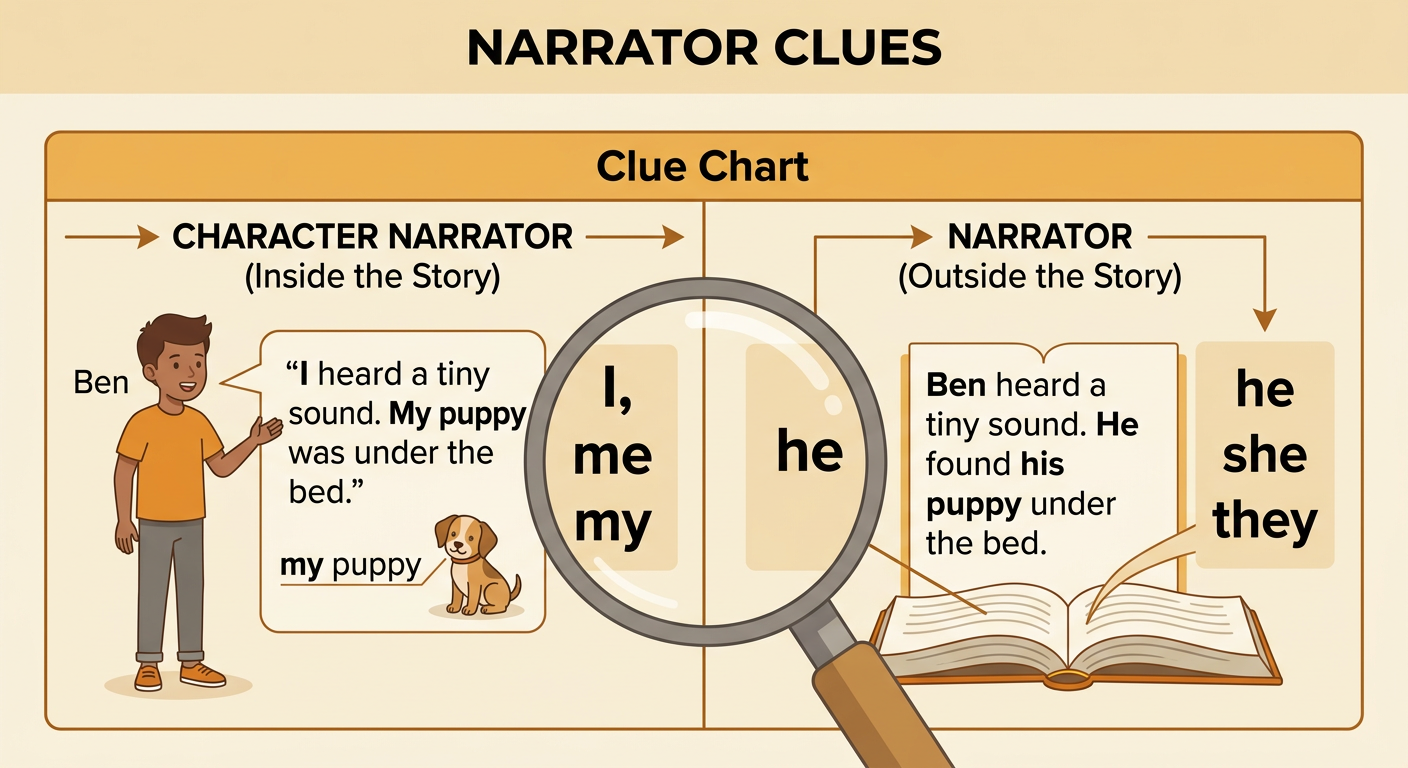
A narrator gives clues through the words used to tell the story. Listen for words such as “I,” “me,” “my,” “we,” and “our.” These words can show that a character is telling about personal experiences. For example, Ben says, “I heard a tiny sound. My puppy was under the bed.” Ben tells what he heard and what he found, so Ben is the narrator. Other stories use words such as “he,” “she,” “they,” or a character’s name. A story might say, “Ben heard a tiny sound. He found his puppy under the bed.” In that version, a narrator outside the story tells about Ben. Pay attention to the words around each event. They can help you discover who is telling that part of the story.
Notice Who Says “I”
When the story text uses “I,” find out who “I” means. The word does not name a person, so you must use nearby clues. Read this example: “I tied my shoes. ‘Wait for me!’ called Rosa. I opened the door for her.” Rosa says words inside quotation marks, but she is not the person telling the whole story. The narrator is the character who tied the shoes and opened the door. An earlier sentence might tell us, “My name is Eli.” Then we know that “I” means Eli. Be careful: a character can say “I” while speaking in dialogue without being the narrator. Ask whether the word appears in the story’s narration or only inside quotation marks. This helps you identify the correct storyteller.

Identify the Narrator
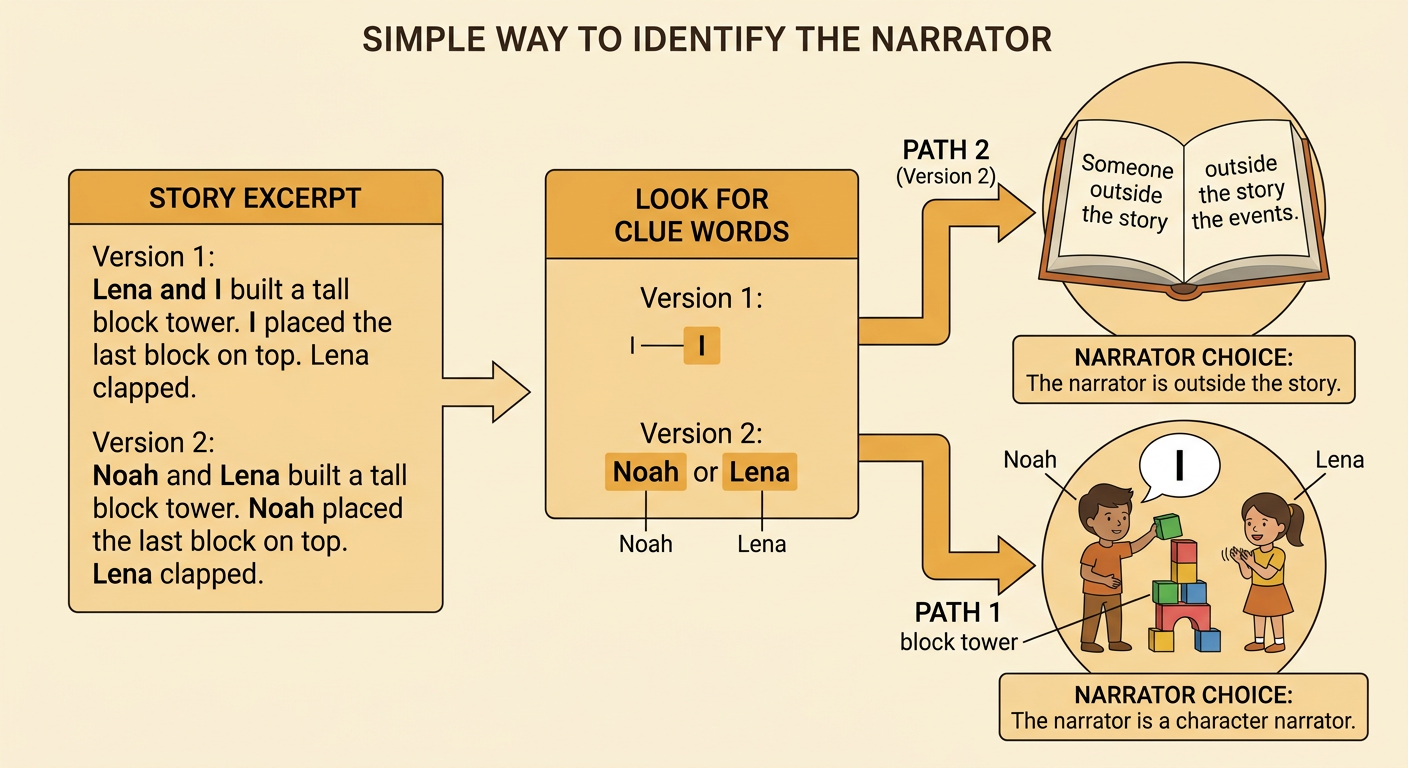
To identify the narrator, follow a few simple steps. First, notice who describes the events. Next, look for clue words. Then, decide whether the narrator is a character or someone outside the story. Read this example: “Lena and I built a tall block tower. I placed the last block on top. Lena clapped.” The narrator takes part in the action and uses “I,” so the narrator is a character who builds with Lena. If the story earlier says, “I am Noah,” then Noah is the narrator. Now compare: “Noah and Lena built a tall block tower. Noah placed the last block on top.” This version names both characters and does not use “I.” A narrator outside the story tells the events. Use all the clues, not just one sentence, before you decide.
Explain Your Evidence
After you identify the narrator, explain how you know. Evidence is a word or sentence from the story that supports your answer. Start with, “The narrator is…” Then add, “I know because…” For example, a story says, “I carried a bowl to Whiskers. The hungry cat rubbed against my legs. Mom said, ‘You take good care of him, Ava.’” You can answer, “The narrator is Ava. I know because the narrator uses ‘I’ and ‘my,’ and Mom calls the narrator Ava.” This explanation names the storyteller and gives two clear clues. If the narrator is outside the story, you might say, “The narrator is outside the story because the text calls the character ‘she’ instead of ‘I.’” Always point to exact words that prove your answer.
