Why Are Objects Made from Different Materials?
Students observe objects made from wood, metal, plastic, and fabric and use material properties to explain why each material fits a particular purpose.
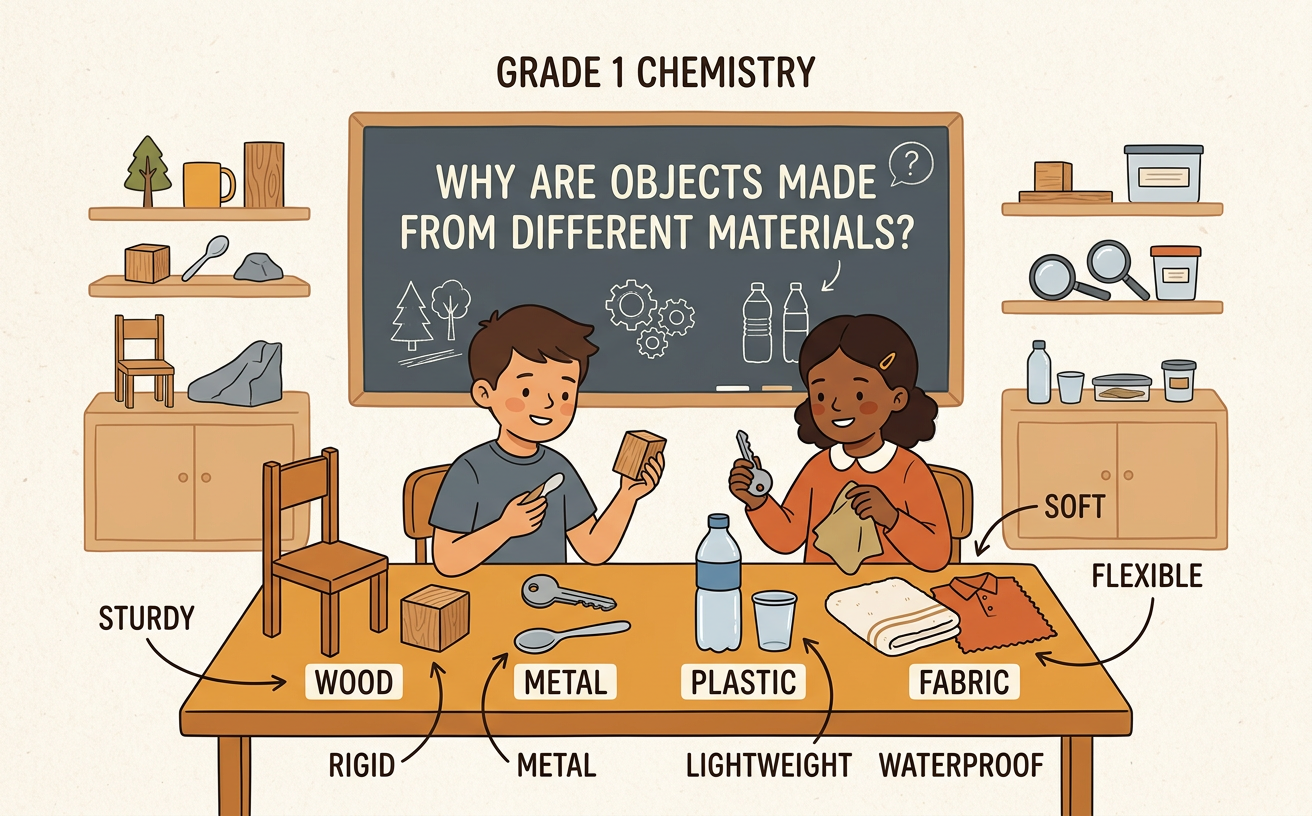
Illustrations are auto-generated and may be placeholders. They can be refreshed to match the narration.
Notice the Materials
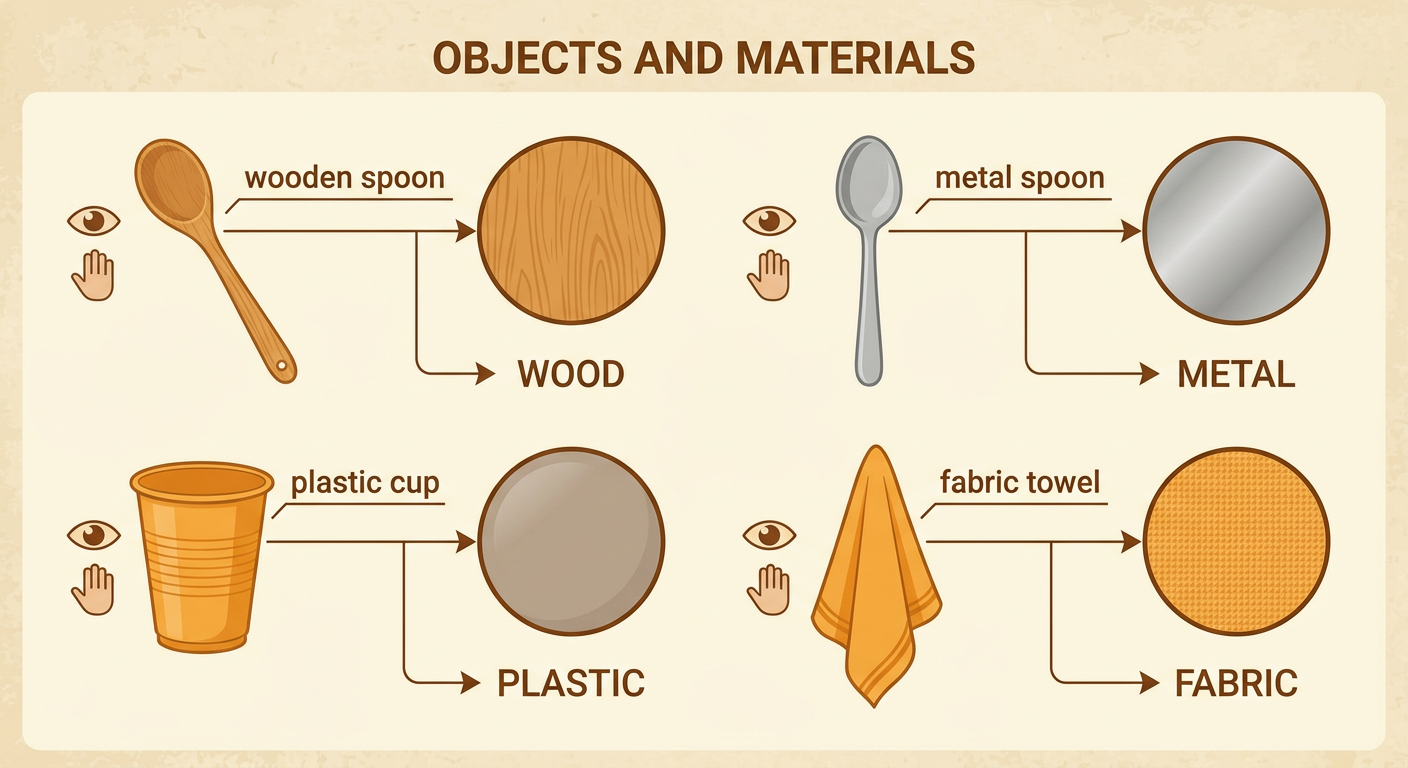
Look closely at everyday objects. An object is a thing you can see or touch. A material is what the object is made from. A wooden spoon is made from wood. A metal spoon is made from metal. A plastic cup is made from plastic. A cloth towel is made from fabric. Objects can have the same purpose but be made from different materials. For example, both a metal spoon and a wooden spoon can move food. Use your eyes and hands to notice each safe sample. Look at its color and surface. Gently feel whether it is smooth, rough, hard, or soft. Name the object, and then name its material. Do not taste any sample.
Describe Useful Properties
A property is something you can observe about a material. Wood is often hard and stiff. Metal is often hard, strong, and shiny. Many plastics are light and waterproof. Many fabrics are soft, flexible, and able to soak up water. Different kinds of the same material can have different properties, so we observe the actual sample. Think about which properties are useful for an object’s job. A raincoat should keep water away from your body, so waterproof material is useful. A towel should soak up water and bend around your hands, so absorbent and flexible material is useful. Use clear property words when you talk with classmates. Listen to their observations and compare them with your own.

Test Materials for a Purpose
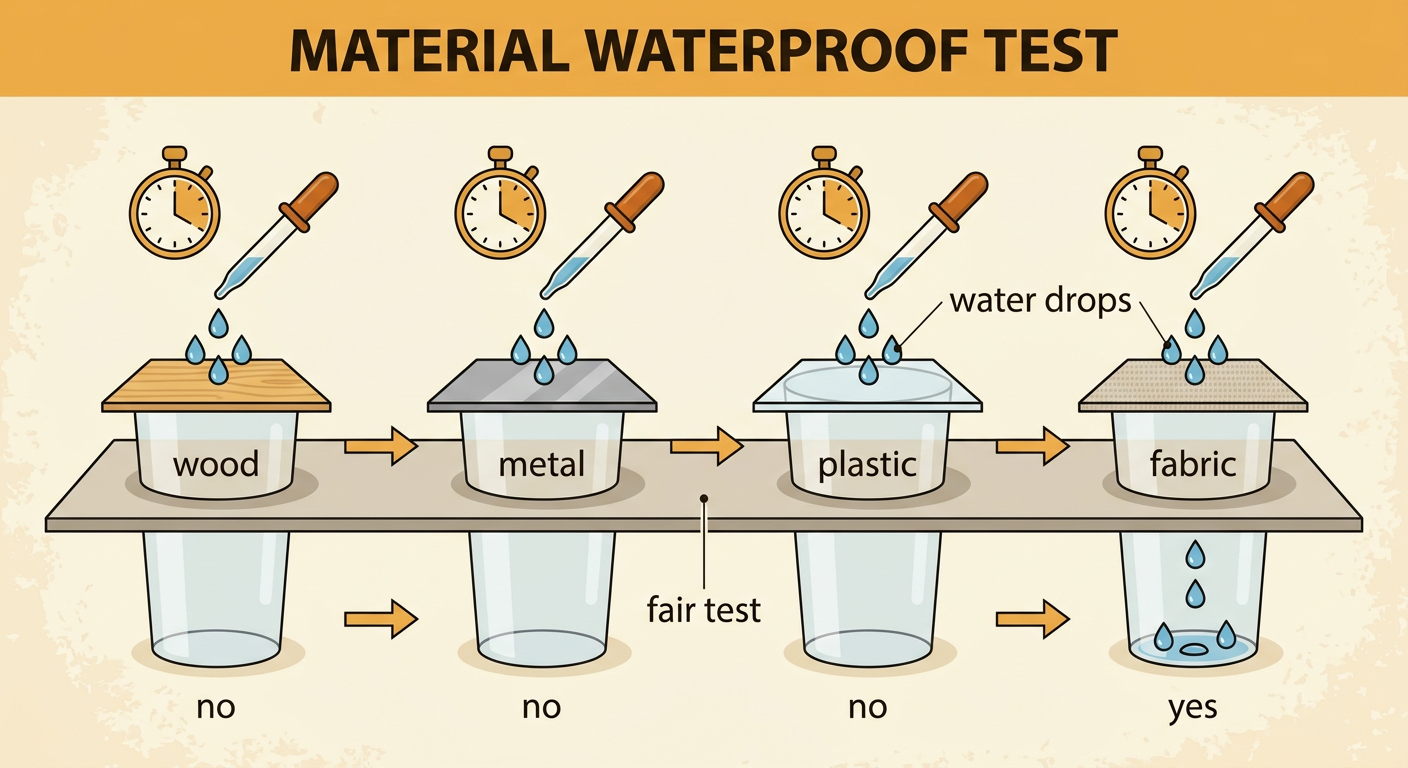
A simple test can help you decide which material is best for a purpose. Suppose you need to make a small cover that keeps a toy dry. Test equal-sized pieces of wood, metal, plastic, and fabric. Place each piece over its own empty cup. With an adult helping, put the same small number of water drops on every piece. Wait the same amount of time. Then look inside each cup. Did water pass through the material? Record yes or no. Keep the test fair by changing only the material. Use the same cup size, piece size, number of drops, and waiting time. Handle samples carefully, and wipe up spilled water so no one slips.
Record and Compare Results
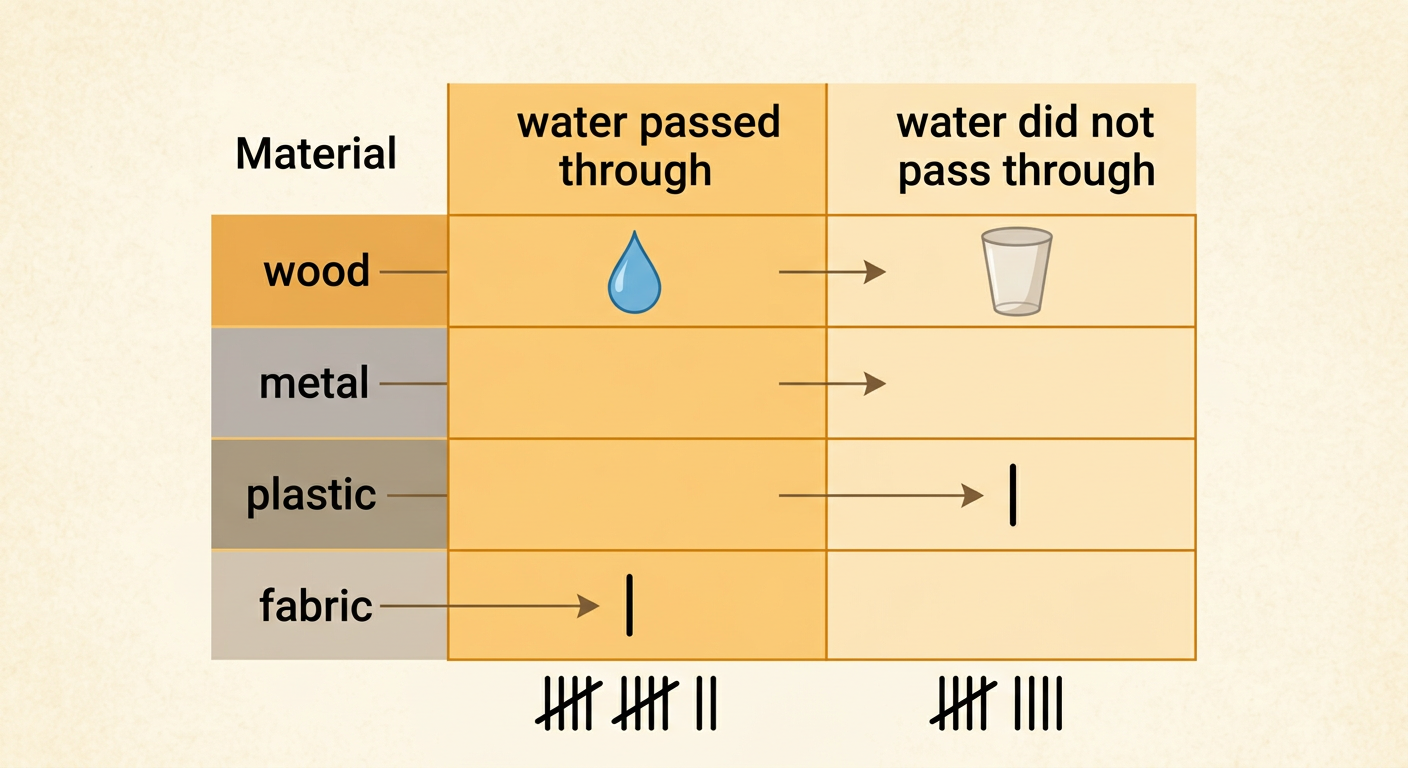
Scientists record results so they can compare what happened. Make a class chart with one row for each material. Add a mark in the “Water passed through” column or the “Water did not pass through” column. Each result belongs in one category. Count the marks in both categories. You might find that water passed through the fabric but did not pass through the plastic sample. Say what the chart shows without guessing. For example, “Our plastic sample kept the cup dry, and our fabric sample did not.” Compare your result with a partner’s result. If the results differ, check whether you used equal pieces, equal drops, and equal waiting times. Careful records help everyone use the test evidence.
Choose the Best Material
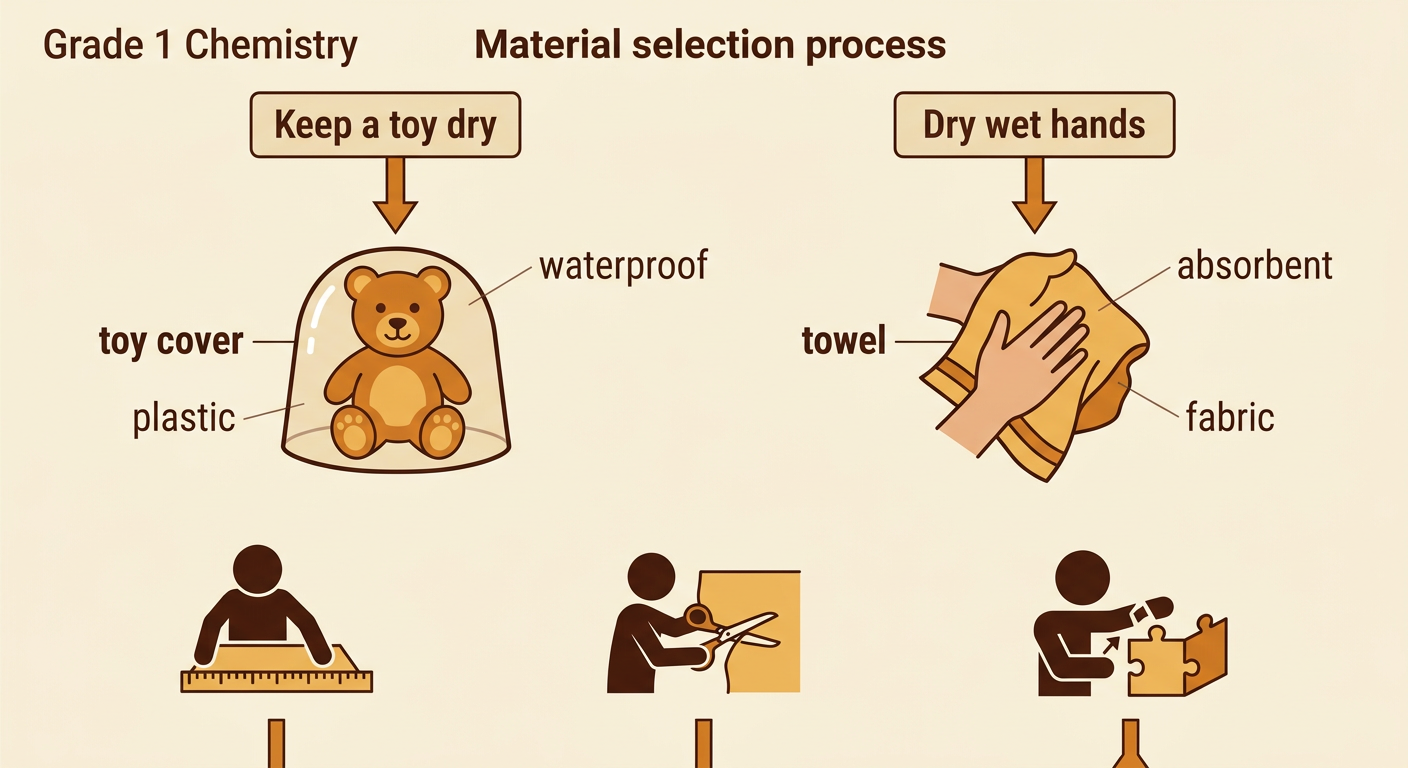
To choose a material, first name the object’s purpose. Then use test results to find a material with helpful properties. For a toy cover, the purpose is to keep the toy dry. If the plastic sample did not let water pass through, plastic is a good choice because it is waterproof and light. Fabric may be a better choice for a towel because it can absorb water and bend easily. One material is not best for every job. People who make goods, such as cups, coats, chairs, and towels, need skills and knowledge. They must know how materials behave, measure the parts, use tools safely, and put pieces together. They also think about cost and how long an object should last.
Explain the Choice
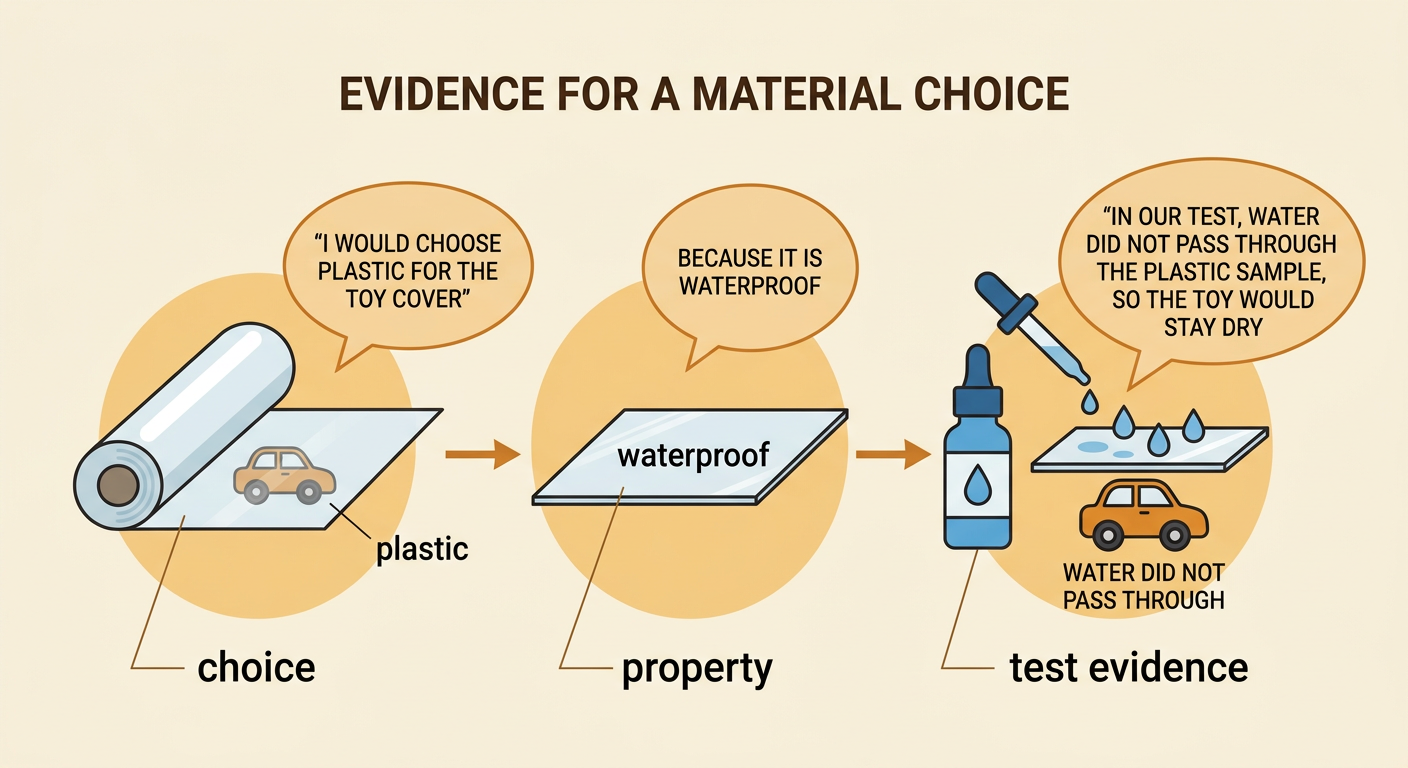
A strong explanation tells what you chose, names a useful property, and gives evidence from the test. You can say, “I would choose plastic for the toy cover because it is waterproof. In our test, water did not pass through the plastic sample, so the toy would stay dry.” This statement connects the choice to an observation. Share your explanation with your group. Take turns speaking, look at the person who is talking, and ask a helpful question such as, “What result supports your choice?” Listen for another idea. A classmate might choose metal because the tested metal also blocked water and was strong. Discuss how weight, softness, cost, or safety could change the choice. More than one material may work, but every choice needs evidence.