
Why Communities Have Rules
Students explore how rules protect people, promote fairness, and help everyone take responsibility for a safe community.

Illustrations are auto-generated and may be placeholders. They can be refreshed to match the narration.
What Is a Rule?
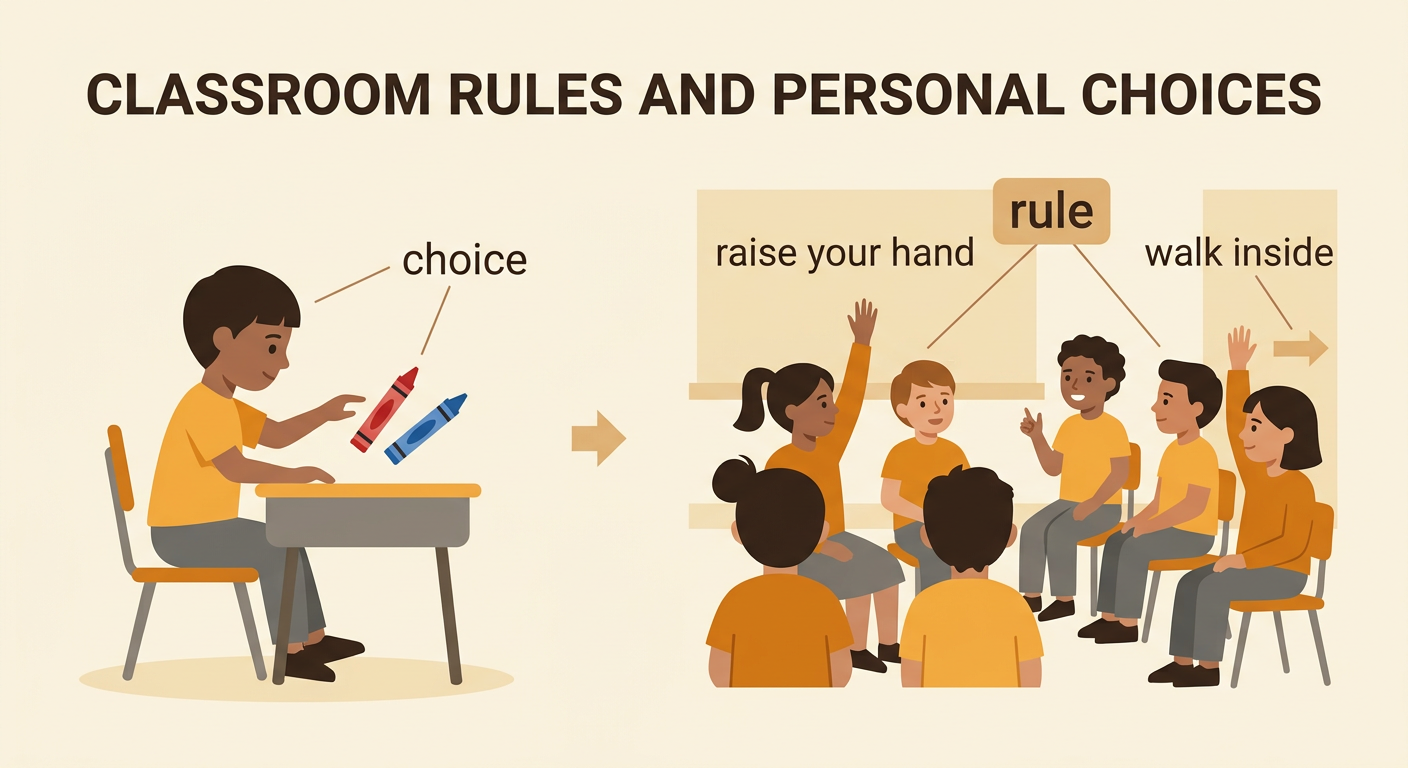
A rule tells people what they should or should not do. Rules help a group live, learn, work, and play together. Families, classrooms, schools, parks, and towns can all have rules. A rule is different from a personal choice. You may choose a red or blue crayon, but everyone must follow the rule to walk inside the school. Rules often solve problems and help people know what to expect. For example, a classroom rule might say, “Raise your hand before speaking.” This rule gives each student a chance to be heard. Leaders may help make rules, but everyone has an important part in following them. People can also ask questions and respectfully share ideas when a rule needs to be improved.
Rules at School and in the Community
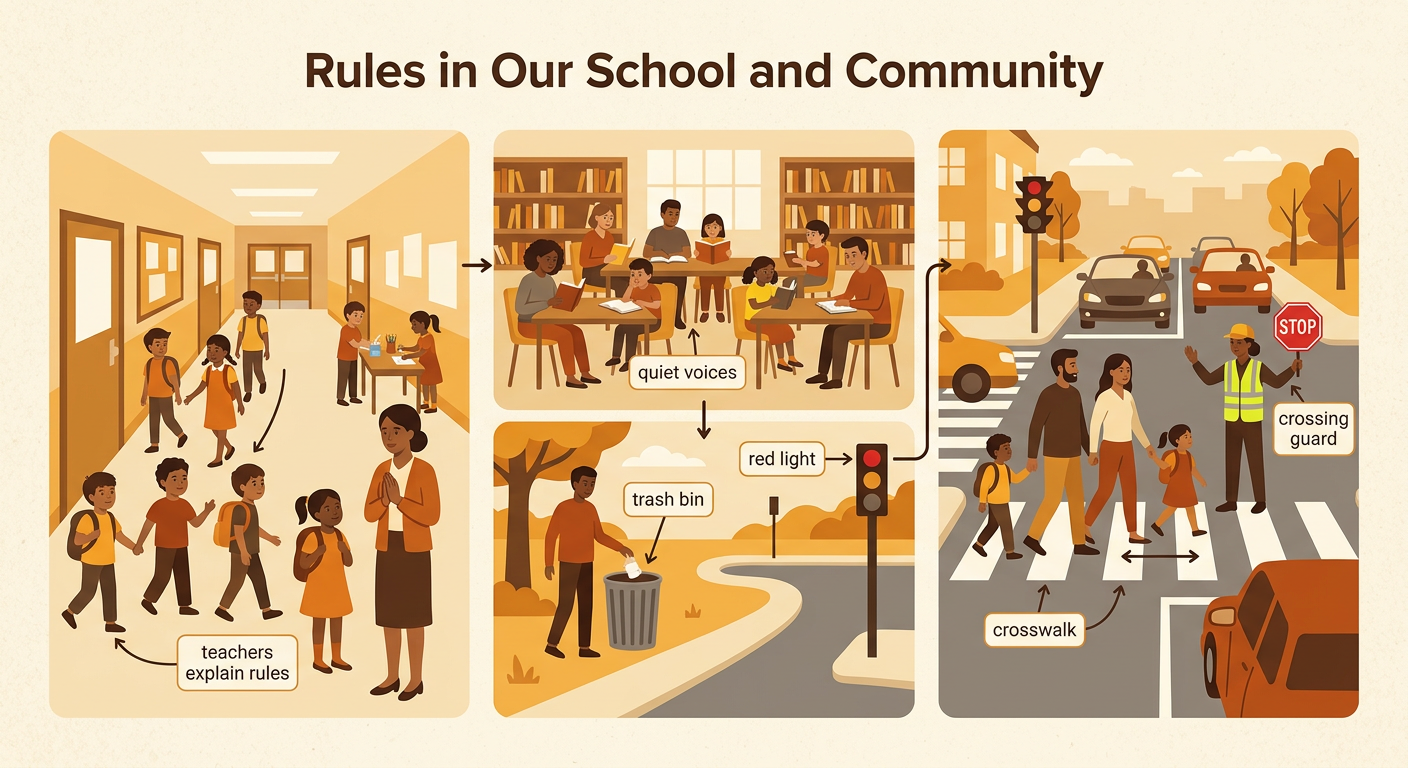
We follow rules in many places. At school, students walk in hallways, take turns with supplies, and keep hands and feet to themselves. Teachers explain rules and help students practice them. Students help by listening, following directions, and reminding one another kindly. Community places have rules too. At a library, people use quiet voices so others can read. At a park, people place trash in bins to keep the area clean. Drivers stop at red lights, and people cross streets at marked crosswalks. These rules work only when many people do their part. Children, adults, workers, and leaders all have community roles. For example, a crossing guard helps people cross safely, while walkers look both ways and follow the guard’s directions.
How Rules Keep Us Safe and Fair
Some rules protect people from harm. Other rules make sure people are treated fairly. Many rules do both. A playground rule to go down the slide feet first helps prevent crashes and injuries. A rule to wait in line gives each child a fair turn. Fair does not always mean that everyone gets the same thing at the same moment. It means that people are treated with care and have a fair chance to participate. Imagine that several students want one ball. If one student keeps it for the whole recess, others cannot play. The group could use a rule that each student gets the ball for five minutes. Students can talk together, listen to each idea, and agree on how to take turns. Following the rule makes play safer, calmer, and fairer.

Solving a Safety Problem
Communities can improve rules when they notice a problem. First, ask a question: “What is making this place unsafe?” Next, observe carefully and gather information. Suppose students often bump into one another near the classroom door. The class watches and notices that some children enter while others leave at the same time. Students share what they saw and listen to their classmates. Then they suggest solutions. One idea is to make one side of the doorway the entrance and the other side the exit. Another is to let one group move at a time. The class can try a solution and observe whether there are fewer bumps. If it does not work well, they can change it and test again. Asking questions, gathering information, and testing ideas can lead to a safer rule.

Our Responsibility to Follow Rules
A responsibility is something we are expected to do. Following helpful rules is one responsibility of every community member. We show responsibility when we stop before crossing a street, return library books, clean up shared spaces, and take turns speaking. We should follow rules even when a leader is not watching because our actions affect other people. We can also help in respectful ways. If a classmate forgets a rule, we can give a kind reminder instead of being unkind. If a rule seems confusing or does not solve the problem, we can ask an adult a question and explain what we noticed. During a class conversation, each student can speak clearly, listen, and build on others’ ideas. When children and adults do their parts, the community becomes safer, fairer, and more welcoming for everyone.
