
Working Together in Our Community
Students learn how community members cooperate to complete shared tasks and make their community a better place.

Illustrations are auto-generated and may be placeholders. They can be refreshed to match the narration.
What Is a Community?
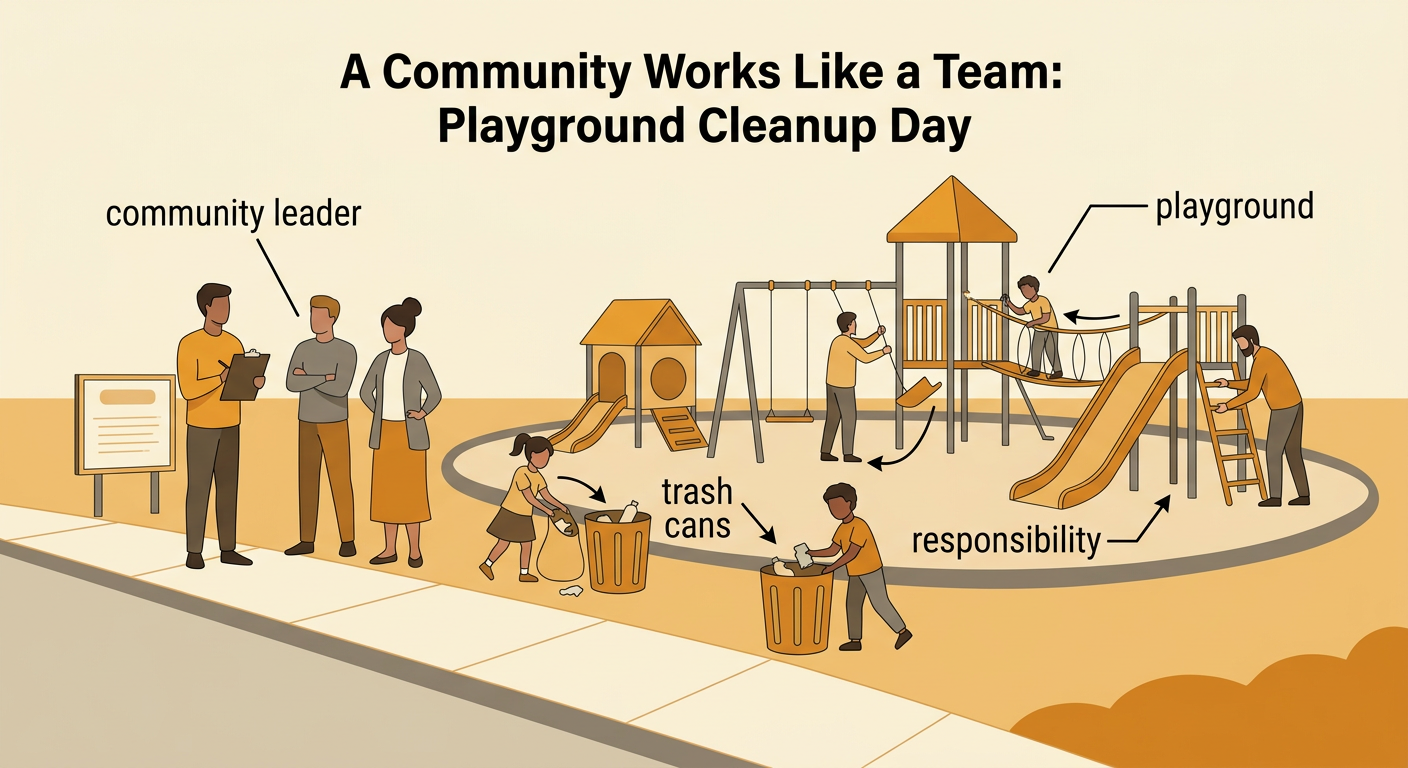
A community is a group of people who live, learn, work, or play near one another. A neighborhood, a school, and a town can all be communities. People in a community share places and help care for them. They may use the same parks, roads, libraries, and schools. Community members also follow rules that help everyone stay safe and get along. For example, people in a neighborhood can work together to keep a playground clean. Children can place litter in trash cans. Adults can repair broken equipment. A community leader can help plan a cleanup day. Each person has a responsibility, or a task to complete. When people do their parts, the playground becomes a cleaner and safer place for everyone.
Jobs People Do
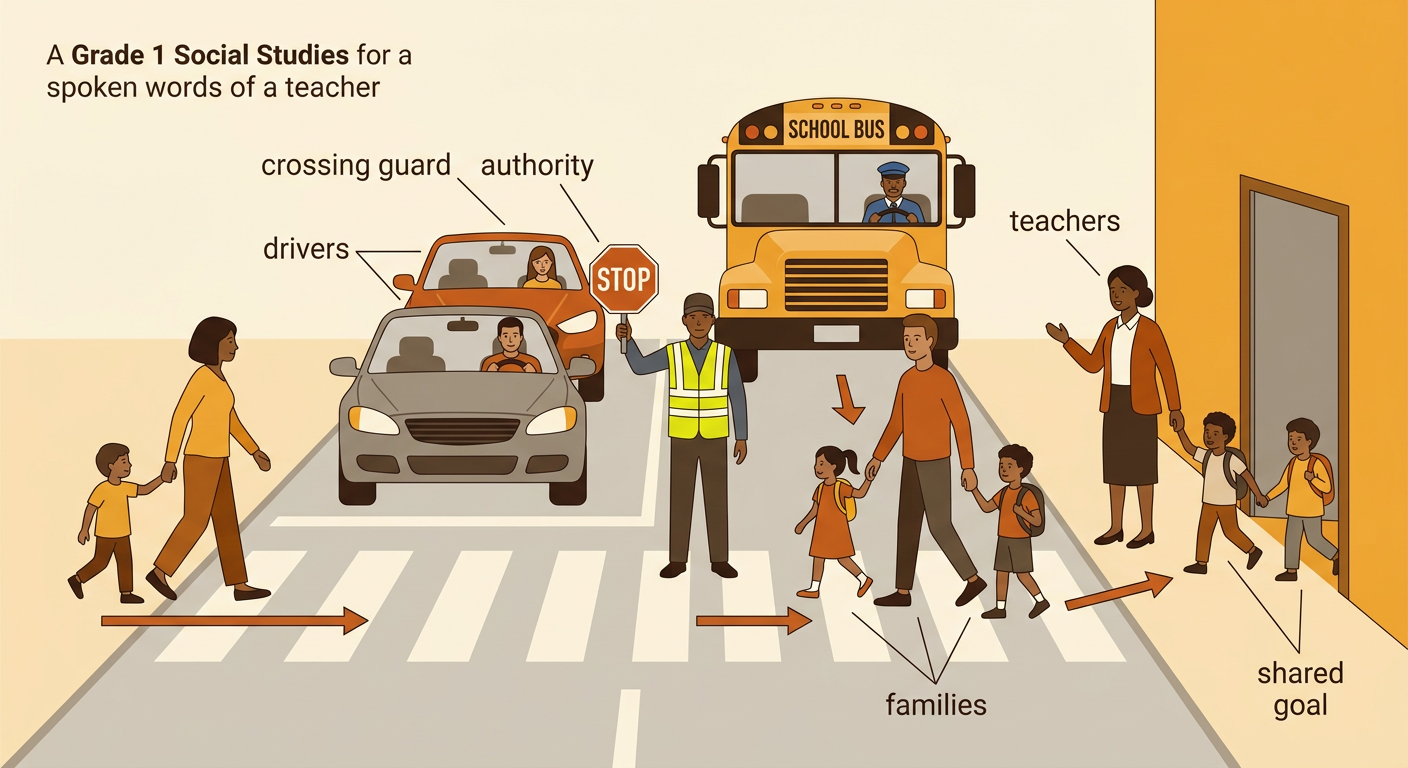
Community members do many different jobs. Each job has duties that help other people. Teachers help students learn. Firefighters respond to fires and other emergencies. Sanitation workers collect trash and recycling. Librarians help people find books and information. Bus drivers take riders safely from place to place. Some people have roles of authority. A role of authority gives a person the responsibility to guide others, make certain decisions, or enforce rules. For example, a crossing guard has the authority to stop traffic near a school. Drivers must wait while children cross the street. The crossing guard, drivers, teachers, and families all have different roles, but they share one goal: helping children arrive at school safely.
Working Toward a Shared Goal
A shared goal is something that people want to accomplish together. First, community members agree on the goal. Next, they make a plan and divide the work into tasks. Each person accepts a responsibility. Leaders may organize the plan, explain safety rules, or make sure needed supplies are ready. Then everyone completes a part of the work. Imagine that a class wants to create a garden beside the school. The principal approves a safe place for it. Families bring seeds and tools. Students pull weeds, plant seeds, and water the soil. A teacher shows everyone how to use the tools safely. No one person does every task. By cooperating and fulfilling their roles, the group creates a garden that the whole school can enjoy.

Community Teamwork Scenario
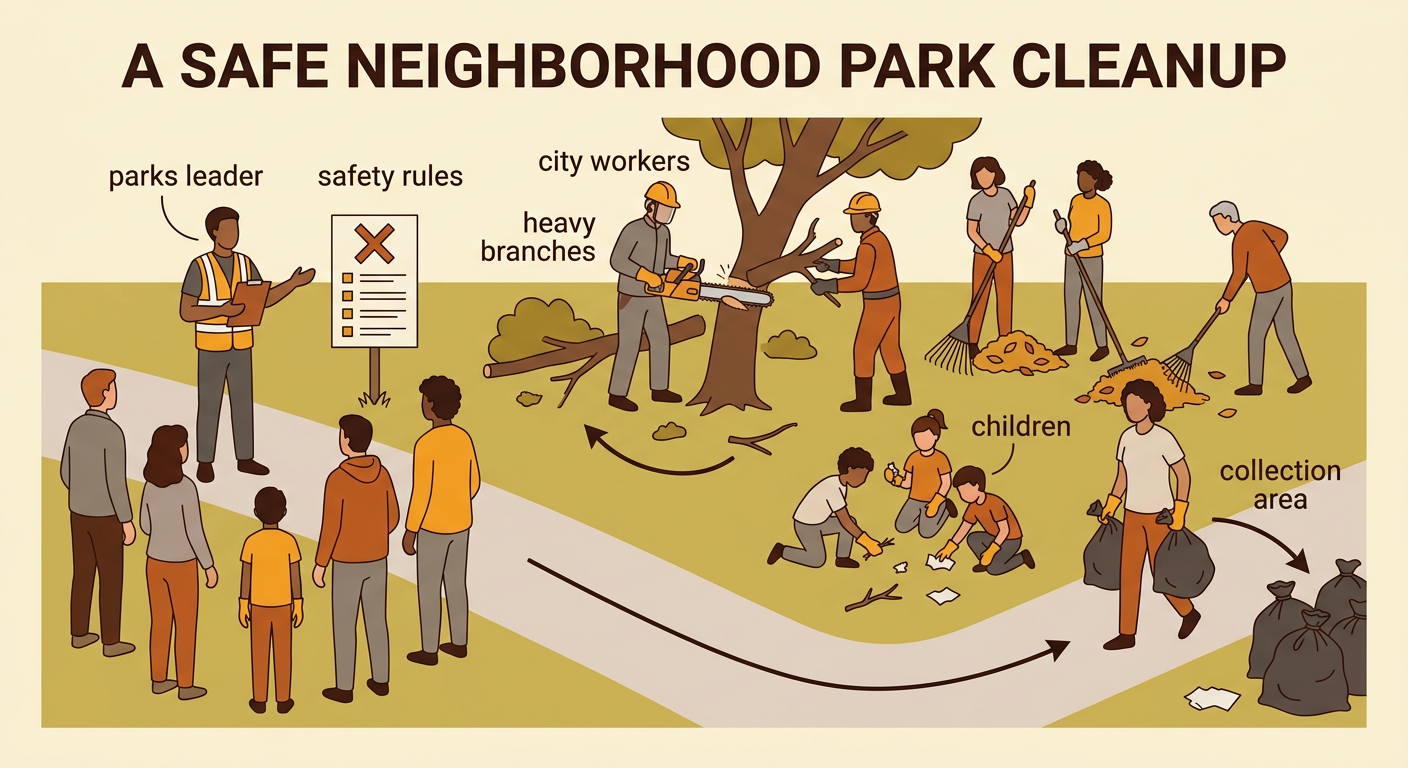
A strong storm blows small branches and leaves across a neighborhood park. The walking path is messy, but large fallen branches could be dangerous. Community members want to make the park safe again. A parks leader checks the area and decides which tasks are safe for volunteers. City workers remove the heavy branches with proper equipment. Adults rake leaves into piles. Children pick up small pieces of litter while wearing gloves and staying with an adult. Another volunteer places bags in the correct collection area. Everyone listens to the parks leader and follows safety rules. By the end of the cleanup, the path is clear and the park is ready to use. The shared goal succeeds because each person fulfills a safe and helpful role.
Draw and Share
Think of a task that people can complete together in your school or neighborhood. You might choose collecting food for families, caring for a class pet, decorating for a school event, or cleaning a shared space. Draw the place, the people, and the work they are doing. Show at least three different roles. For example, your picture could show a class collecting canned food. One student sorts cans, another counts them, and a teacher checks the collection list. Add labels to name each role and task. Then share your drawing with a partner. Explain the shared goal, each person’s responsibility, and any leader in the picture. Listen as your partner explains, too. Together, decide how the people’s different actions help the community accomplish the task.
