
Writing a Strong Argument
Students develop a clear claim and support it with logical reasons, relevant evidence, and an effective concluding statement.

Illustrations are auto-generated and may be placeholders. They can be refreshed to match the narration.
Identify the Issue
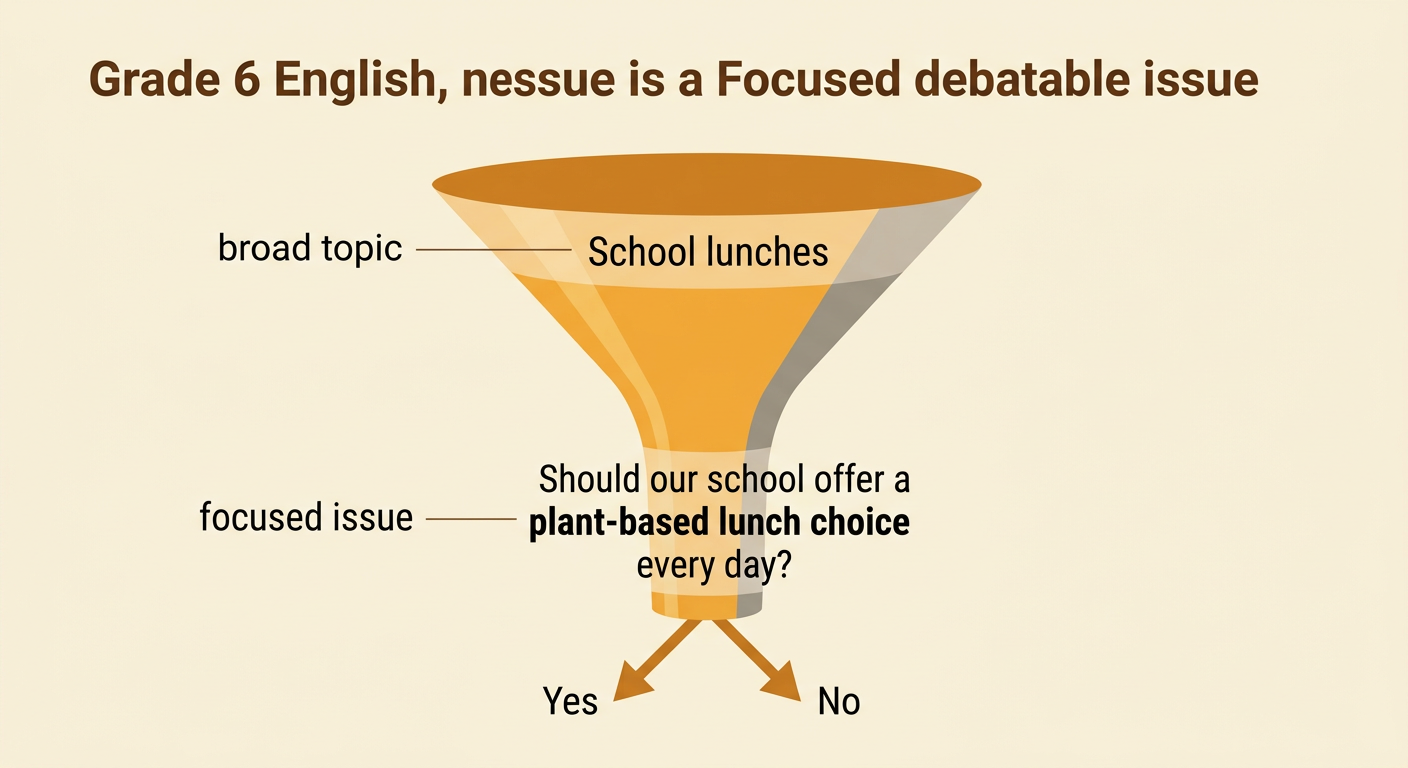
An argument begins with an issue, a question about which people may reasonably disagree. A broad topic is not yet an issue. For example, “school lunches” is a topic. “Should our school offer at least one plant-based lunch choice every day?” is a specific issue because it asks a focused question with more than one possible answer. Before writing, learn enough about the issue to understand its different sides. Ask who is affected, what might change, and why the question matters. Avoid issues that are too broad to explain with available evidence. A focused issue helps you form a claim, choose useful reasons, and leave out unrelated information. You should be able to state your issue as one clear question that your argument will answer.
State a Clear Claim
A claim is the writer’s answer to the issue question. It tells readers exactly what the writer wants them to believe or support. A strong claim is clear, specific, and debatable. It should not be a simple fact, such as “Our school serves lunch,” because facts do not take a position. For the lunch issue, a strong claim could be, “Our school should offer at least one plant-based lunch choice every day.” This sentence clearly states what action the school should take. Avoid uncertain wording such as “I guess” or “maybe,” which can weaken your position. Also avoid claims that are too extreme to defend. As you research and plan, you may revise your claim so that it matches the strongest reasons and evidence you find.

Develop Logical Reasons
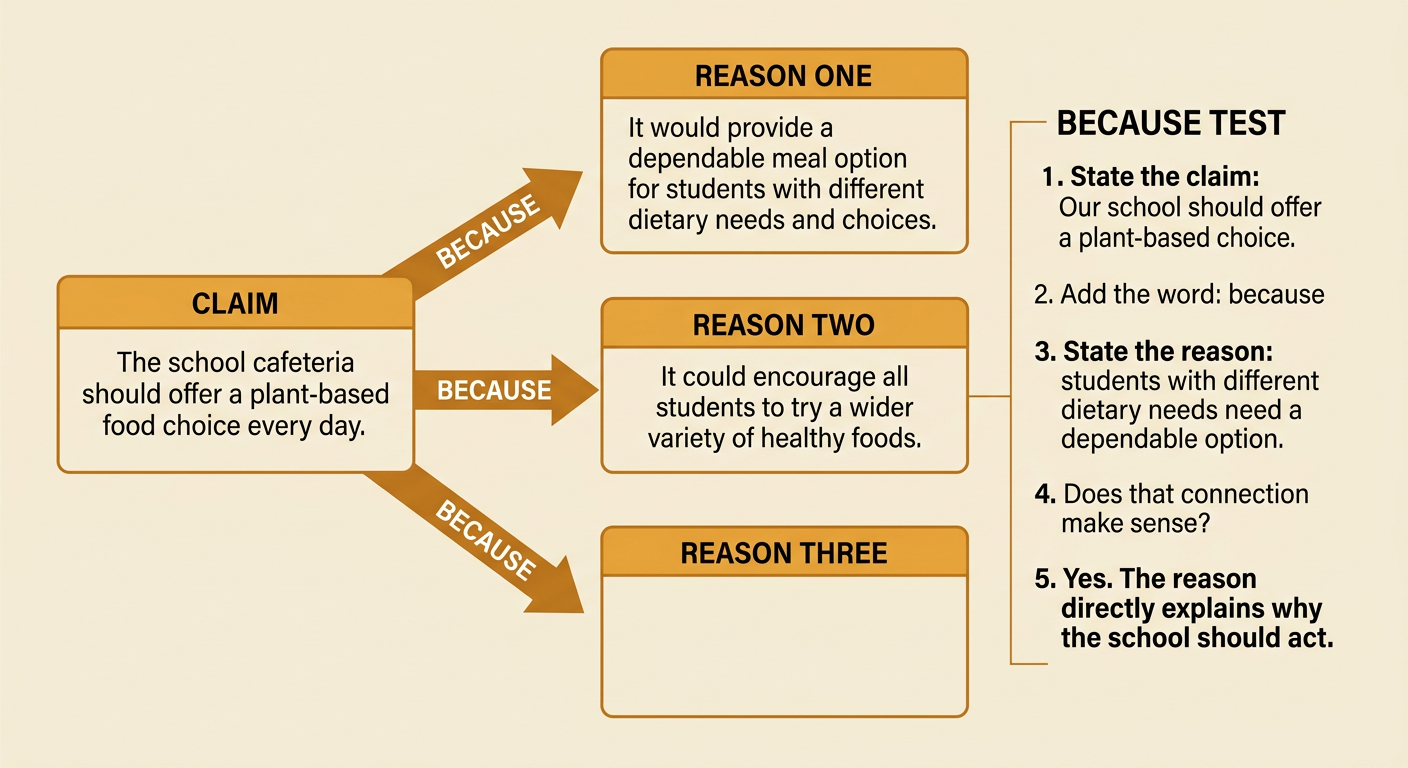
Reasons explain why readers should accept your claim. Each reason must connect logically to the claim and cover a meaningful part of the argument. For the claim about offering a daily plant-based lunch, one reason might be, “It would give students with different dietary needs a dependable meal choice.” Another might be, “It could encourage students to try a wider variety of foods.” These reasons support the claim in different ways instead of repeating the same idea. Test each reason by placing the word “because” after your claim. For example, “Our school should offer a plant-based choice because students with different dietary needs need a dependable option.” Then ask whether the connection makes sense. Arrange reasons in an order readers can follow, such as from the most familiar reason to the most important one.
Select Relevant Evidence
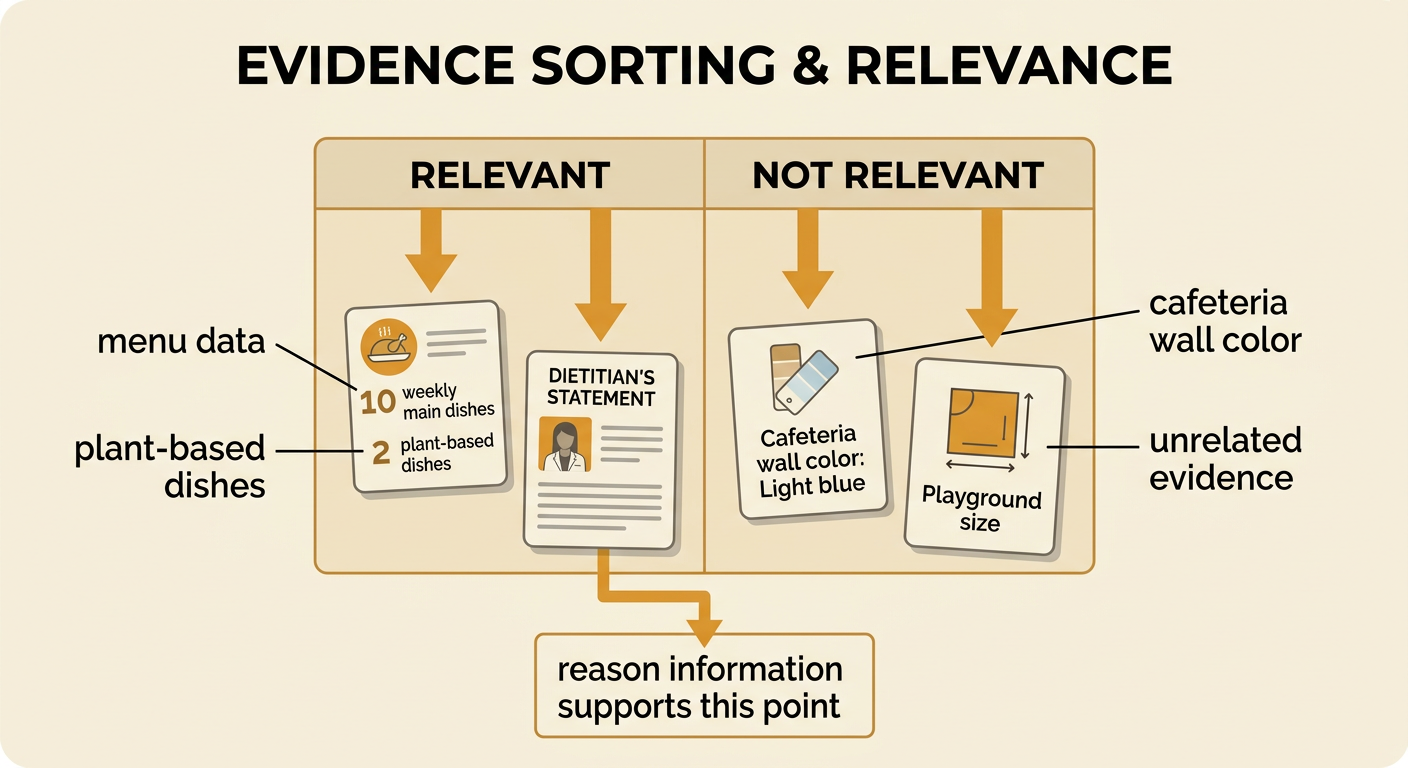
Evidence is information that proves or illustrates a reason. It may include facts, statistics, expert statements, examples, observations, or quotations from trustworthy sources. Relevant evidence directly supports the reason being discussed. Suppose your reason is that students need choices for different diets. A school menu showing that only two of ten weekly main dishes are plant-based would be relevant evidence. A fact about the color of the cafeteria walls would not be relevant because it does not support that reason. Check who created each source, when it was published, and whether other reliable sources agree. Introduce evidence clearly and explain how it supports your point. Do not expect a quotation or number to speak for itself. After presenting the menu data, explain that a daily option would make lunch access more dependable for affected students.
Address the Audience
Your audience is the person or group you want to persuade. Think about what readers already know, what they value, and what questions or concerns they may have. If you are asking the principal to add a plant-based lunch choice, use a respectful, formal tone and consider concerns about cost, preparation, and food waste. You might write, “Although adding a new option may require planning, the school could begin with a one-month trial and track how many students select it.” This sentence recognizes a reasonable concern and offers a practical response. Addressing another viewpoint does not weaken your argument. It shows that you have considered the issue carefully. Define unfamiliar terms, avoid insults or exaggeration, and select reasons likely to matter to your readers. An argument becomes stronger when the audience feels understood and respected.

Write a Strong Conclusion
A conclusion brings the argument to a clear and satisfying end. Restate the claim in fresh words, remind readers of the strongest reasons, and explain why the issue matters. Do not simply copy the introduction, and do not add a major new reason or piece of evidence that you have not explained. For example, a conclusion might say, “By providing one plant-based meal each day, our school can serve more dietary needs and encourage students to explore varied foods. A short trial would allow leaders to measure demand before making a permanent change. Every student deserves access to a lunch they can eat and enjoy.” This conclusion returns to the claim, summarizes key support, and ends with a meaningful final thought. Depending on the audience, you may also suggest a reasonable next step, such as requesting a meeting or beginning a trial.
